
Bangladesh is once again set to lead the world’s largest diplomatic forum.
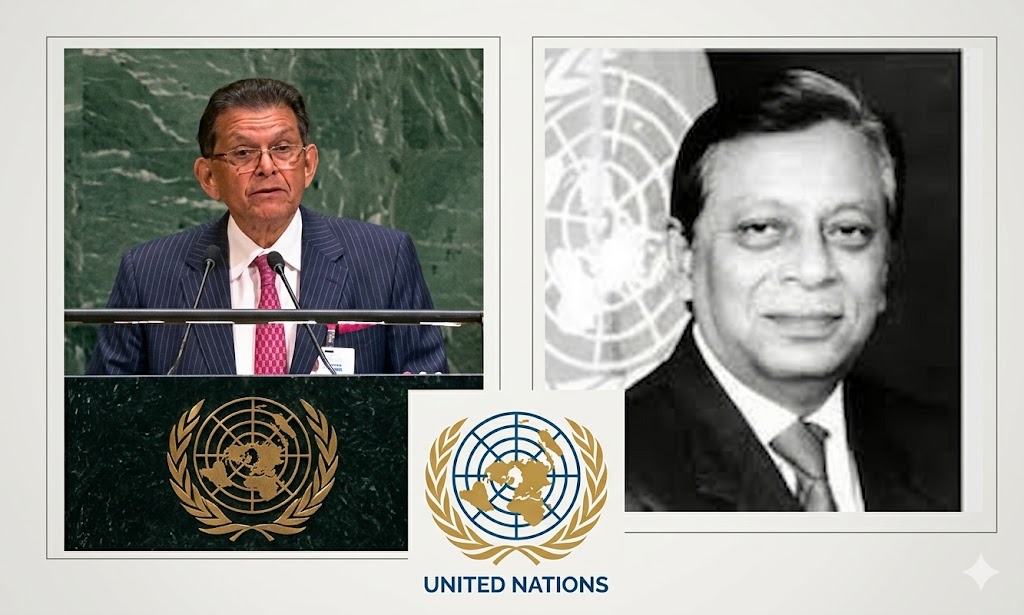
After four decades, a Bangladeshi diplomat will preside over the United Nations General Assembly (UNGA), a position widely regarded as one of the most prestigious roles in multilateral diplomacy. In the coming session, presidents, prime ministers and foreign ministers from around the globe will stand at the UN podium and address a Bangladeshi as “Mr. President.”
For a developing nation like Bangladesh, this is far more than a diplomatic victory. It is a recognition of the country’s growing international stature, credibility and contribution to global affairs. Congratulations to Bangladesh. Congratulations to Dr. Khalilur Rahman.
Most importantly, this achievement does not belong to any individual, political party or government. It belongs to Bangladesh. It is a moment of pride for Bangladeshis at home and across the world. The possibility of Dr. Khalilur Rahman’s election had been apparent for some time. As an accomplished diplomat with extensive international experience, he has earned respect and recognition in global diplomatic circles. His election, however, also brings back memories of another historic moment in Bangladesh’s diplomatic journey.
I remember 1986. At the time, Bangladesh was under military rule, and many of us were actively involved in the pro-democracy movement against the regime of General Hussain Muhammad Ershad. The country’s foreign minister was another distinguished diplomat, Humayun Rashid Choudhury. That year, Bangladesh secured the presidency of the UN General Assembly for the first time.
Unlike this year’s contest, there was no election. Through a consensus arrangement within the Asia-Pacific Group, Bangladesh emerged as the sole candidate, and Humayun Rashid Choudhury was elected by acclamation.
The political atmosphere in Bangladesh was tense. We were protesting against military rule, and Choudhury, as a senior member of the government, was not immune to public criticism. His residence was even attacked during that period of political unrest. Yet when he was elected President of the General Assembly, many of us set aside political differences and congratulated him.
At a public gathering in Sylhet’s Court Point, we said something that remains equally relevant today:“This achievement belongs neither to an individual nor to a government. It belongs to Bangladesh.”
Forty years later, those words deserve repeating. When Humayun Rashid Choudhury travelled to New York to preside over the General Assembly, he invited several individuals from outside government circles to accompany him, including student leader Misbah Uddin Siraj, who was active in the anti-government movement, and journalist Wahid Khan. Political divisions certainly existed then, but there was also a culture of inclusiveness
and respect for national interests that transcended party lines. His decision was widely praised.
Politics has changed considerably since then. The language of political discourse has become harsher, and the space for mutual respect has narrowed. Yet Humayun Rashid Choudhury’s legacy endures. He later joined the Awami League, became Speaker of Parliament, and throughout his career left a lasting mark through competence, professionalism and public service.
Returning to the present, it is worth reflecting on the significance of this latest achievement. The election of the President of the United Nations General Assembly
follows a rotational system among the UN’s five regional groups to ensure geographical balance. Bangladesh belongs to the Asia-Pacific Group, one of the most influential regional blocs within the United Nations.
Since the UN’s founding in 1945, only 19 presidents have come from the Asia-Pacific Group. Bangladesh has now produced two of them.The first was Humayun Rashid Choudhury in 1986. The second is Dr. Khalilur Rahman in 2026. The circumstances, however, were very different.
While Choudhury was elected unopposed through regional consensus, Dr. Khalilur Rahman won a competitive and closely contested secret-ballot election on June 2, 2026. Facing Cypriot candidate Andreas Kakouris, he secured victory by a vote of 99 to 91 and will assume the presidency of the 81st Session of the General Assembly in September 2026.
A look at neighboring countries makes Bangladesh’s achievement even more noteworthy.
Pakistan held the presidency once, in 1962, through Muhammad Zafarullah Khan. Afghanistan achieved the distinction in 1966 through Abdul Rahman Pazhwak. Sri Lanka followed in 1976 with Hamilton Shirley Amerasinghe.
India’s experience is particularly striking. Despite being one of the world’s largest democracies, a founding member of the United Nations and an increasingly influential global power, India has held the position only once. In 1953, Vijaya Lakshmi Pandit was elected President of the Eighth Session of the General Assembly, becoming the first woman ever to preside over the UNGA. More than seven decades later, India has yet to
return to the office.
Against that backdrop, Bangladesh’s achievement stands out. Within an Asia-Pacific Group comprising 54 member states—including regional powers, nuclear-armed nations and some of the world’s largest economies—Bangladesh has now secured the presidency twice. That
accomplishment reflects the country’s growing diplomatic influence, its contributions to UN peacekeeping operations, its commitment to multilateral engagement and the trust it has earned within the international community.
At a time when the world faces wars, humanitarian crises, geopolitical rivalries and growing uncertainty, a Bangladeshi will once again occupy one of the most visible seats in global diplomacy.
It is an honor for the nation and for the red-and-green flag. And that is why, just as we said in 1986, it is worth saying once again today: This achievement belongs not to any individual or government. This achievement belongs to Bangladesh.