
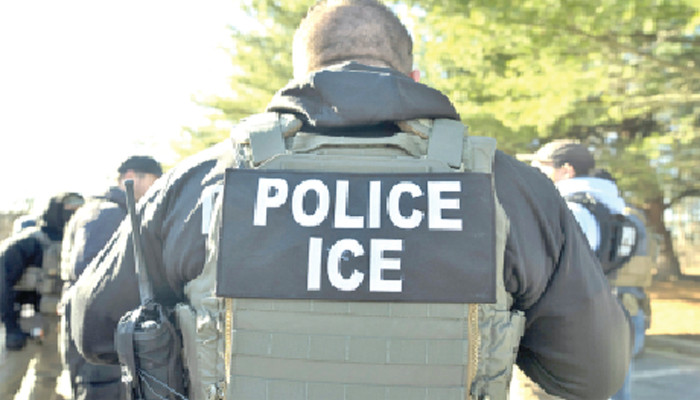
For decades, New York has been known as a safe haven and a land of opportunity for people arriving from around the world. Today, however, for many immigrants, the city has become a place defined by fear, uncertainty, and the constant threat of arrest. A series of enforcement operations by U.S. Immigration and Customs Enforcement (ICE), along with sudden arrests and the presence of heavily armed, masked federal agents, have spread widespread anxiety among undocumented immigrants.
Across Queens, Brooklyn, the Bronx, Manhattan, and extending to Long Island, concerns over potential ICE operations have become commonplace. Community organizations and local residents say many undocumented immigrants have limited their movements to avoid arrest. Some have stopped going to work, abandoned their usual residences, relocated to undisclosed locations, or separated from family members in an effort to remain hidden.
Routine activities—taking children to school, seeking medical treatment, attending court hearings, driving, or traveling through airports—have become sources of anxiety. Tensions have escalated further as local residents have confronted ICE agents during enforcement operations, and incidents involving chemical spray used against civilians recording the operations have drawn widespread attention.
Beginning on Monday, July 27, reports circulated that ICE had intensified its enforcement activities across New York City and surrounding areas. Following reports of operations in Queens, immigrant rights organizations issued alerts warning residents in Brooklyn, the Bronx, Manhattan, Staten Island, and Nassau and Suffolk counties on Long Island to remain vigilant.
However, neither ICE nor the Department of Homeland Security has released a comprehensive, area-by-area official count of arrests made in New York City and Long Island during the past week. As a result, arrest figures circulating on social media cannot be independently verified.
Meanwhile, under New York City’s sanctuary policies, local police and correctional authorities generally cannot directly assist ICE in enforcing civil immigration violations. They are also limited in their ability to hold individuals beyond their scheduled release solely on the basis of an ICE administrative detainer request.
Federal officials, however, argue that the New York City Department of Correction released hundreds of individuals during the last fiscal year despite ICE requests to take them into federal custody. According to federal sources, ICE is now attempting to locate and arrest many of those individuals after their release.
Guidance issued by the New York State Attorney General states that local law enforcement agencies generally may not detain individuals based solely on federal civil immigration detainer requests unless accompanied by a warrant signed by a judge.
Against the backdrop of these legal and political disputes, ICE has expanded its field operations in New York. Although city officials cannot prevent federal enforcement actions, they have sought to limit ICE’s access to information held by city agencies, schools, hospitals, shelters, and other local institutions.
Immigrant rights advocates say one of their greatest concerns is the possibility of so-called “collateral arrests.” This refers to situations in which ICE agents searching for a specific individual encounter other undocumented immigrants in the same home, workplace, vehicle, or nearby location and arrest them as well.
As a result, many undocumented immigrants remain fearful even if they are uncertain whether ICE has specifically targeted them. Immigration attorneys warn that visiting relatives or coworkers, traveling in the same vehicle as someone under investigation, or simply being present during an enforcement operation may increase the risk of detention.
A recent investigation into immigration arrests in New York and New Jersey found that between October 2025 and March 2026, 93 percent of 430 documented street arrests across the New York metropolitan area, Long Island, and New Jersey involved Latino individuals. The investigation also documented allegations in several cases involving mistaken identity, racial profiling, and excessive use of force.
One of the most widely discussed incidents occurred on Thursday, July 30, during an ICE operation in the Inwood neighborhood of Upper Manhattan. Residents gathered near the intersection of Isham Street and Seaman Avenue after spotting masked federal agents wearing body armor.
Local resident Linda Wolf was recording the operation on her cellphone. Videos later published online appear to show a masked federal agent crossing the street toward her before spraying her in the face with a chemical irritant at close range. Several bystanders were also affected by the spray.
Wolf said she had been standing at a safe distance, recording the operation without physically interfering with the agents’ activities. She later announced plans to pursue legal action.
Videos circulating on social media also appear to show the agent approaching the woman filming before deploying the spray. However, ICE has not publicly provided a detailed explanation regarding whether it contends that the woman interfered with the operation.
Under the First Amendment to the U.S. Constitution, citizens generally have the right to record law enforcement officers performing their duties in public places, provided they maintain a safe distance and do not interfere with official operations. Physically obstructing an arrest, blocking law enforcement vehicles, or interfering with officers may expose individuals to legal consequences.
Following the Inwood incident, anger spread throughout Upper Manhattan’s immigrant community. Residents have since organized neighborhood monitoring groups, established rapid alert networks, and begun documenting ICE vehicles and enforcement activities through photographs and video recordings.