
The eastern Ituri Province of the Democratic Republic of Congo is once again at the center of a growing Ebola outbreak, raising alarm among global health authorities. As the number of infections continues to climb and the virus spreads into new regions, the World Health
Organisation (WHO) warns that the crisis is no longer just a local public health emergency but a potential international threat.
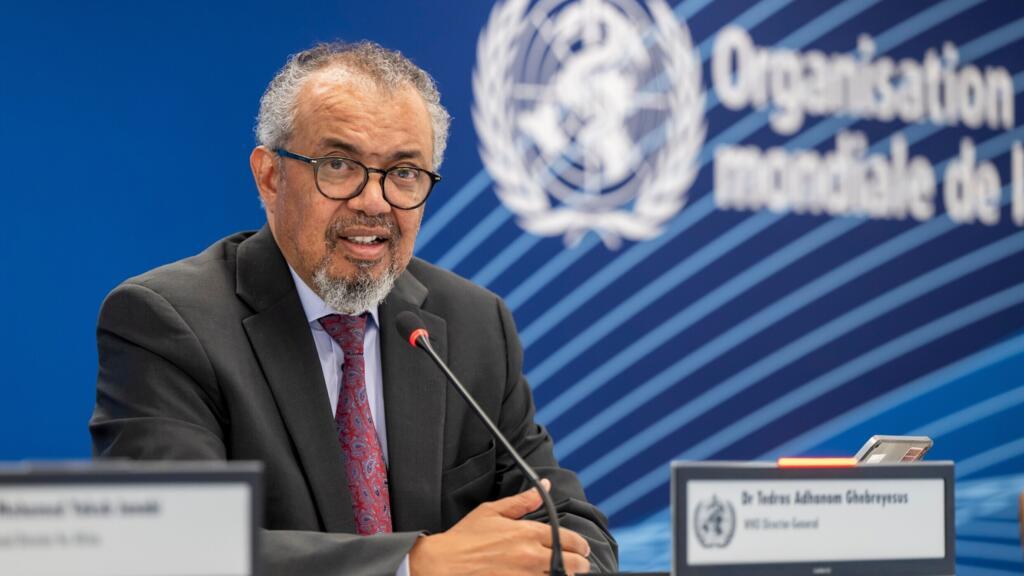
Speaking to reporters in Geneva on Wednesday, WHO Director-General Dr. Tedros Adhanom Ghebreyesus acknowledged that the global response had not moved quickly enough after the outbreak began.
“The outbreak started well before we were able to respond effectively. We are still behind, but under the leadership of the Congolese government, we are making progress,” he said.
Tedros returned from Congo only a day earlier after visiting affected communities. While he reported encouraging signs from the front lines, he also warned that major challenges remain.
Health experts say this outbreak is particularly concerning for several reasons. It is the 17th Ebola outbreak in Congo’s history and is being described as the third-largest Ebola outbreak recorded worldwide since the virus was first identified. More troubling is the fact that the outbreak involves the Bundibugyo strain of Ebola, for which no approved
vaccine or specific treatment currently exists.
Medical workers on the ground report that the virus is spreading at an unusually rapid pace. Transmission is occurring primarily within families, through caregiving for sick relatives, social gatherings, and unsafe burial practices.
According to the latest figures, Congo has recorded 344 confirmed infections and 60 confirmed deaths. Neighboring Uganda has reported 15 confirmed cases and one death. More than 1,000 suspected cases remain under investigation.
The outbreak has already expanded beyond Ituri Province into North Kivu and South Kivu. In Bunia, the region’s largest city, three specialized Ebola treatment centers with a combined capacity of 80 beds are currently operating. Additional emergency treatment units have also been established in several surrounding communities.
Amid the crisis, there have been some encouraging developments. Four nurses recently recovered and were discharged from a hospital in Bunia. Earlier, a laboratory worker also made a full recovery.
“This demonstrates that people can survive Ebola if they receive treatment early enough,” Tedros said.
Yet healthcare workers themselves remain among the most vulnerable. At least 16 medical personnel have been infected so far, underscoring the risks faced by those battling the outbreak.
Tedros identified five major obstacles to controlling the epidemic. The most critical is contact tracing—the process of identifying and monitoring people who have been exposed to infected individuals. Currently, authorities are reaching only about 45 percent of contacts, far below the more than 90 percent considered necessary to contain an outbreak effectively.
Conditions on the ground remain extremely difficult. Armed attacks, large-scale displacement, and unrestricted population movement have complicated efforts by health workers. In some areas, insecurity has made regular access nearly impossible.
Another significant challenge is public distrust.
Tedros said discussions with local community leaders revealed that many residents still refuse to believe Ebola is real. “Community mistrust remains one of our biggest obstacles. Some people simply do not believe Ebola exists,” he said.
This scepticism is hindering medical operations and making it harder to identify, isolate, and treat infected individuals.
The outbreak has now become a matter of international concern. Uganda has tightened border controls, while Rwanda has increased monitoring at crossing points. Health screening measures have also been strengthened at airports and international transit hubs.
Public health experts were particularly concerned after a Congolese traveller arriving through the United Arab Emirates was identified in Uganda. The incident highlighted the virus’s ability to move across international travel routes and potentially reach distant regions.
A U.S. physician who became infected while working in Bunia is currently receiving treatment in Germany. Suspected Ebola cases reported in Brazil and Italy later tested negative, but countries including India, Thailand, and Mexico have intensified airport and border screening procedures as a precaution.
The United States has also implemented preventive measures. The Trump administration has announced temporary entry restrictions for certain categories of travellers arriving from Congo, Uganda, and South Sudan. Additional policies regarding the treatment of infected American citizens overseas have also drawn attention.
Behind the outbreak lies a broader humanitarian crisis. Ituri and neighboring provinces have long struggled with armed conflict, poverty, mass displacement, and severe food insecurity. According to United Nations estimates, nearly 10 million people across eastern Congo are facing acute food shortages.
“Hunger and disease are constant companions,” Tedros said. “People suffering from malnutrition are far more vulnerable to infection.”
He added a stark warning: “If people survive Ebola only to die later from malaria or malnutrition, then we have not truly succeeded.” Despite the growing challenges, health officials remain cautiously optimistic. Congo has confronted 16 previous Ebola outbreaks and has ultimately overcome each one.
This time, however, experts say the battle extends beyond medicine and science. According to Tedros, the key to ending the outbreak is not simply a vaccine or a treatment.”Leadership, local ownership, partnership, and public trust are the real tools that will stop this outbreak,” he said. And as the virus continues to spread, the fight is no longer Congo’s alone—it has become a concern for the entire world.