

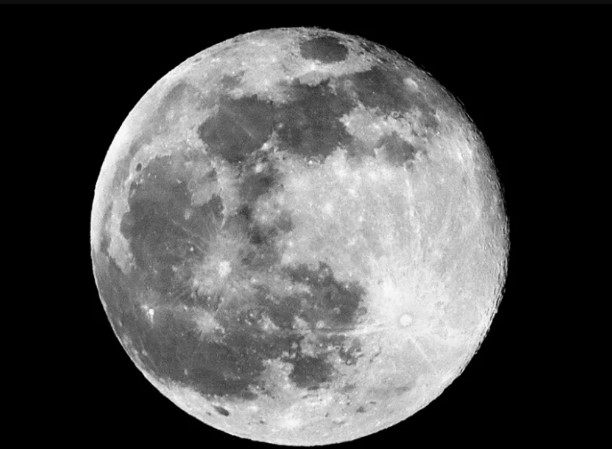
A discarded rocket stage roughly the size of a five-storey building is set to slam into the Moon’s surface at around 5,400 mph on Wednesday (August 5). Scientists estimate the impact will release energy equivalent to about three tonnes of TNT.
The upper stage of a SpaceX Falcon 9 rocket, which delivered a lunar spacecraft before being left in space for more than a year, was gradually pulled toward the Moon by its gravity. Researchers believe it will strike near the Einstein crater on the Moon’s sunlit side, creating a new crater about 27 metres wide and five metres deep.
William Jo, a researcher at the University of Texas, said the collision could eject a cloud of dust and debris as high as 75 to 100 kilometres above the lunar surface. Benjamin Fernando, a researcher at Los Alamos National Laboratory in New Mexico, said the flash from the impact would last less than a second, but the ejected material could remain visible for several minutes through telescopes from both Earth and space.
Scientists say the impact poses no danger to Earth or future lunar missions because the Moon has no atmosphere. NASA plans to use its Lunar Reconnaissance Orbiter to capture images of the impact site before and after the collision.
The event has also renewed attention on the growing challenge of managing space debris in deep space, highlighting the need for better long-term disposal strategies for abandoned spacecraft and rocket components.