
New York, 10 July 2026: Bangladesh has underscored the importance of climate resilience,
water security, skills development and innovation-driven industrialization in advancing the
Sustainable Development Goals (SDGs) at the High-level Political Forum on Sustainable
Development at United Nations Headquarters.
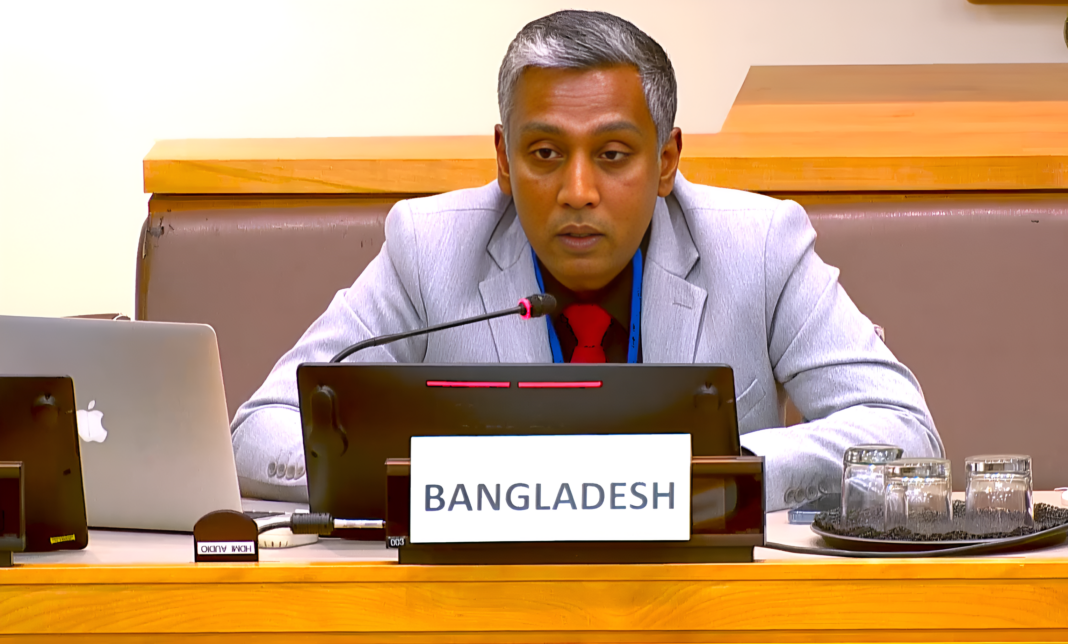
Speaking at the Forum, Professor Dr. S M Abdul Awal, Principal Coordinator (SDG Affairs)
at the Prime Minister’s Office, highlighted Bangladesh’s long-standing focus on climate adaptation
and sustainable water management. He referred to the government’s plan to excavate 20,000
kilometres of canals over the next five years to strengthen irrigation networks, improve rainwater
retention, raise groundwater levels and enhance drinking water security for both rural and urban
communities. He also stressed the importance of international cooperation on transboundary water
sharing, including in support of the Teesta Barrage Project in northern Bangladesh.
In a separate intervention on SDG 9, Dr. Awal said resilient infrastructure, sustainable
industrialization and innovation remain central to Bangladesh’s development strategy as it is
struggling for graduation from the least developed country (LDC) category. He emphasized
investments in skilled and knowledge-based education, technical and vocational education and
training (TVET), STEM, digital infrastructure and entrepreneurship to equip young people for future
jobs and build a knowledge-based economy. Also, he asked for investment from international
communities on agriculture, biotechnology, pharmaceutical, leather, digital and creative industries as
Bangladesh has now favorable condition for foreign investment after proper democratic election.
He underlined these efforts would help safeguard development gains, create employment and
support a resilient, inclusive and sustainable future.