

A major milestone in medical science has been reported from the United Kingdom, where surgeons successfully removed a brain tumor with the direct assistance of artificial intelligence (AI).
According to Sky News, 48-year-old Rhys Hibbert underwent the pioneering procedure and was able to preserve his eyesight, return to normal life and resume his work.
How did AI help during the operation?
Specialist surgeons at London’s National Hospital for Neurology and Neurosurgery, part of University College London Hospitals NHS Foundation Trust, performed the complex operation in May.
During the surgery, a live AI system analysed the brain in real time. It identified extremely delicate tissues and critical areas and displayed them using different colours through colour coding.
This gave surgeons a clearer picture of which parts of the brain were safe to operate on and which areas had to be avoided while removing the tumour.
The procedure was particularly challenging because important structures—including nerves responsible for vision—are located extremely close together. Doctors said that even an error of around one millimetre could potentially have had devastating consequences.
AI developed in the UK
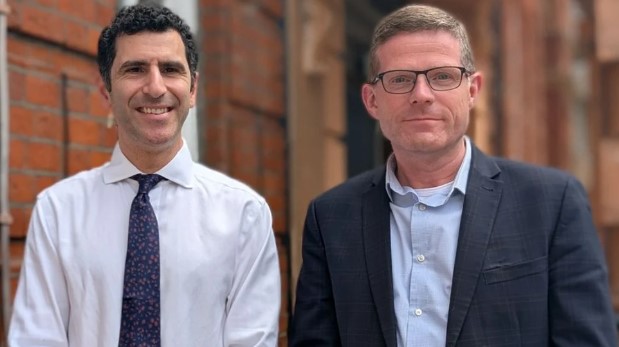
Consultant neurosurgeon Professor Hani Marcus, one of the members of the surgical team, described the procedure as an important milestone in the history of neurosurgery.
Importantly, the AI technology was not developed abroad. It was created in-house at UCL Hawkes Institute in the UK and trained using data from hundreds of complex brain-surgery videos.
What could this mean for future medicine?
Doctors believe AI could increasingly assist surgeons by providing highly detailed, real-time information during complicated procedures. Beyond surgery, advances in AI could also help doctors detect cancer and other serious diseases at an earlier stage, potentially improving treatment outcomes and reducing pressure on the UK’s National Health Service.
AI has already been used in other complex operations in the UK. For example, in June, an AI technology called Eureka, developed in Japan, was reportedly used successfully during bowel surgery on a woman at London’s St Mark’s Hospital.
For patients like Hibbert, however, the most immediate benefit is simple: the ability to undergo a highly complex brain operation while preserving an essential function such as eyesight.