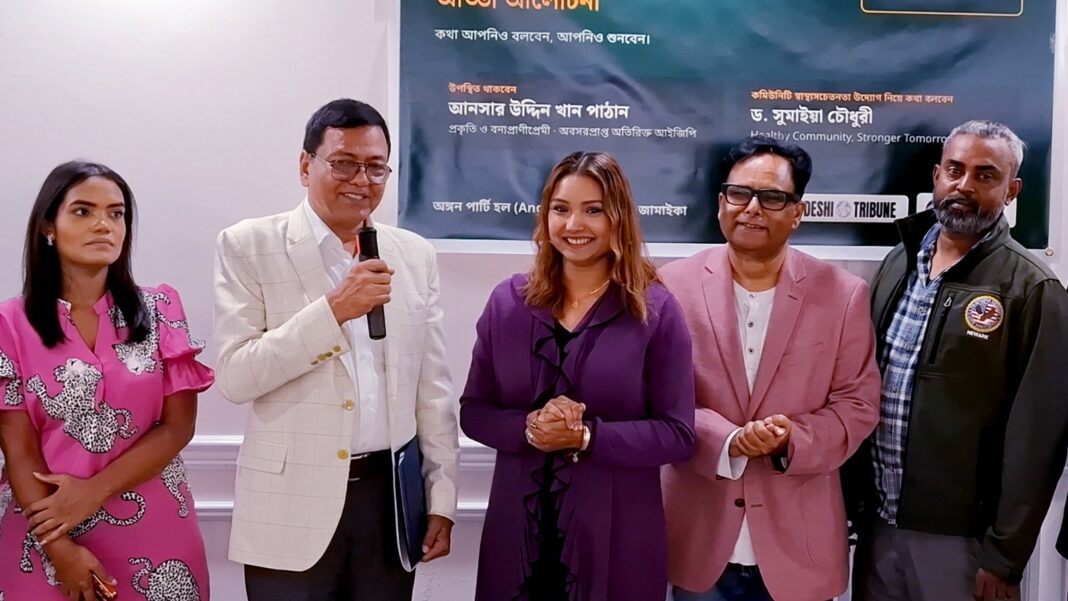

The election season is heating up in New York’s Bangladeshi community. The society elections have everyone busy, with endless calculations, alliances, and displays of concern. Who is on whose slate? Who is running against whom? Who grilled whom with questions at the airport, and who will speak out in protest? These are the things that keep us occupied. Facebook is buzzing with congratulations, condemnations, and a flood of statements. Protests are being rehearsed. We are so preoccupied with community leadership that we barely find the time to ask what people should actually expect from those leaders.
Amid all this noise, one name comes to mind: **Win Rozario.**
Win was one of our own—a young man experiencing a mental health crisis. The police were called to help. Their job was to manage the situation and keep a distressed young man safe. Instead, he was shot and killed by police in front of his mother. The very people called upon to provide assistance ultimately left a mother devastated by the loss of her son.
A mother had asked for help to save her child. Even today, she must continue fighting over the consequences of that call for help. What could be a crueler irony?
The incident happened in New York, the very city where we live. Yet amid the noise of our community, Win Rozario seems to have become an unwelcome name. There is no election campaign for him, no slate, no promotional banners. No contest for leadership is being waged in his name. It is as though the death of a young man and his mother’s quest for justice have nothing to do with our community.
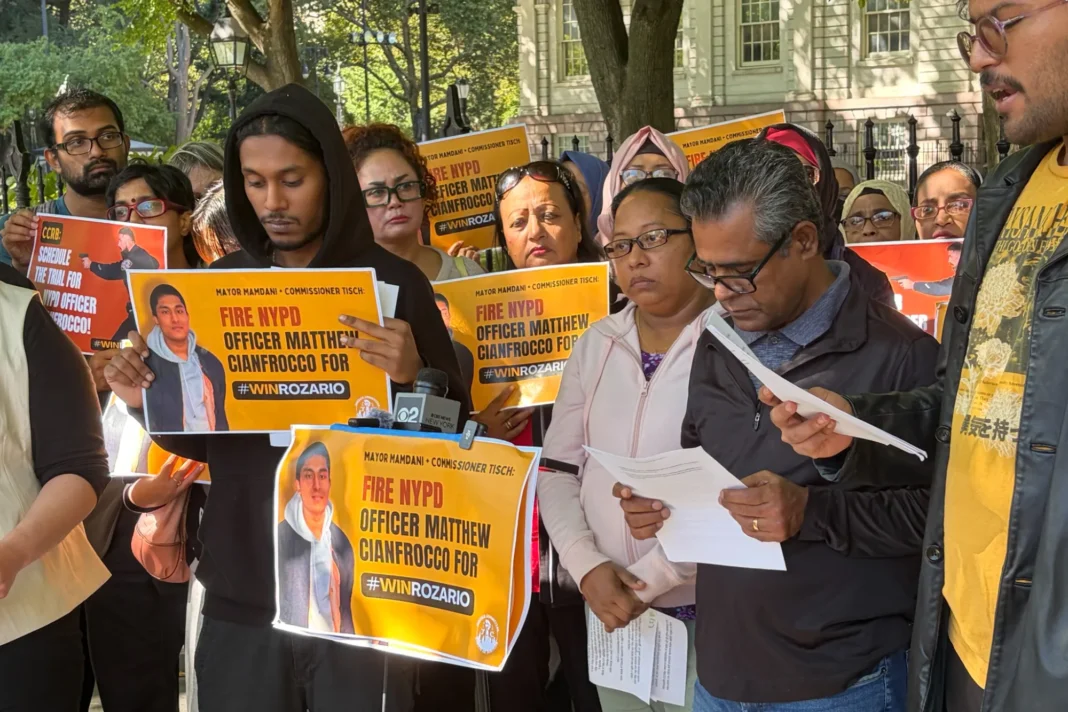
In September 2025, New York City’s Civilian Complaint Review Board (CCRB) brought allegations of abuse of authority and unnecessary force against two police officers. Salvatore Alongi, the officer who used a Taser, retired before facing a departmental trial. Police Commissioner Jessica Tisch described the incident as a “human error.” The other officer, Matthew Chianfranco, remains on the force, and no date has been set for his departmental trial.
Of course, allegations and a final determination of responsibility are not the same thing. But how can we ignore the prolonged disciplinary process, the apparent weakness of accountability, and the questions surrounding administrative failure?
One police officer has retired. Another remains on the job. In between lies a fatal encounter, a mother’s tears, and a family’s long wait for justice.
Here is a simple question: Why must a grieving mother repeatedly hold press conferences to demand justice? Why must she stand outside City Hall to remind the administration of its responsibilities? Why must she also shoulder the burden of keeping the questions surrounding her son’s death alive?
**Where are our community leaders?**
We are hardly short of leaders. We have no shortage of organizations, titles, advisers, presidents, or general secretaries. During election season, everyone claims to care about the public. Everyone presents themselves as a guardian of the community. Everyone professes an uncompromising commitment to protecting people’s rights. Yet when the pursuit of justice for a young man of Bangladeshi origin comes under scrutiny, why are those guardians so conspicuously silent?
Is Win Rozario not a son of our community? Are his mother’s tears not our tears? Or does the grief of a family that has lost a child hold no value for us? Are we so reluctant to stand with them that we will not even raise our voices on their behalf?
Some may argue that society elections and police accountability are two different matters. That is true. But can we not expect an organization that speaks of people’s rights, dignity, and well-being to stand beside someone in distress, even if it cannot secure justice for every victim of injustice?
A statement of solidarity, a community gathering, or a demand for accountability addressed to the authorities on behalf of the family—is even that too much to ask?
Some human rights organizations, including DRUM, have stood by the family. Their role is undoubtedly important. But the larger question concerns the Bangladeshi community as a whole. Where are our social organizations, election slates, familiar public figures, and self-proclaimed leaders?
We can argue for days over a question asked at an airport. We dissect every detail of who insulted whom, who issued a statement against whom, and who stood beside whom. Yet why are we so silent when it comes to standing beside a family seeking justice?
Do we have even a fraction of that enthusiasm for demanding accountability over the circumstances in which a mother lost her son?
Who will become the next society president and what they will do in office may be important questions. But the real test of leadership comes when people are in distress. It is easy to take a microphone and proclaim one’s commitment to serving the community. It is much harder to stand beside a vulnerable person and continue the fight until the end.
What kind of community are we building? Whom does our leadership serve? And if our leaders cannot stand beside people in their darkest hours, what is the point of having so many organizations, so many titles, and so many elaborate election campaigns?
**We demand justice for Win Rozario. Standing beside his family is our moral responsibility. You do not need a title, an organization, or an election campaign to stand beside a mother who has lost her child. You simply need to be human.**