
Tuesday, June 2, marked another primary election day on the America political calendar. By the end of the night, however, it became clear that these contests were far more than routine candidate selection races. They served as a critical test of political strength, voter
sentiment, leadership appeal, and the emerging dynamics that will shape November’s midterm elections.
From California to Iowa, and from New Jersey to New Mexico, primary voters delivered results that not only elevated new political figures but also signaled subtle yet significant shifts in the nation’s political landscape. Perhaps most importantly, the elections offered
fresh clues about the durability of President Donald Trump’s influence within the Republican Party and where Democrats see expansion opportunities.
California attracted the greatest attention. With Governor Gavin Newsom stepping aside after two terms, the nation’s most populous state found itself searching for new leadership. A crowded field of 61 candidates entered the race, creating one of the most competitive gubernatorial primaries in recent memory.
While vote counting continues, former U.S. Health and Human Services Secretary Xavier Becerra has emerged as the clear frontrunner. The battle for second place, however, remains unresolved. Republican commentator Steve Hilton and Democratic billionaire environmental activist Tom Steyer are locked in a razor-thin contest, meaning the outcome may not be known for several more days.
California’s unique “top-two” primary system, in which the two highest vote-getters advance regardless of party affiliation, had raised concerns among Democrats that a split vote could potentially allow two Republicans to advance to November. For now, those fears appear to have subsided, though the race remains fluid.
The biggest surprise of the night came from Iowa.
In the Republican gubernatorial primary, businessman and farmer Zach Lahn delivered a stunning upset by defeating Trump-endorsed Congressman Randy Feenstra. Few political observers considered Lahn a frontrunner before Election Day, but the results suggest that many Iowa Republicans were looking to send a different message.
The implications extend beyond Iowa. For years, Trump’s endorsement has been viewed as one of the most powerful assets in Republican politics. Yet Feenstra’s defeat raises new questions about whether that influence remains as decisive as it once was.
The results also highlighted the growing appeal of the “Make America Healthy Again” (MAHA) movement. Focused on health, nutrition, and government transparency, the movement appears to be gaining traction among segments of the Republican electorate.
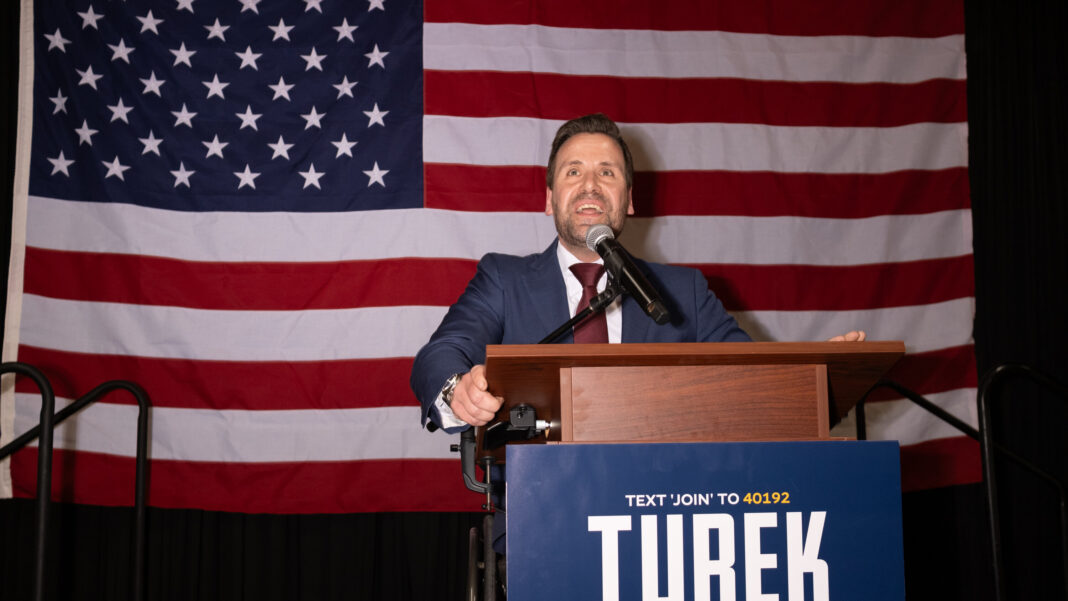
Iowa’s Senate race is equally important. Democrats nominated Paralympian and state legislator Josh Turek to compete for the seat currently held by longtime Republican Senator Joni Ernst. Republicans selected Congresswoman Ashley Hinson as their nominee. Their November showdown is expected to attract national attention and could play a significant role in determining the balance of power in the Senate.
In New Jersey, one of the most closely watched contests unfolded in the 12th Congressional District. The retirement of longtime Congresswoman Bonnie Watson Coleman after twelve years in office created a rare open seat in a district long considered a Democratic stronghold.
Thirteen Democratic candidates entered the race. Emerging victorious was Dr. Adam Hamawy.
His story embodies a classic American success narrative. Born to Egyptian immigrant parents, Hamawy arrived in the United States when he was just seven months old. He later served as a U.S. Army lieutenant colonel and combat trauma surgeon, providing medical care in Iraq and Haiti.
Hamawy gained national recognition in 2004 when he helped save the life of then-soldier Tammy Duckworth after her helicopter was shot down in Iraq. Today, Duckworth serves in the U.S. Senate and was among his prominent supporters.
His campaign also benefited from endorsements by progressive leaders such as Bernie Sanders and Alexandria Ocasio-Cortez. His humanitarian medical work in Gaza further strengthened his appeal among Muslim, Arab American, and progressive voters.
In November, Hamawy will face the Republican nominee Greg Mele. Given the district’s strong Democratic history, he enters the general election as the favorite. If elected, he would become New Jersey’s first Muslim member of Congress.
Another closely watched New Jersey race is taking place in the state’s 7th Congressional District, where former Navy helicopter pilot Rebecca Bennett secured the Democratic nomination. She will challenge incumbent Republican Congressman Tom Kean Jr. in November.
The race carries added intrigue because of growing questions surrounding Kean’s health. His limited public appearances in recent months have fueled speculation and concern among Republicans. Political analysts increasingly view the district as one of New Jersey’s most competitive swing seats, where even a small shift in voter sentiment could determine
the outcome.
Meanwhile, Senator Cory Booker easily won his primary and is now focused on the general election campaign.
In New Mexico, former Interior Secretary Deb Haaland won the Democratic gubernatorial primary. Haaland, the first Native American cabinet secretary in U.S. history, is now considered one of the strongest contenders in the governor’s race.
Montana Republicans selected Aaron Flint as their nominee, while South Dakota Governor Larry Rhoden further solidified his position in his state’s Republican primary. Together, these results have helped clarify the political landscape heading into the fall campaign season.
Yet the biggest question emerging from election night remains unchanged: How strong is Donald Trump’s influence within today’s Republican Party?
The Iowa results suggest the answer may no longer be straightforward. A segment of Republican voters appears increasingly receptive to new voices and alternative political messages. At the same time, Democrats continue searching for new coalitions capable of expanding their electoral reach.
Control of the Senate, the House of Representatives, and key state offices will all be on the line in November. The June 2 primaries offered an early indication of the battles ahead.
More than a candidate-selection process, these primaries served as a arometer of America’s political mood. And if the results are any
indication, the 2026 midterm elections are shaping up to be one of the most competitive, unpredictable, and consequential political contests in recent years.