

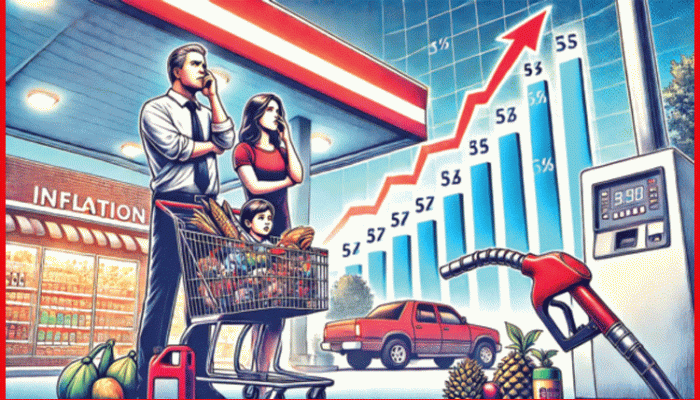
When conflict erupts in the Middle East, its impact is not confined to the battlefield. The tensions in Tehran, Tel Aviv, or the Strait of Hormuz are felt directly in grocery stores in Jackson Heights, restaurants in Brooklyn, the lives of taxi drivers in the Bronx, travel agencies in Queens, and in the kitchens of ordinary American families. The recent military conflict involving Iran is no longer just a diplomatic or security crisis; it is creating new financial pressure on the monthly budgets of American households, including Bangladeshi families across the United States.
Although the conflict zone is thousands of miles away, the economic distance is now almost zero. When global oil prices rise, the effects become visible at American gas stations within days. Higher gasoline prices do not only increase the cost of filling a vehicle’s tank; they also raise trucking expenses, food distribution costs, airfare, business operating expenses, and ultimately force families to spend more while earning the same income.
The Strait of Hormuz is one of the world’s most important energy transportation routes. A significant portion of the oil and fuel products used in international markets passes through this corridor. As a result, whenever tensions increase in the region, concerns over energy supplies emerge, causing global fuel prices to rise rapidly. This has a direct impact on the U.S. energy market.
Only a few months ago, the average gasoline price in the United States was below $3 per gallon. Following the recent crisis, prices in many areas have risen above $4 per gallon. As a result, consumers are paying an additional $1.25 to $1.50 per gallon. While that may appear modest on an individual level, the national impact is enormous. Americans consume approximately 374 million gallons of gasoline every day. Based on that figure, the additional cost could amount to between $467 million and $561 million per day. Monthly, that expense could reach $14 billion to $18 billion, and annually it could total between $170 billion and $215 billion.
Economists describe this as an indirect economic burden imposed on ordinary people as a result of international crises. Even without the government introducing new taxes, consumers are now paying more for the same goods and services. This pressure is not limited to any one community. Bangladeshi, Indian, Pakistani, Hispanic, African American, White, Arab, Chinese, Korean, and other American families are all feeling the impact. However, low- and middle-income households are bearing the greatest burden.
Within New York’s Bangladeshi community, the pressure is particularly visible. Taxi drivers, Uber drivers, limousine operators, delivery workers, and truck drivers are being directly affected by higher fuel prices. Drivers who previously spent about $40 per day on gas are now paying between $60 and $70. Over the course of a week, those additional expenses can amount to several hundred dollars. By the end of the month, that extra spending reduces their ability to pay rent, purchase groceries, cover children’s educational expenses, or send money home.
The impact extends beyond transportation. Small businesses are also feeling the strain. Bangladeshi-owned grocery stores, restaurants, sweet shops, halal meat markets, pharmacies, and retail businesses are facing increased transportation and operating costs. Higher expenses for obtaining products from wholesalers, managing delivery systems, and paying utility bills are forcing many business owners to raise prices. Ultimately, the additional burden is passed on to consumers.
The effects are equally evident in the food market. Transportation costs are linked to nearly all essential products, including rice, lentils, cooking oil, meat, fish, vegetables, milk, eggs, and fruit. As trucking and fuel costs rise, food prices increase as well. Families are now spending more money to purchase the same amount of groceries. Households with multiple family members who rely on cars for commuting are facing even greater financial pressure.
The travel industry is also experiencing a major setback. Uncertainty surrounding travel to the Middle East and Asia has increased among passengers. Many people are postponing trips to Bangladesh. Some are delaying ticket purchases, others are canceling existing reservations, while many are waiting to see how the situation develops. As a result, Bangladeshi-owned travel agencies have seen a decline in sales. Reduced business activity has led some companies to cut operating hours, while others are considering layoffs.
Rising fuel prices are also increasing airline operating costs. If oil prices remain elevated for an extended period, international airfares could rise further. This would create additional hardship for expatriates, especially those who need to travel to Bangladesh for family visits, medical emergencies, weddings, funerals, or other urgent matters.
Another important aspect of this crisis is remittances. A large number of Bangladeshis living in the United States regularly send money to family members back home. However, as the cost of living in America increases, many find it more difficult to remit the same amount as before. Consequently, countless families in Bangladesh are also feeling the indirect effects of the crisis.
The conflict is also increasing volatility in financial markets. If tensions persist, stock market fluctuations are likely to intensify, creating greater uncertainty among investors. Bangladeshis who invest in 401(k) plans, IRAs, mutual funds, and other retirement savings programs are becoming increasingly concerned. This is especially true for individuals approaching retirement, for whom market instability represents a significant source of anxiety.
Despite these pressures, one positive development is that the United States has not officially entered a recession. According to the latest data, the country added 172,000 new jobs in May, while the unemployment rate remained stable at approximately 4.3 percent. Hiring continues in healthcare, technology, local government, and service sectors.
Nevertheless, the reality experienced by many families is different. Even with steady employment, saving money has become increasingly difficult. While wages are rising, the costs of food, housing, fuel, healthcare, and insurance are increasing at a faster pace. As a result, although official economic indicators remain positive, everyday life is becoming more expensive for ordinary Americans.
History shows that major conflicts in the Middle East have almost always shaken the global economy. From the oil crisis of the 1970s to the Gulf War, the Iraq War, and more recent regional tensions, the energy market has consistently been the first sector to feel the impact. Instability in energy markets quickly spreads to transportation, food, manufacturing, consumer spending, and financial markets.
For the Bangladeshi community, the crisis also has an important social dimension. Many immigrants must simultaneously manage living expenses in the United States while supporting family members in Bangladesh. Some are paying off home loans, funding their children’s education, covering medical expenses for parents, assisting relatives with weddings, or meeting other family obligations. As living costs in New York rise, balancing these responsibilities becomes increasingly difficult.
This reality is not unique to Bangladeshis. Immigrant families throughout America face similar challenges. Hispanic families send remittances to Latin America, African immigrants support relatives in their home countries, and South Asian families regularly assist loved ones abroad. Rising fuel prices and living costs therefore create a global family financial crisis that extends far beyond U.S. borders.
According to analysts, the greatest concern is the possibility of further escalation. If tensions involving Iran intensify and oil supplies through the Strait of Hormuz are disrupted, global energy prices could rise even more. In that scenario, the costs of gasoline, diesel, jet fuel, electricity, food products, and airline tickets would likely increase further.
Governments make decisions about war, but ordinary people ultimately pay the economic price. Higher fuel bills, rising food costs, expensive airfares, reduced savings, uncertain investments, employment risks, and the growing cost of living all place an increasing burden on working-class and middle-income families.
Although thousands of miles separate the battlefields of the Middle East from American households, that distance is nearly nonexistent in economic terms. The longer the Iran-related crisis continues, the deeper its financial impact will become—and the burden will be felt by Bangladeshi communities and all families across the United States.