
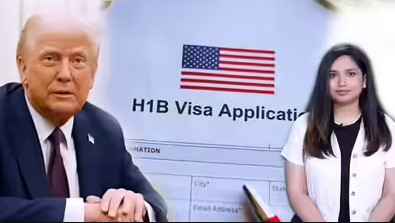
A major development has emerged in U.S. immigration policy. One of the Trump administration’s most controversial measures—a $100,000 fee for H-1B visas—has been struck down by a federal court. On June 8, Federal Judge Leo Sorokin of Boston issued a landmark ruling invalidating the fee.
The judge’s reasoning was straightforward but significant: the charge was not a fee but effectively a tax. Under the U.S. Constitution, the power to impose taxes belongs to Congress, not the President. Therefore, the court concluded that the measure was unlawful.
The H-1B visa program allows U.S. technology companies, universities, hospitals, and engineering firms to hire highly skilled foreign professionals, including software engineers, physicians, researchers, and scientists. Traditionally, the application process involved fees
amounting to several thousand dollars. Last year, however, President Trump increased the charge dramatically to $100,000.
The administration argued that such a substantial fee would encourage employers to hire American workers instead of recruiting talent from abroad. Supporters viewed the policy as a way to protect domestic jobs, while critics warned that it would weaken U.S. competitiveness and discourage highly skilled professionals from coming to the country.
The program’s participation numbers appeared to support the critics’ concerns. By mid-February, only 85 payments had reportedly been submitted under the new fee structure, suggesting that the policy had effectively stalled participation in the program.
The lawsuit challenging the fee was brought by attorneys general from 20 Democratic-led states, joined by several business organizations, including the U.S. Chamber of Commerce. The plaintiffs argued that the fee was causing significant harm to businesses and institutions that rely on highly skilled international talent.
The Trump administration defended the measure by asserting that federal immigration law grants the President authority to restrict the entry of certain foreign workers when doing so serves the national interest. Judge Sorokin rejected that argument, ruling that such authority does not extend to imposing what amounts to a tax.
Legal observers expect the administration to appeal the decision. As a result, the future of the H-1B visa program—and the broader question of presidential authority to impose such charges—appears headed for a prolonged legal battle.