

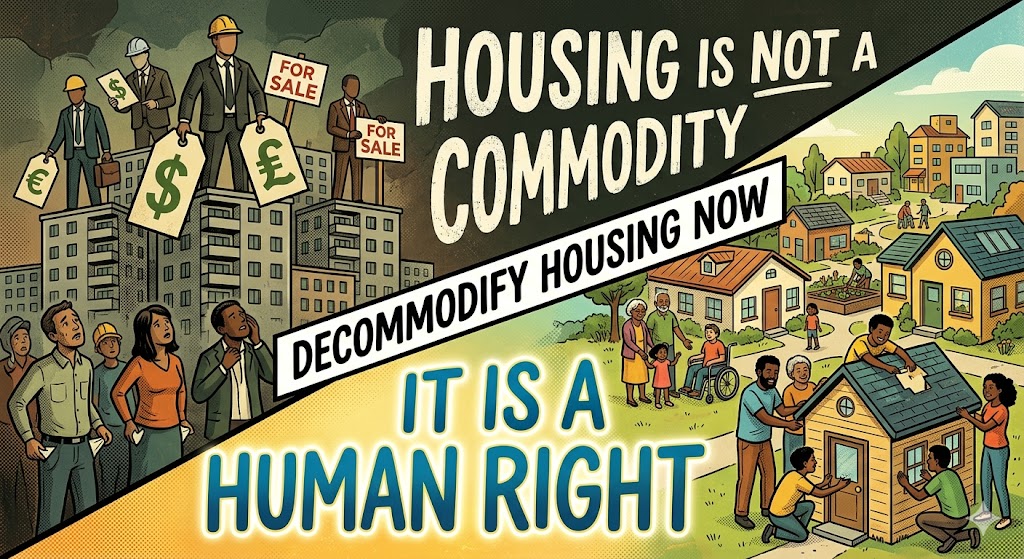
Housing is rapidly becoming one of the defining challenges of the 21st century. From New York to Dhaka, from London to Lagos, millions of people are struggling to find a safe, affordable place to live. What was once considered a basic necessity is increasingly being treated as a commodity to be bought, sold, and speculated upon. Yet the growing global housing crisis is forcing policymakers, urban planners, and community leaders to confront a fundamental question: Is housing merely a market product, or is it a basic human right?
The answer may determine the future of our cities.
For decades, housing policy in many countries has been driven largely by market forces. Rising property values have often been celebrated as indicators of economic growth. Behind those numbers, however, lies a different reality. Working families, immigrants, young professionals, and low-income residents are finding it increasingly difficult to secure stable housing. In many cities, rents have risen far faster than wages, pushing households into financial insecurity and, in some cases, homelessness.
The roots of the crisis extend far beyond economics. Climate change is emerging as one of the most significant drivers of housing instability. Droughts, floods, land degradation, and environmental disasters are forcing people to leave rural communities and migrate to urban centers. As cities absorb these new populations, demand for housing continues to outpace supply, placing enormous pressure on already strained infrastructure and public services.
The result is a growing paradox. Rural areas are losing population and economic vitality, while cities struggle to accommodate expanding populations. Without comprehensive planning, this imbalance threatens both social stability and sustainable development.
Housing, however, is about far more than shelter. A home provides security, dignity, and a sense of belonging. It is where children grow up, where families build their futures, and where communities take shape. Access to clean water, electricity, sanitation, transportation, healthcare, and other essential services is closely tied to housing. A society that fails to provide adequate housing ultimately undermines the social and economic well-being of its people.
For this reason, many experts argue that housing should be viewed in the same way as education and healthcare — as a fundamental right rather than a privilege reserved for those who can afford it.
Addressing the housing crisis will require more than private investment alone. Governments must play a more active role in ensuring affordable and accessible housing for all. Public-private partnerships can help, but they must be guided by policies that prioritize people over speculation. Social housing programs, targeted subsidies, tenant protections, and long-term urban planning are becoming increasingly important components of successful housing strategies around the world.
Equally important is community participation. Too often, housing projects are designed for people without meaningfully consulting those who will ultimately live there. Sustainable solutions emerge when residents are treated not as passive beneficiaries but as active partners in the planning, development, and management process. Development should happen with communities, not simply for them.
This principle has been demonstrated repeatedly across the world. Housing initiatives that empower residents to participate in planning, construction, and decision-making often produce stronger, more resilient communities. When people have a stake in their neighborhoods, they are more likely to invest in their long-term success.
The challenge before policymakers is therefore not simply to build more housing. It is to create communities where people can live with dignity, security, and opportunity.
As global populations continue to grow and climate pressures intensify, the housing debate will only become more urgent. The question is no longer whether governments should act. The question is whether they can act quickly enough.
Housing is not merely a roof over one’s head. It is the foundation upon which families, communities, and nations are built. Recognizing housing as a human right rather than a market commodity may be the first step toward creating more equitable, resilient, and sustainable societies for generations to come.
“This version is written in a newspaper commentary/feature style suitable for publication under your byline and maintains the analytical, human-centered tone often seen in your articles.”