

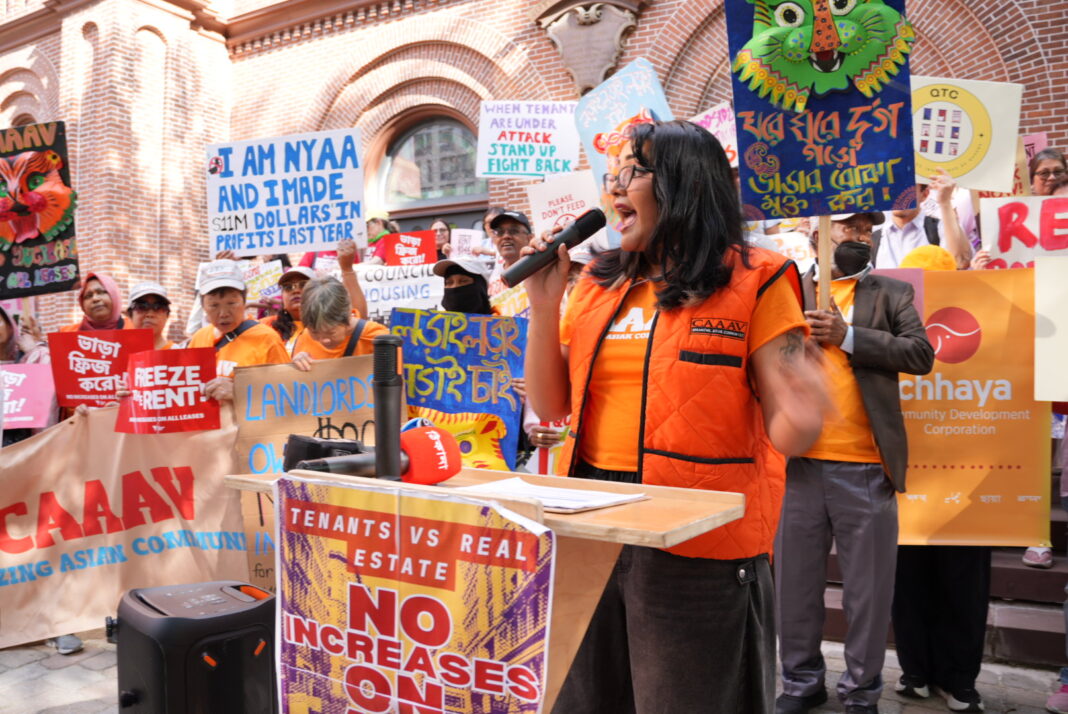
More than 100 tenants and housing advocates gathered Thursday evening outside the Rent Guidelines Board (RGB) public hearing in Queens, demanding a rent freeze for New York City’s 2.4 million rent-stabilized tenants, including more than 440,000 residents in Queens.
Organized by tenant advocacy groups, the rally called on the mayor-appointed Rent Guidelines Board to approve a 0% rent increase for both one-year and two-year leases. Advocates argued that working-class and immigrant families are already struggling with rising living costs, inflation, and growing economic uncertainty.
Holding banners reading “Rent Freeze,” “No Increases on All Leases,” and “Please Don’t Feed the Vultures,” protesters accused what they described as “vulture landlords” of neglecting building maintenance while continuing to seek higher rents.
Speaking at the rally, Parveg Hasan Dolar, a tenant leader with CAAAV in Astoria, emphasized the importance of rent stabilization for immigrant families living in Queens.
“Queens is the borough of immigrants,” Dolar said. “Rent-stabilized housing is one of the main reasons many immigrant families can still afford to live here. At a time when ICE enforcement activities are increasing, stable housing provides a sense of security. Rent increases threaten that stability and place additional pressure on vulnerable communities.”
Tenant organizers argued that rising rents could force many families from their homes at a time when immigrant communities are already facing heightened concerns over immigration enforcement and economic hardship.
Advocates said tenants are dealing with multiple financial pressures, including rising costs for food, healthcare, transportation, and other necessities. They also expressed concern about federal spending cuts affecting programs such as Medicaid and SNAP benefits.
According to organizers, additional rent increases would further strain household budgets and increase the risk of displacement for low- and moderate-income New Yorkers.
The rally comes as the Rent Guidelines Board prepares for its final vote on rent adjustments later this month. During its preliminary vote in May, the RGB approved proposed rent increase ranges of 0% to 2% for one-year leases and 0% to 4% for two-year leases. Tenant advocates noted that it was the first time in the board’s history that a potential rent freeze had been included for both lease categories.
Sumathy Kumar, executive director of the New York State Tenant Bloc, said the board should recognize the financial challenges facing tenants.
“Tenants are experiencing inflation, benefit cuts, and economic uncertainty, while many landlords have seen their revenues increase over recent years,” Kumar said. “A rent freeze is necessary to help families remain in their homes and maintain housing stability.”
Tenant groups point to rising housing costs across New York City as evidence that stronger protections are needed. According to advocates, rents for stabilized apartments increased for four consecutive years under the previous administration, rising by more than 12% overall. During the same period, landlord operating income reportedly increased substantially.
Housing organizations say many rent-stabilized tenants continue to struggle financially, citing data showing that numerous households lack emergency savings and face growing challenges in meeting monthly expenses.
An analysis by the Community Service Society estimated that a citywide rent freeze could save New Yorkers up to $7 billion annually, or roughly $600 per month for affected households. Tenant advocates also point to polling that indicates broad public support for a rent freeze.
Landlord organizations, however, argue that rent increases are necessary to cover rising operating costs, maintenance expenses, insurance premiums, and property taxes. Tenant groups counter that many landlords have failed to adequately reinvest rental income into building repairs and maintenance.
The Rent Guidelines Board is expected to hold additional hearings before casting its final vote later this month. The decision will affect approximately one million rent-stabilized apartments across New York City and millions of residents who depend on them for affordable housing.
For many tenants who rallied in Queens, the message was clear: amid rising costs and growing housing insecurity, they believe this is the moment for New York City to implement its first full rent freeze for all rent-stabilized leases.