
The Bangla Literature Festival 2026 (Bangla Lit Fest), held in the Washington, D.C. metropolitan area, will be remembered as a significant milestone in the history of Bengali language and literary activities in the diaspora. The two-day event, held on May 29 and 30, evolved into much more than a gathering of literature enthusiasts; it became a vibrant celebration of language, culture, creativity, and identity.
Literature lovers traveled from distant states to attend the festival in Virginia. Rather than gathering in traditional Bangladeshi community hubs such as New York or other heavily populated immigrant neighborhoods, participants made the journey purely out of their passion for Bengali literature and culture. Time, travel expenses, and long hours on the road did little to diminish their enthusiasm. Many drove hundreds of miles to be part of the event, describing the experience as a rare and memorable celebration of Bengali language and literary heritage in North America.

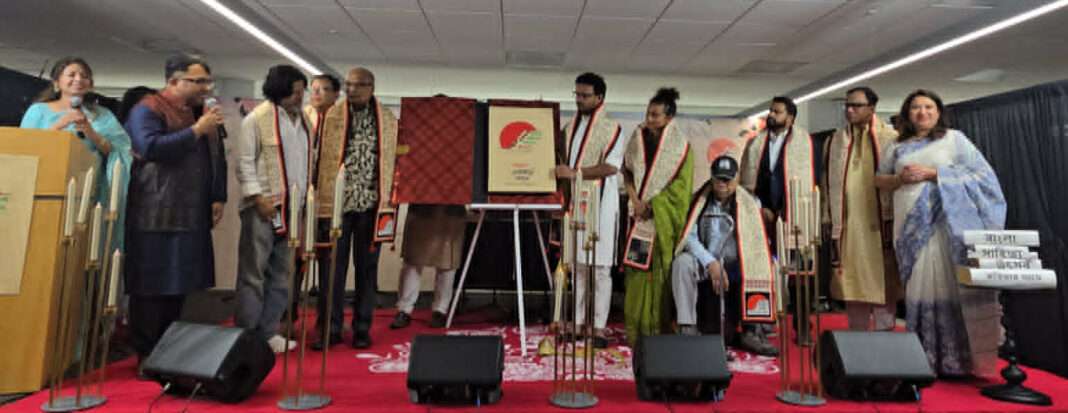
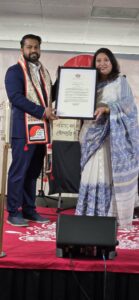
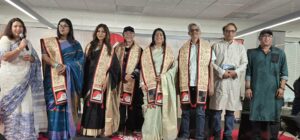
One of the festival’s most notable achievements was its official recognition by the Virginia State Senate. Virginia State Senator Saddam Azlan Salim personally attended the event and presented a Senate resolution and commemorative certificate to festival founder and chief organizer Kavita Dilwar. The recognition represented a proud moment for attendees and underscored the growing importance of Bengali language and literary activities within the broader cultural landscape of the United States.
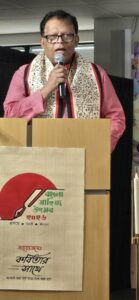
The festival was held at the Washington University of Science and Technology (WUST) Auditorium in Alexandria, Virginia. Rooted in the belief that Bengali language and literature transcend geographic boundaries, the event brought together participants from Bangladesh, the United States, Canada, and other parts of the world.
Poets, novelists, researchers, artists, journalists, publishers, and literary enthusiasts transformed the gathering into a truly international literary conference. Careful planning by organizers, tireless efforts by volunteers, generous support from sponsors, and
enthusiastic participation from attendees contributed to the event’s remarkable success.
A major attraction of the festival was its book fair. Publishers from Bangladesh joined local authors and literary organizations in showcasing their publications. Booths operated by Muktadhara, Batighar, Onnyoprokash, and Prothom Alo North America remained busy throughout the event. The strong interest in Bengali books among the Washington
metropolitan area’s immigrant community reflected an encouraging commitment to preserving literary traditions abroad.
Perhaps one of the festival’s most commendable accomplishments was its ability to remain free from the political divisions that often affect community events. Supporters and critics of various political viewpoints attended side by side, united by a shared appreciation for Bengali literature and culture. Discussions remained focused on literature, history, journalism, language, and cultural identity, creating an inclusive and intellectually stimulating environment.
Tickets for the opening evening’s Meet and Greet session sold out before the event began—an uncommon occurrence for a literary gathering in the diaspora community. The enthusiastic response highlighted the festival’s growing popularity and significance among Bengali-speaking audiences.
The opening evening provided an intimate atmosphere where writers, publishers, readers, and guests from around the world could connect. Participants discussed the festival’s annual literary publication, *Mon Poboner Nao* (“The Boat of the Winds of the Heart”), while book launches, poetry readings, and musical performances added warmth and
excitement to the occasion.
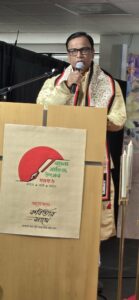
The main festival activities began on May 30 with a formal inauguration featuring a ceremonial lamp-lighting and ribbon-cutting ceremony. Throughout the day, attendees participated in a diverse range of literary, artistic, and cultural programs.
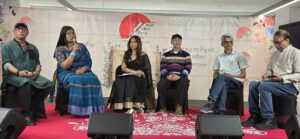
Panel discussions explored topics such as “Bengali Literature Beyond Bengal,” examining the opportunities and challenges of preserving Bengali literary traditions in the diaspora. Another highly praised session, “Authors Ask, Publishers Answer,” created meaningful dialogue between writers and the publishing community.
One of the festival’s most talked-about discussions focused on “Artificial Intelligence and the Future of Literature.” Participants examined the evolving relationship between technology, creativity, and human expression in an increasingly digital world. Another panel, “The Two Streams of the Pen: Literature and Journalism,” explored the intersection between literary writing and media.
Seminars and short-film screenings coordinated by Probal Rashid attracted considerable attention. More than ten newly published books were introduced and discussed, demonstrating the continued vitality and diversity of contemporary Bengali literature.
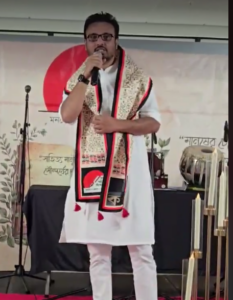
The poetry session, titled “Shobder Dipaboli” (“Festival of Words”), featured poets reciting their own works, creating an emotionally resonant atmosphere that captivated the audience.
Another highlight was the interactive session with renowned novelist Sadat Hossain. During “Readers in Sadat’s Story Room,” attendees engaged directly with the author, discussing his literary journey, creative process, and philosophical outlook.
Beyond literature, the festival showcased dance performances, recitations, dramatic readings, music, painting, and sculpture exhibitions. Book stalls featuring leading publishing houses from Bangladesh offered visitors a rare opportunity to browse and purchase Bengali books, bringing a touch of home to readers living abroad.
The festival concluded with a memorable performance by acclaimed Rabindra Sangeet artist Aditi Mohsin. Her soulful interpretations of Rabindranath Tagore’s songs moved many in the audience and created an emotional bridge between the diaspora and their cultural roots. Between songs, she engaged warmly with attendees, while the audience listened in
near-perfect silence—a testament to both her artistry and the enduring appeal of Bengali music.

Bangla Literature Festival has emerged as an important movement dedicated to preserving Bengali language, literature, and culture abroad. By creating opportunities for writers, readers, and cultural practitioners to connect, the festival has become a vital platform for
literary exchange and cultural continuity.
The strong participation of children and young people was especially encouraging, demonstrating that interest in the Bengali language remains vibrant among younger generations growing up outside Bangladesh.
The success of Bangla Literature Festival 2026 was the result of years of planning, dedication, and hard work by the organizing committee. Under the leadership of Kavita Dilwar, the team demonstrated that with vision, commitment, and community support, it is possible to organize an international-caliber literary festival in the diaspora. Dilwar Hossain
also played a significant behind-the-scenes role, helping oversee numerous aspects of the event’s operations.
The contributions of Washington University of Science and Technology, HouseCalls Home Care, and Love Share BD USA were instrumental in making the festival possible. Engineer Abubakar Hanif attended with colleagues and supporters, providing valuable encouragement and assistance throughout the event.
Although Bangla Literature Festival 2026 has concluded, it leaves behind lasting memories, new friendships, fresh inspiration, and renewed hopes for the future. The recognition from the Virginia State Senate not only elevated the prestige of the festival but also demonstrated that Bengali language and literary activities are increasingly finding a place within mainstream cultural discourse in the United States.
Participants and visitors alike expressed hope that this beacon of Bengali language and culture will continue to shine even brighter in the years ahead. Today, Bangla Literature Festival is more than an event—it is a celebration of cultural identity, collective pride, and a
commitment to passing the Bengali language and literary heritage on to future generations.