

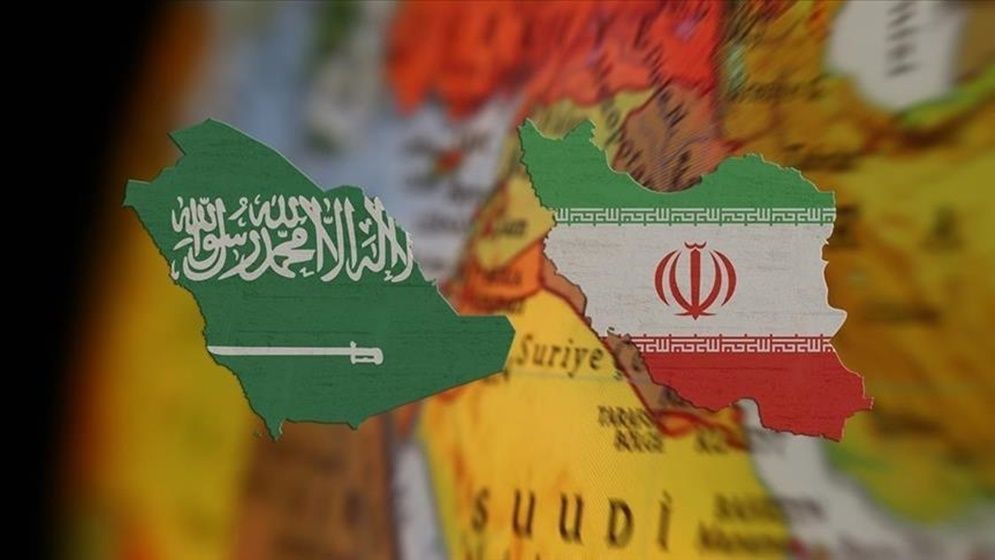
Saudi Arabia is finding it increasingly difficult to stay on the sidelines as tensions between the United States and Iran continue to escalate across the Middle East. Since the joint U.S.-Israeli strikes on Iran on February 28, Riyadh has sought to avoid becoming directly involved in the conflict. However, mounting security threats from multiple directions have forced the kingdom to take a more active role.
In recent days, Saudi Arabia joined U.S. forces in carrying out airstrikes against Iran-backed paramilitary groups in Iraq. Saudi officials said the targeted groups were responsible for recent drone attacks against key facilities inside the kingdom. Despite the military response, Riyadh now faces a difficult choice: continue retaliatory operations or return to its previous strategy of reducing tensions through quiet diplomacy and indirect engagement.
The regional conflict has effectively split the Middle East into two opposing camps. On one side are Iran, the Islamic Revolutionary Guard Corps (IRGC), and allied groups such as Yemen’s Houthis and Iraq’s Popular Mobilization Forces (PMF). On the other are the U.S. Central Command (CENTCOM), Gulf Arab partners, and Jordan. Although Israel remains Washington’s closest regional ally, it has not taken a visible frontline role in the latest phase of the confrontation.
Iran has recently claimed responsibility for missile and drone attacks targeting Jordan, Kuwait, and Bahrain, while also tightening its control over commercial shipping in the Strait of Hormuz. The growing involvement of Iraqi Shiite militias and Yemen’s Houthis has heightened fears that the conflict could evolve into a prolonged regional war unless a broader political settlement is reached.
Saudi Arabia’s security concerns are not new. In 2019, drone attacks on the kingdom’s major oil processing facilities at Abqaiq and Khurais temporarily cut Saudi oil production by roughly half, exposing vulnerabilities in the country’s energy infrastructure. More recently, Iraqi-based armed groups have reportedly launched another drone attack targeting the Abqaiq oil complex.
With shipping through the Strait of Hormuz facing increased risks, Saudi Arabia has relied more heavily on its East-West pipeline to transport crude oil to the Yanbu terminal on the Red Sea. However, after Saudi airstrikes on Sanaa Airport in July in support of Yemen’s internationally recognized government, the Houthis reportedly intensified attacks on Saudi-linked shipping in the Red Sea. That has raised fresh concerns over the security of the Bab el-Mandeb Strait, another critical global shipping route.
Despite leading a military campaign in Yemen for seven years, Saudi Arabia was unable to defeat the Houthis and agreed to a fragile ceasefire in 2022. Now, with pressure mounting from Iran-backed groups in Iraq to the north and renewed Houthi activity in the south, Riyadh faces a complex strategic dilemma.
As Saudi Arabia seeks to diversify its economy and position itself as a global investment and business hub, the kingdom must weigh the risks of deeper military involvement alongside the United States against the potential cost of prolonged regional instability. Whether Riyadh chooses continued military cooperation or renewed diplomatic engagement could have significant implications for both regional security and global energy markets.