

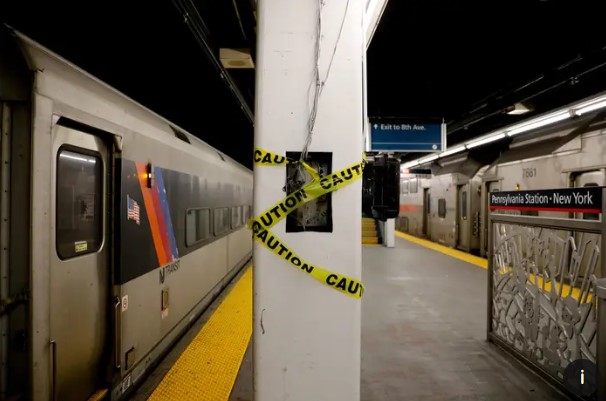
A federally led reconstruction of New York’s Penn Station, championed by President Donald Trump, has revived long-standing ambitions to create a seamlessly integrated transit network connecting New York and New Jersey. For decades, transportation planners have envisioned a unified regional system that would eliminate the need for commuters to navigate multiple agencies, separate ticketing, and disruptive transfers. While historical logistical and political hurdles have previously stalled the unification of the states’ busiest railways, the ongoing $16 billion Gateway project and the upcoming construction of new Hudson River rail tunnels have fundamentally altered the landscape, presenting a rare opportunity to reorganize the entire network.
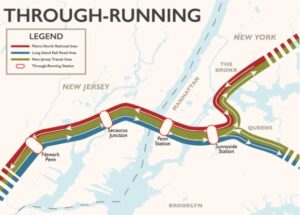
Although public attention has predominantly centered on transforming the station’s notoriously complex layout into a sunlit architectural marvel—potentially including the relocation of Madison Square Garden—transportation experts emphasize a looming capacity crisis. The Gateway project is expected to double cross-state train traffic from 24 to 48 trains per hour by 2035, and Metro-North arrivals are scheduled to begin in 2030 under the MTA’s Penn Access initiative. To address the anticipated bottleneck, Andy Byford, the former New York City Transit president currently spearheading Amtrak’s station redesign, has advocated for a concept known as “through-running.”
This operational model would allow NJ Transit and Long Island Rail Road (LIRR) trains to pass directly through the Midtown hub as part of a regional circuit rather than terminating, reversing, and exiting. By minimizing the time trains spend idling at platforms, the station can accommodate a significantly higher volume of traffic. Byford, who successfully oversaw similar through-running operations on London’s Elizabeth Line, notes that the model is already utilized on a smaller scale by Amtrak. Currently, dozens of NJ Transit and LIRR trains simply drop off passengers and proceed to holding yards in Queens and Manhattan to sit idle until the evening rush, highlighting the inefficiency of the existing setup.
The prospect of a unified system gained formal momentum last year when President Trump shifted oversight of the Penn Station redevelopment from the Metropolitan Transportation Authority to federal control. Alongside tasking Byford and Amtrak with selecting a master builder this month, the administration mandated an 18-month feasibility study on through-running, which is due later this year. However, realizing this unified vision requires navigating substantial obstacles. Creating a cohesive network would demand extensive track and platform re-engineering, standardizing equipment across different railway systems, securing complex political agreements between neighboring states, and renegotiating labor union contracts.
Despite the enthusiasm from transit advocates, significant pushback remains regarding the logistical viability of the project. A recent report by the Regional Plan Association, echoing findings from a 2024 study by the engineering firm WSP, argued that Penn Station’s existing platforms are too narrow to facilitate the rapid boarding required for efficient through-running operations. The WSP study suggested that widening these platforms would necessitate moving foundational pillars supporting Madison Square Garden, leading to over a decade of disruptive construction. While alternative proposals have suggested demolishing a portion of Midtown to expand the station southward, that idea was firmly dismissed by both New York Governor Kathy Hochul and Byford, who continues to contest the claim that through-running is an unattainable goal.