
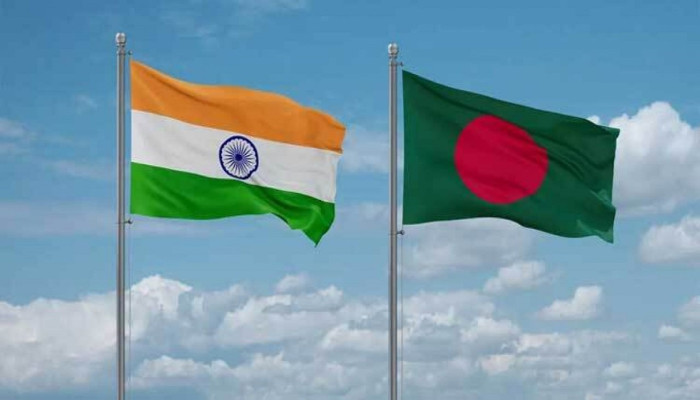
A new geopolitical contest appears to be unfolding around Bangladesh, with India increasingly concerned about the country’s shifting political and strategic alignments.
In Pakistan, speculation continues over a possible accommodation between former Prime Minister Imran Khan and the country’s “deep state.” Against that backdrop, some observers are now hopeful that former Bangladeshi Prime Minister Sheikh Hasina could similarly find a path back to power. Following renewed discussion about her return to Bangladesh, Human Rights Watch (HRW) has also become increasingly vocal about the detention and treatment of politicians and activists associated with the Awami League.
HRW has criticized the Bangladeshi authorities for keeping former Awami League politicians and others in detention for extended periods without trial. According to the organization, police arrested thousands of Awami League leaders, activists, and supporters after Sheikh Hasina was forced to resign following the protests of 2024. HRW says that several hundred people remain in custody without having been formally charged with a crime.
The article portrays HRW’s renewed activity as particularly significant because of the organization’s links to Western funding and international influence. It also suggests that India may be playing a role in the broader diplomatic environment surrounding these developments.
At the same time, Sheikh Hasina’s son, Sajeeb Wazed Joy, has drawn attention to the case of Maulana Ikramul Haque, whom he describes as a senior figure in al-Qaeda in the Indian Subcontinent (AQIS). Joy claimed that Ikramul disappeared after being released on bail and has remained missing for roughly 22 months.
According to Joy’s post, Ikramul allegedly uses several aliases, including Abu Talha, Maulana Sabit, Noor Hossain, Mansur, and Milon. Joy also claimed that he faces at least 10 terrorism-related cases in India. Ikramul was reportedly released on bail from Kashimpur High Security Central Jail on October 10, 2024, during the interim government led by Muhammad Yunus.
Indian media have given considerable attention to Ikramul’s disappearance. Around the same time, a United Nations report reportedly warned that AQIS could attempt to use Bangladesh as a potential base for its activities.
Against this backdrop, former Indian High Commissioner to Bangladesh Veena Sikri has also weighed in on Bangladesh-India relations. Writing in India’s NDTV on August 24 under the headline “A Snub Gone Too Far? The Story of Bangladesh PM’s Stalled India Visit,” Sikri discussed the postponement of Prime Minister Tarique Rahman’s expected August 23–25 visit to India, diplomatic tensions between Dhaka and New Delhi, the issue of Sheikh Hasina’s extradition, and Bangladesh’s energy situation.
Sikri argued that Sheikh Hasina’s return to Bangladesh could potentially be resolved through negotiations between the governments of Bangladesh and India. She also questioned the political direction of the Tarique Rahman-led government, alleging that anti-India sentiment was being deliberately encouraged to build domestic popularity while Bangladesh continues to depend on Indian cooperation in areas where it needs assistance.
The article describes the cancellation of Tarique Rahman’s expected India visit, reportedly after preparations for an official reception had already begun, as an unusual diplomatic development.
Meanwhile, Bangladesh has also witnessed growing pressure from groups calling themselves the “Tawhidi Janata” to stop cultural programs, film screenings, concerts, Baul performances, and other public events. In some places, campaigns have been conducted through social media or mosque meetings, while in others, organizers have reportedly faced attacks and vandalism.
At the same time, the discovery of bombs, explosives, and bomb-making materials in different parts of Bangladesh has renewed discussion about the activities of the Neo-JMB faction of the banned militant organization Jama’atul Mujahideen Bangladesh (JMB). Threats against the Chinese Embassy in Dhaka have added another layer of concern. Following those threats, Chinese Ambassador Yao Wen reportedly met with Bangladeshi police officials and expressed anger during the discussion.
Bangladeshi police officials subsequently met with Japanese Ambassador Saida Shinichi as well, although there was reportedly no indication that the Japanese Embassy had received a similar militant threat.
These developments have unfolded alongside Bangladesh’s interest in the so-called Mecca agreement and possible participation in a broader Muslim strategic grouping.
The article argues that the roots of the latest Bangladesh-India tensions may lie not in New Delhi but in Beijing. After becoming prime minister, Tarique Rahman reportedly made China his first major overseas destination. During the visit, discussions covered infrastructure, investment, the Teesta River, Mongla Port, trade, and connectivity. Before the trip, Dhaka had indicated that it was preparing to sign 15–17 bilateral agreements with China.
For India, the Teesta and Mongla projects are not merely development initiatives. They also have implications for northeastern India’s security, the Bay of Bengal, regional connectivity, and China’s growing strategic presence in the region.
Former Indian diplomat Veena Sikri has reportedly viewed Bangladesh’s growing interest in Chinese-backed projects as a source of concern for New Delhi.
India is also facing a broader strategic challenge. The emerging military relationship among Saudi Arabia, Turkey, and Pakistan has added to New Delhi’s concerns, while U.S. President Donald Trump’s reported positive response to the grouping has further complicated India’s strategic calculations.
Against this backdrop, Bangladesh has become an increasingly important strategic card for India. New Delhi appears keen to prevent Bangladesh from moving too close to China, the United States, or emerging Muslim military alliances.
India has intensified its diplomatic activity. National Security Adviser Ajit Doval has traveled to China, while Foreign Minister S. Jaishankar has met Russian President Vladimir Putin in Moscow. India is also preparing to host the BRICS summit next month and hopes that Chinese President Xi Jinping and Russian President Vladimir Putin will attend. New Delhi is also expected to seek closer engagement with Bangladesh.
The larger message is that Bangladesh has become a crucial part of a wider geopolitical contest involving India, China, Pakistan, Russia, the United States, and emerging Muslim alliances.
The article ultimately suggests that New Delhi may be prepared to offer Dhaka significant incentives in an effort to maintain its influence. The sentiment is reminiscent of Sheikh Hasina’s much-quoted claim that Bangladesh had given India so much that India would remember it for the rest of its life.