

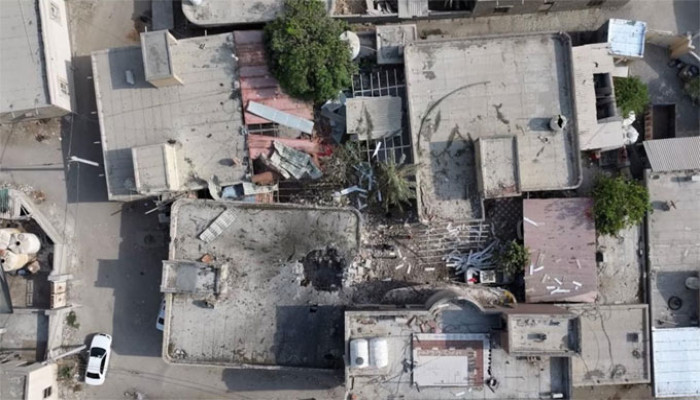
A blast at a wedding ceremony in southern Iran that killed four people and injured at least 68 may have been caused by a direct strike from a US weapon, according to weapons experts who analyzed photographs and videos reviewed by Reuters.
The explosion occurred on Tuesday in the small town of Kuhestak. Four military weapons experts who examined the damage said the pattern of destruction was more consistent with a direct strike than with debris from a weapon hitting a nearby target.
Three of the experts said the weapon was more likely to have been a US munition than an Iranian air-defense missile. However, the exact cause of the blast and the type of weapon involved have not been officially confirmed.
On September 1, US Central Command said American forces had carried out multiple strikes in southern Iran targeting Islamic Revolutionary Guard Corps (IRGC) air-defense systems, radars and communications facilities. Two US officials said a telecommunications tower in the Kuhestak area was also among the targets.
Satellite imagery shows the tower was about **135 meters from the wedding venue**. Iranian media reported that the tower was struck at around 9:30 p.m. local time.
US Vice President JD Vance said on Thursday that the United States was investigating reports of casualties at the wedding. The US military also said it was aware of the incident and was looking into what happened.
According to two human rights monitoring organizations, three wedding guests were among those killed: **43-year-old Kolsoom Mollahi Najhandania, 50-year-old Zarkhatoun Taheri, and four-year-old Amir Mohammad Karimi**. A 16-year-old, Mohammad Mollahi, was reportedly killed while riding a motorcycle near the telecommunications tower.
The incident has renewed concerns over civilian casualties in the ongoing conflict in Iran. On February 28, Iranian authorities said a missile strike on a primary school in the city of Minab had killed more than 175 children and teachers.
The US Defense Department has yet to release the findings of its investigation into that incident. However, an earlier Reuters report said a preliminary internal US military investigation had raised the possibility that American forces were responsible for the strike.
After reviewing photographs and videos from the latest incident, weapons experts said the damage was most likely caused by a direct impact, making it unlikely that debris from the nearby telecommunications tower had caused the destruction.
Reports of the wedding blast began circulating on social media at around 9:30 p.m. local time on September 1. Human rights groups that maintain contact with local residents said witnesses had been pressured by local authorities not to speak to foreign media. Reuters spoke with residents through intermediaries.
In a voice message shared with Reuters, one resident said many people had been attending the wedding and that numerous injured people were being evacuated from the scene after the blast.
Iranian state media, citing telecommunications authorities, said the nearby tower was not a military facility. Instead, it provided mobile, telephone and internet services to residents of Sirik County.
Weapons analyst **Trevor Ball** said blast marks on the roof of the house suggested that a weapon had exploded directly on or immediately above the roof. In his assessment, debris thrown from an attack on the nearby telecommunications tower would not normally cause that type of damage. He said he believed the weapon was American.
Another expert, **Colin**, said the evidence pointed more strongly toward the use of a US-made **500-pound air-delivered munition**. Sebastian Schutte, a researcher at the Oslo-based Peace Research Institute, also said the pattern of damage to the roof was inconsistent with debris or fragments from a strike on the telecommunications tower.
All three experts said they considered it unlikely that the house had been destroyed by an Iranian missile that had been accidentally or mistakenly fired.
Ball identified some fragments shown in Iranian media as components of a **US-made JSOW-type glide bomb**. Reuters, however, could not independently verify whether the fragments came from the weapon used in the attack on the house in Kuhestak.
Funeral prayers and burial ceremonies for the victims were held in Kuhestak on Thursday. A local witness described the situation in Sirik as deeply mournful, saying residents remained shocked by the attack.
During the six-month-long conflict, the United States has repeatedly struck Iranian radar and communications facilities. Washington says the attacks are intended to counter Iranian military threats to commercial vessels and oil tankers operating in the strategically important Strait of Hormuz.