

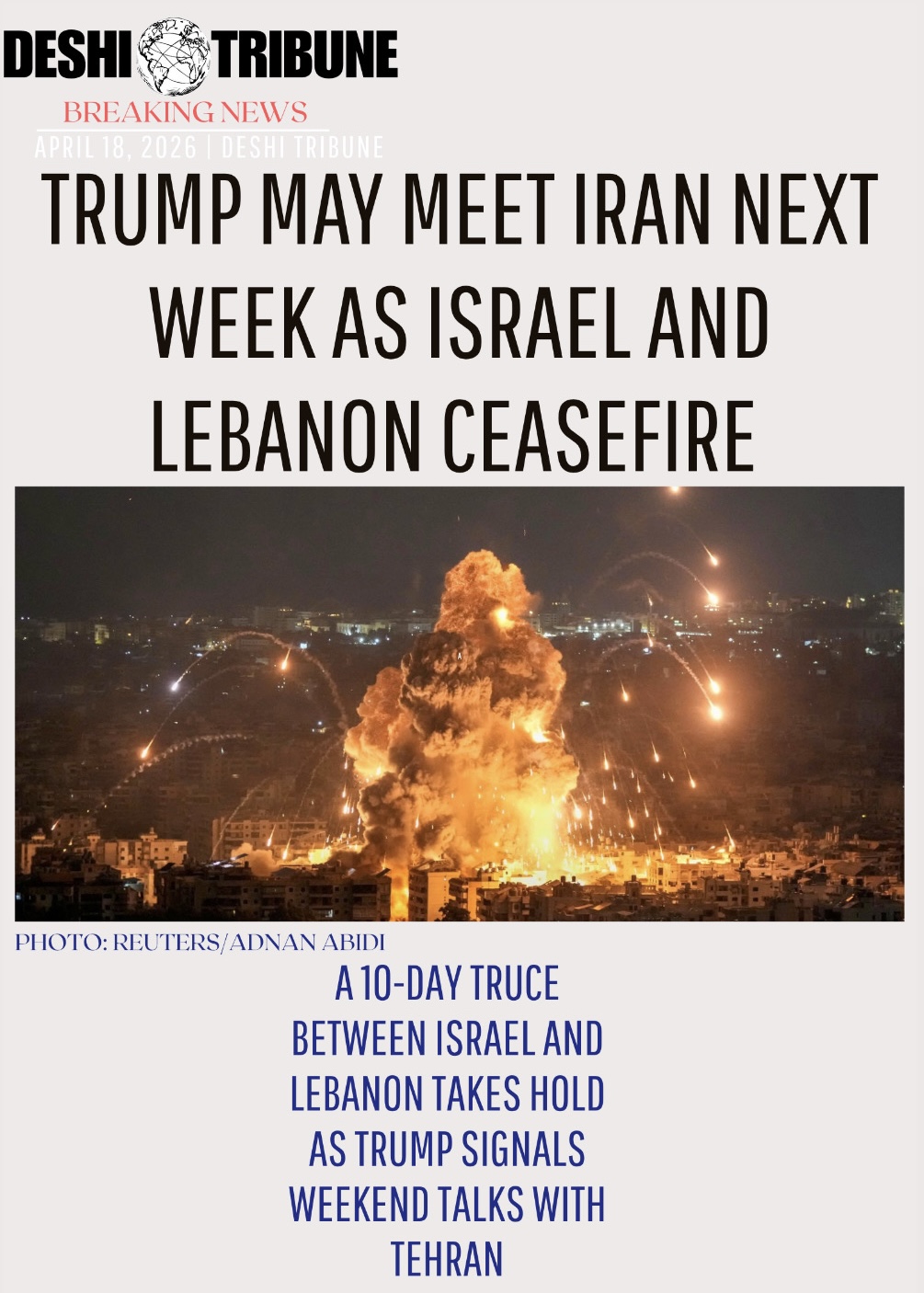
A fragile truce between Israel and Lebanon offers a rare moment of hope amid broader regional tensions
A 10-day ceasefire between Israel and Lebanon came into force early Friday, as U.S. President Donald Trump signaled that a diplomatic breakthrough with Iran could be within reach — potentially drawing one of the most volatile conflicts in recent memory toward a close.
Speaking to reporters outside the White House, Trump said Washington and Tehran were “very close to making a deal,” noting that Iran had proposed refraining from nuclear weapons development for more than two decades. A follow-up round of negotiations, he suggested, could take place as early as this weekend.
“I think we’re very close to making a deal with Iran,” Trump said. “And if that happens, oil goes way down, prices go way down, inflation goes way down — and much more importantly, you won’t have a nuclear holocaust.”
The war, which erupted on February 28 following a joint U.S.-Israeli military offensive against Iran, has claimed thousands of lives andtriggered a historic oil price shock after the closure of the Strait of Hormuz — a critical shipping lane through which roughly one-fifth of the world’s oil and gas supply passes.
Ceasefire Takes Effect — But Violations Reported Celebratory gunfire echoed across Beirut as midnight struck Thursday, marking the start of the truce. However, the Lebanese Army reported early Friday that Israeli forces had violated the terms of the agreement, shelling several villages in southern Lebanon after it took effect. The Israeli military had no immediate response, though its Arabic-language spokesperson stated that troops remained deployed due to what he described as continued Hezbollah activity in the area. Hezbollah, for its part, released a detailed account of its final military operations on Thursday, indicating that its last strike occurred at 11:50 p.m. — ten minutes before the ceasefire deadline. Trump took to social media urging all parties to honor the pause in fighting. “I hope Hezbollah acts nicely and well during this important period of time,” he posted.
Nuclear Compromise Takes Shape Diplomats familiar with last weekend’s negotiations in Islamabad revealed that the two sides remain divided but are narrowing their differences. The United States proposed a 20-year suspension of all Iranian nuclear activity — a notable step back from its longstanding demand for a permanent ban — while Tehran countered with a three-to-five-year halt.
On the issue of highly enriched uranium, Iranian sources said Tehran was considering shipping part of its stockpile out of the country, aconcession it had previously ruled out entirely.Pakistani Army Chief General Asim Munir, acting as a key mediator, arrived in Tehran on Wednesday and was said to have made headway on several contentious issues, though Iranian officials cautioned that the nuclear question remained unresolved.
U.S. Defense Secretary Pete Hegseth warned that American forces stood ready to resume combat operations should talks collapse.Trump said he had spoken with both Israeli Prime Minister BenjaminNetanyahu and Lebanese President Joseph Aoun and planned to invite bothleaders to the White House for further talks within the coming weeks. He added that if a final accord is signed in Islamabad, he may travel therepersonally for the occasion.
Reporting contributed by wire services. Additional context from diplomatic and security sources.