
During my second visit to the United States, one issue left a profound impression on me: the American healthcare system. We generally perceive America as the world’s wealthiest and most advanced nation—leading in technology, education, research, military power, and economics. However, when it comes to the fundamental human right of healthcare, the reality is quite different.
I used to believe that in such an advanced nation, healthcare was a government-guaranteed right, much like in many European countries where the state takes responsibility for public health. In reality, I found a system almost entirely dependent on commercial interests.
In America, most people rely on health insurance. Yet, having insurance does not guarantee access to care. There is a labyrinth of complex rules regarding what is covered, the extent of the costs borne by the insurer, and which specific hospitals or doctors one can visit. Consequently, people often find themselves in distress even when they are “covered.”
I know someone whose wife was diagnosed with cancer. He shared that their insurance didn’t cover the full cost, causing a delay in starting treatment. In a disease like cancer, where timing is everything, such delays can be fatal. It is disheartening and shocking to see such a reality in a developed nation.
My son is currently a PhD student in the U.S. on a scholarship. Every month, over $500 is deducted from his stipend for health insurance. Despite this, he still has to pay out-of-pocket for many services. In America, insurance rarely means “free” care; it often just means “shared” cost.
He told me a story that truly astonished me: a woman fell and broke her leg on the street. When bystanders offered to call an ambulance, she begged them not to. She was terrified of the bill, which can range from several hundred to over a thousand dollars for a single trip. It is a sad state of affairs when people fear the cost of an ambulance more than their own injuries.
A Personal Ordeal
During our stay, my son had a dental appointment at his university’s medical faculty. He had two impacted wisdom teeth that needed extraction to prevent future damage. After the paperwork and insurance checks, he went in for surgery while we waited.
An hour and a half later, he walked out with gauze in his mouth to stem the bleeding. We walked nearly a mile to where the car was parked. After picking up his prescriptions, we headed home.
Back at the house, he tried to eat a few spoonfuls of soft food to take his medicine. Suddenly, he turned to me and said, “Dad, hold me. I think I’m going to faint.” Within seconds, he lost consciousness in my arms. My daughter-in-law and wife panicked. I urged them to call an ambulance.
As my daughter-in-law reached for her phone, my son regained consciousness. He had been out for about two or three minutes. When I told him we should go to the hospital, he immediately refused. “No, don’t call an ambulance,” he insisted. “It will cost a thousand dollars, and I’m feeling better now.” Despite our anxiety, we didn’t call.
Later, he admitted he had fainted once before as a student in Bangladesh after seeing blood from a cycling accident. It was the sight of the bleeding from his dental surgery that had triggered the episode.
What struck me most was the follow-up. I tried calling the hospital to report the fainting spell, but I couldn’t get through to anyone. Looking at his prescriptions, I noticed there were no antibiotics—something almost guaranteed in Bangladesh after such a procedure. He was only given two types of painkillers (one being Paracetamol) and an oral rinse.
The Paradox of Progress
This experience made me realize that even in the world’s most “advanced” country, people live in fear of the cost of emergency care. For a student on a scholarship or a low-income worker, these costs are crippling.
Why is the system like this? Historically, U.S. healthcare evolved as a private system. After WWII, health insurance became tied to employment. While programs like Medicare (for the elderly), Medicaid (for the poor), and the Affordable Care Act (Obamacare) exist, the system remains market-driven.
Statistically, America spends more on healthcare than almost any other nation, yet it lacks the universal coverage seen in the UK’s National Health Service (NHS) or the systems in Canada, France, and Germany.
Admittedly, America is the global leader in medical innovation, drug development, and complex surgeries. People travel from all over the world for specialized treatment there. Furthermore, the U.S. is one of the largest contributors to the World Health Organization (WHO). Yet, its own citizens struggle with basic access.
What Defines a “Developed” Nation?
Is development measured only by GDP, skyscrapers, and technology? Or should it be measured by social security and the peace of mind a citizen feels during a medical crisis?
Bangladesh is a developing nation with many limitations—crowded hospitals and resource shortages are common. But a poor person in Bangladesh can enter a government hospital without the paralyzing fear of a million-taka bill.
The American experience teaches us that economic growth must be balanced with human security. A truly developed nation is one where a citizen doesn’t have to choose between their bank account and their life. Healthcare should be a basic need, not just a business.
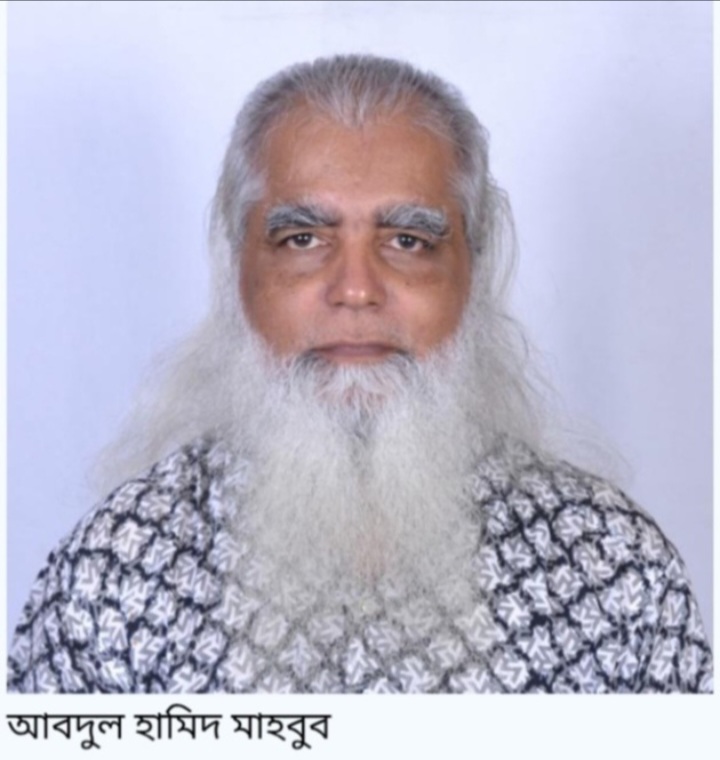
About the Author:Abdul Hamid Mahbub is a senior journalist and children’s author. He is the former President of the Moulvibazar Press Club, Bangladesh.