
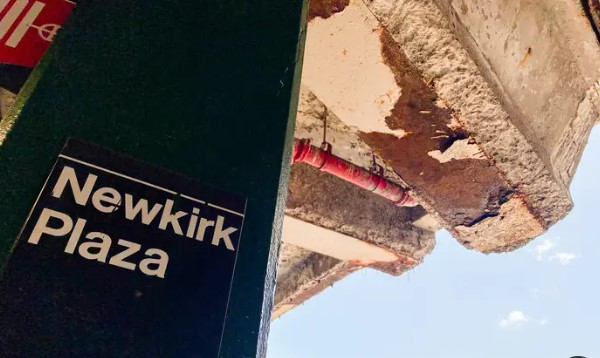
The structural integrity of two century-old bridges spanning a critical Brooklyn subway corridor has come under intense scrutiny as engineering reports reveal a “sorry state” of decay driven by decades of neglect. Built in 1907, the bridges supporting Newkirk and Foster avenues serve as vital conduits over the B and Q subway lines, yet recent assessments describe the steel framework as being riddled with holes, resembling “Swiss cheese.” This deterioration is not merely internal; visible signs of failure, including exposed rusting rebar and small white stalactites formed by years of water seepage, are now clear to the naked eye. The City Department of Transportation (DOT) recently issued an urgent call for consultants to draft a rehabilitation plan, acknowledging that a structural failure at this junction would spell disaster for South Brooklyn’s transit network.
The current crisis highlights a broader infrastructure challenge as New York’s aging assets outlive their intended lifespans. Despite the visible rot, city officials only recently prioritized the project after a protracted decade-long jurisdictional dispute between the MTA and the DOT. According to Jerrell Gray, chair of Brooklyn Community Board 14, the agencies had been at an impasse since 2012 over who was responsible for the maintenance, leaving the bridges to crumble while officials debated paperwork. While the city has finally claimed ownership of the bridges, the MTA retains control over the adjacent Newkirk Plaza. This division of responsibility continues to frustrate local stakeholders who argue that the lack of unified oversight has stifled funding and necessary upgrades for the historic shopping hub.
Restoration efforts are expected to be both costly and technically complex. Engineers have noted that any major repairs must navigate a sensitive sewer line running beneath the tracks, and the task is further complicated by the fact that original blueprints for the Foster Avenue crossing have vanished over the last century. While the DOT has expressed a commitment to “generational upgrades” designed to last another 120 years, actual construction remains years away. For the thousands of daily commuters who have grown accustomed to the “dilapidated” and “rustic” aesthetic of the station, the promise of safety comes with the looming threat of significant service disruptions on two of the borough’s busiest subway lines. Local business owners remain on edge, fearing that the continued decay and future construction will further drive away customers from the historic plaza.