
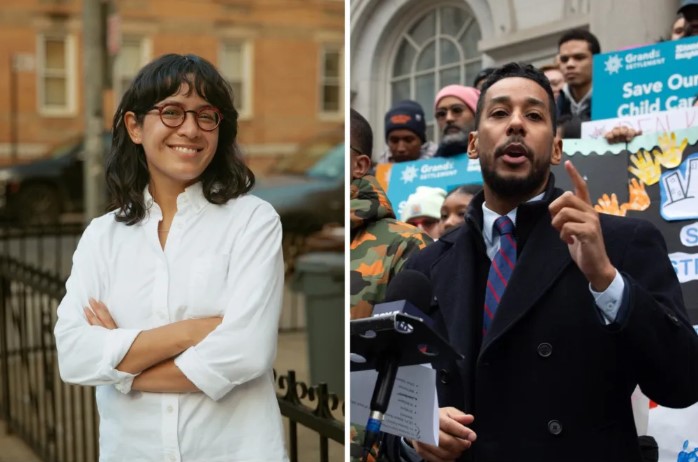
After more than three decades representing New York’s 7th Congressional District, pioneering Democratic Representative Nydia Velázquez is retiring at the end of the year, triggering a fierce battle to fill one of the city’s most historically significant seats. The primary race to succeed Velázquez—popularly known as “La Luchadora”—has rapidly transformed into a high-stakes proxy war between the establishment progressive wing and the insurgent democratic socialist left. Yet, despite the district’s complex ideological divides, the political and economic future of Puerto Rico has emerged as the defining battleground of the election, even though none of the three leading candidates are of Puerto Rican descent. Velázquez has long functioned as the island’s unofficial ambassador in Washington, fighting its colonial status, pushing for self-determination, and advocating for its 3.3 million residents who, despite being U.S. citizens, cannot vote in presidential elections and lack voting representation in Congress.
Looking to cement this legacy, Brooklyn Borough President Antonio Reynoso—Velázquez’s handpicked successor—is rolling out a comprehensive six-page policy platform directly targeting Washington’s paternalistic relationship with the territory. Reynoso, born in Brooklyn to Dominican immigrants, is calling for a binding referendum on the island’s political status, the repeal of century-old maritime trade laws that artificially inflate local prices, and the outright abolition of the controversial federal fiscal oversight board that has micromanaged Puerto Rico’s finances for a decade. Velázquez herself has strongly backed the platform, asserting that Congress effectively “owns” Puerto Rico and holds a moral obligation to fix its deteriorating infrastructure. Reynoso’s chief rival, Assemblymember Claire Valdez of Queens, who is backed by the Democratic Socialists of America (DSA) and Senator Bernie Sanders, has also placed Puerto Rico at the heart of her progressive platform, emphasizing that the island deserves true dignity, reliable energy grids, and parity in federal healthcare funding. Meanwhile, Queens Councilmember Julie Won is preparing her own foreign policy platform to ensure her voice is heard on the matter.
The fact that the race is dominated by candidates of Dominican, Mexican, and Native American heritage reflects a massive demographic shift within the 7th District. Decades of gentrification, shifting migration patterns, and aggressive redistricting have significantly diluted the Puerto Rican voting bloc that originally swept Velázquez into office in 1992, with much of the community now concentrated in parts of the Bronx. While the leading candidates hold virtually identical progressive stances on domestic policies—such as universal healthcare, universal childcare, and abolishing ICE—their fierce competition over Puerto Rico highlights the enduring cultural weight of the diaspora in New York politics. With the district sitting at the heart of a left-wing stronghold, the outcome of this midterm primary will not only determine the ideological direction of New York’s congressional delegation but will also decide who inherits the mantle as Washington’s fiercest advocate for Puerto Rican sovereignty.