
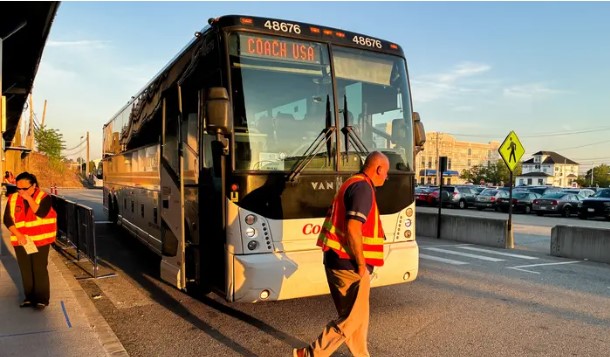
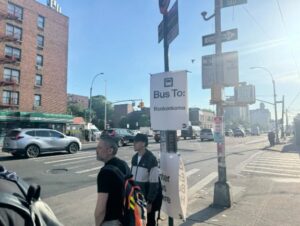
The Long Island Rail Road (LIRR) came to a grinding halt on Monday morning, leaving hundreds of thousands of commuters stranded after late-night contract negotiations between the MTA and a coalition of labor unions collapsed. With 275,000 daily riders forced to find alternatives, New York state and transit officials issued a plea for residents to work from home, but for many—from healthcare workers to corporate executives—staying home was not an option. The MTA scrambled to deploy a limited shuttle bus network connecting six Long Island hubs to Queens subway stations, yet officials admitted the fleet could only handle a tiny fraction of the railroad’s typical capacity. The result was a morning of exhaustion and frustration; at the Hicksville station, elderly commuters reported walking for hours just to reach a shuttle bus, while at the Jamaica-179th Street station in Queens, crowds of anxious travelers stood sweating under the morning sun, waiting for any available transport back to the island.
On the ground, the divide between labor and management remained stark as picket lines formed outside major stations. Workers held banners demanding “equal pay for equal work,” while some passing motorists honked in solidarity, even as the shutdown choked the region’s infrastructure. Striking employees expressed hope for a quick resolution, but the gridlock extended far beyond the tracks and into the streets. Commuters opting to drive faced a “nightmare” scenario, with some leaving home as early as 4:30 a.m. to beat the inevitable congestion at bridges and tunnels. To manage the overflow, City Hall deployed extra traffic agents and police officers at high-traffic subway portals. Meanwhile, those turning to ride-sharing apps like Uber and Lyft were met with surge pricing and extended wait times, compounding the financial and logistical headache for families already struggling with the disruption.
The crisis has rapidly evolved into a political lightning rod, with Republican leaders on Long Island pointing the finger at Governor Kathy Hochul for failing to avert the walkout. Nassau County Executive Bruce Blakeman, a gubernatorial hopeful, slammed the administration for a “complete nuisance” that has crippled local businesses and demanded a temporary suspension of congestion pricing to ease the burden on drivers—a request the Governor dismissed as legally unfeasible. While federal mediators have summoned both sides back to the bargaining table in Manhattan, the tension remains high, especially as union leaders from other transit sectors, such as NICE Bus, urged their members not to assist the MTA in bypassing the strike. For now, Long Island remains in a state of transit limbo, with a weary public caught between a stalled negotiation and a broken commute.