

Ibrahim Chowdhury Khokon: The ongoing war in the Middle East is rapidly turning into a severe humanitarian crisis. The United Nations World Food Programme (WFP) has warned that if the conflict continues, it could become the largest humanitarian disaster since the COVID-19 pandemic. The situation may reach a point where an additional 45 million people fall into acute food insecurity.
UN Secretary-General António Guterres has once again called for an immediate end to the conflict. In a statement issued from New York, he said, “This war must stop.” He stressed that all relevant UN Security Council resolutions—particularly those calling for an end to attacks on Iran’s neighboring countries—must be implemented to prevent the
situation from spiralling out of control.
Speaking to journalists in Geneva, WFP Deputy Executive Director Carl Skau said the conflict is no longer just a regional crisis but a direct blow to global humanitarian operations. “We are truly feeling the impact. The supply chain is on the brink of collapse,” he said, noting that shipping costs have already increased and aid delivery is being delayed, putting relief efforts at serious risk.
Due to rising fuel and transportation costs, WFP’s operational expenses have increased by about 18 percent. Thousands of trucks are now running daily on more expensive fuel, directly affecting aid distribution. In many cases, less food or reduced cash assistance is being provided. WFP has already been forced to cut food rations in Sudan, while in Afghanistan—currently facing one of the world’s worst malnutrition crises—only a fraction of severely malnourished children are receiving assistance.
Concerns are also growing over global fertilizer supplies. Nearly a quarter of the world’s fertilizer passes through the Strait of Hormuz, which now faces the risk of disruption. This could severely impact agricultural production in Africa and Asia. Rising food and fuel prices may push millions of families beyond their ability to afford
necessities.
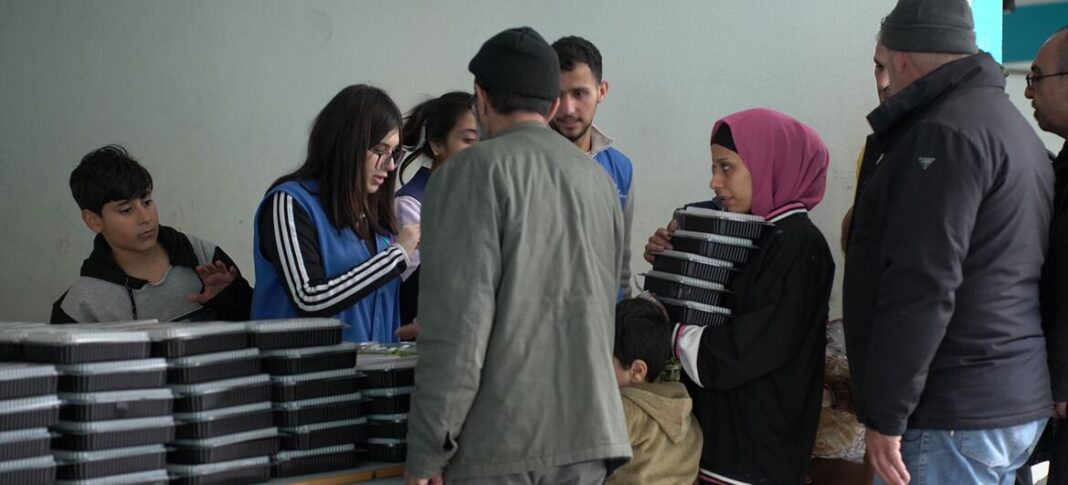
On the ground, the situation is increasingly dire. In Lebanon, ongoing airstrikes and violence have led to massive displacement. According to the United Nations, more than one million people have already been forced from their homes. Only a portion of them are in shelters, while many remain scattered, making it difficult for aid agencies to reach them. The elderly and the physically vulnerable are among the worst
affected.
The situation has worsened further with the collapse of air aid routes. Assistance that once flowed from Gulf countries has largely stopped, creating significant gaps in humanitarian support.
The UN human rights office has also warned that ongoing evacuation orders and patterns of attacks may amount to violations of international humanitarian law. Strikes on densely populated areas, destruction of residential buildings, and civilian casualties have raised serious concerns. Even temporary shelters for displaced people have come under
attack.
All indications point to a crisis that extends far beyond regional borders. What began as a conflict is quickly evolving into a global humanitarian emergency, affecting food security, healthcare systems, and economic stability worldwide.
The pressing question now is how quickly the conflict can be brought to an end. Each passing day of delay pushes more people into hunger, displacement, and deep uncertainty.