
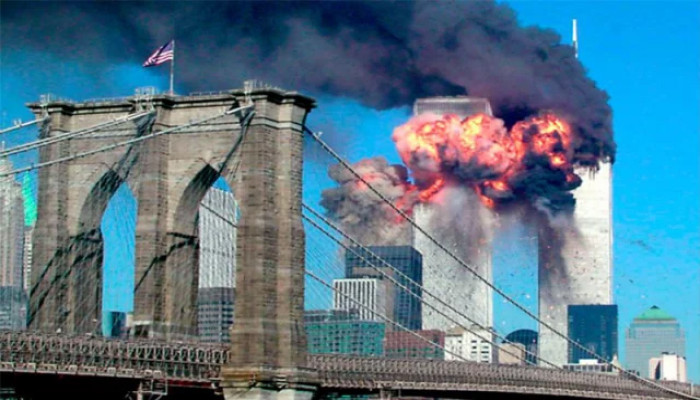
A major breakthrough has been made in the nearly 25-year effort to identify victims of the September 11, 2001, terrorist attacks at New York City’s World Trade Center.
Using an advanced forensic technique known as **Forensic Investigative Genetic Genealogy (FIGG)**, the New York City Office of the Chief Medical Examiner (OCME) has identified a woman who was killed in the attacks. This marks the **first time FIGG technology has been used to identify a 9/11 victim**.
New York City Mayor Zohran Kwame Mamdani and the OCME announced the identification Tuesday. At the family’s request, the woman’s name and other identifying information have not been released.
With the latest identification, authorities have now confirmed the identities of **1,654 of the 2,753 people killed at the World Trade Center**. Nearly 25 years after the attacks, however, the identities of **1,099 victims remain unknown**, meaning roughly 40% of those killed have yet to be identified.
As the 25th anniversary of 9/11 approaches, Mayor Mamdani said New York continues to honor the nearly 3,000 people who lost their lives in the attacks while remaining committed to families who have spent decades waiting for answers about their loved ones.
He said the latest identification demonstrates that when advanced science is combined with sustained commitment, even questions that have remained unresolved for decades can eventually be answered.
The city, he added, will continue working to provide every possible answer to families still waiting and to offer them at least some measure of comfort and peace.
Dr. Graham, the city’s chief medical examiner, said the OCME’s commitment to identifying every World Trade Center victim and returning their identities to their families remains unchanged nearly 25 years later.
According to Graham, FIGG has opened a new avenue in what has been a long and extraordinarily complex identification effort.
### How Does FIGG Work?
**Forensic Investigative Genetic Genealogy** combines specialized DNA analysis with genealogical research to determine the possible identity of an unidentified person.
Investigators first develop a potential identity through genetic and genealogical analysis. The OCME then uses conventional DNA testing and other accepted forensic techniques to formally confirm the identification.
The OCME is working with the New York Police Department’s Investigative Genetic Genealogy Squad on the effort.
Long-preserved remains from the World Trade Center are being reexamined using newer technologies. Investigators are also comparing DNA obtained from relatives of victims with DNA recovered from the remains.
In addition to the latest identification, investigators have discovered new genetic links involving the remains of three other people whose identities had already been confirmed. FIGG technology, DNA samples from family members, and the reexamination of remains preserved since 2001 all played important roles in those cases.
The latest identification is the first new identification of a World Trade Center victim since August 2025.
### The Search Continues
Nearly a quarter-century after the attacks, authorities have not stopped trying to identify the victims whose remains remain unidentified.
New York City officials say they will continue using every effective scientific technology available—both existing and future—to provide answers to families still waiting to learn the fate of their loved ones.
The September 11, 2001, attacks remain one of the deadliest terrorist attacks in U.S. history. Advances in forensic science are now creating new opportunities to resolve some of the tragedy’s longest-standing mysteries.
The latest identification is therefore more than a scientific achievement. For families who have spent 25 years waiting for answers, it represents another sign of hope that even decades-old mysteries may eventually be solved.