
The humanitarian crisis in Gaza’s healthcare system may no longer dominate headlines as it did during the most intense phases of the war. Reports of major military operations inside hospitals and attacks on medical facilities have become less frequent. But that does not mean Gaza’s healthcare system has recovered.
Instead, the crisis is becoming less visible while growing more severe.
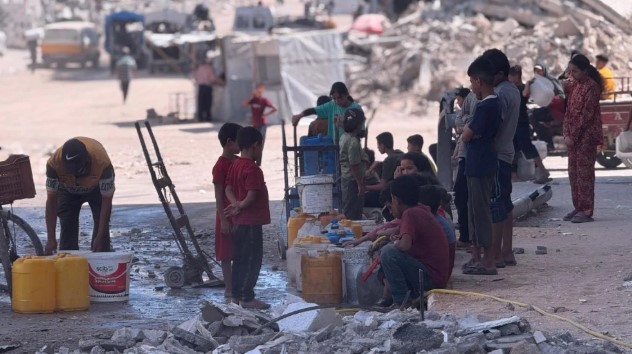
The situation is particularly difficult in displacement camps, where hundreds of thousands of people who have lost their homes are living in extremely poor conditions. Damaged medical infrastructure is unable to provide adequate care, while many sick and injured people struggle to reach the limited number of functioning facilities.
Poor sanitation, shortages of clean drinking water and extreme weather conditions are making the health crisis even worse.
Displaced Families Struggle to Access Care
In Gaza City’s Nasr area, hundreds of displaced people are living in tents around the remains of a destroyed school. The makeshift camp has no permanent organization providing healthcare or other essential services.
During a recent medical outreach program, healthcare workers from a nearby private clinic examined around 150 people free of charge.
Doctors found a wide range of illnesses, including hypertension, diabetes and kidney problems. Infectious diseases such as hepatitis and scabies were also reported. Among children, medical workers encountered chickenpox, gastroenteritis, diarrhea and respiratory infections.
For many residents, however, reaching a doctor remains extremely difficult.
Long distances, transportation costs, exhaustion caused by repeated displacement and harsh weather conditions often force people to postpone treatment—even when they urgently need medical attention.
Treatment Is Often Too Expensive
One displaced man in his 40s illustrates the problem.
He suffered a serious leg injury from shrapnel and needed crutches to walk. He also had high blood pressure. Although a nearby hospital was partially functioning, its services were largely focused on children and cancer patients.
To seek treatment elsewhere, the man would have needed to spend several dollars simply on transportation—an amount that can be unaffordable for families struggling to obtain enough food each day.
As a result, many people delay treatment, go without essential medicines and allow otherwise manageable illnesses to become more serious.
Hospitals Are Still Operating Far Below Capacity
Restoring basic primary healthcare could prevent many of these problems.
Before the war, the UN agency for Palestinian refugees, UNRWA, operated 22 health clinics across Gaza. Only a small number are currently functioning.
The hospital system has also been severely reduced. Of Gaza’s 34 hospitals, only about 19 are operating at least partially. Many wards remain unusable because of damage to buildings and infrastructure.
For a population of roughly two million people, the territory now has only around 2,200 hospital beds available. Before the war, Al-Shifa Hospital alone had about 700 beds.
The shortages extend far beyond beds. Diagnostic laboratories, surgical services, medical equipment and essential medicines remain in short supply. There is also a serious shortage of healthcare workers.
Healthcare Has Become a Privilege
The destruction of medical facilities and the mass displacement of civilians have effectively turned access to healthcare into something that many people can obtain only if they have the money, transportation and physical ability to reach a functioning facility.
Rebuilding hospitals will therefore not be enough.
Gaza urgently needs functioning primary-care centers, mobile medical teams and direct healthcare services inside displacement camps. International organizations and humanitarian agencies could play a crucial role in restoring these basic services.
The biggest challenge now is not simply rebuilding damaged hospitals—it is making sure that healthcare reaches people who can no longer afford, or physically manage, to reach a hospital themselves.