

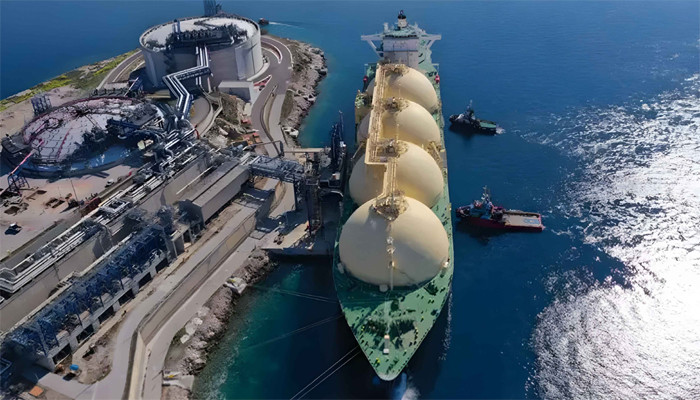
Excelerate Energy’s floating LNG terminal, which was shut down due to a shortage of liquefied natural gas, has resumed operations after three days. An LNG cargo purchased from the spot market from British Petroleum (BP) arrived a day ahead of schedule, allowing the terminal to begin unloading LNG. As a result, gas supplies to Bangladesh’s national grid have started to increase, Petrobangla confirmed on Saturday, August 22.
Three days earlier, the LNG stored at Excelerate’s terminal had run out, forcing the facility to halt gas supplies to the national grid. The disruption affected gas availability for power generation and industrial operations.
Petrobangla had previously said that the next LNG cargo for Excelerate’s terminal was expected to arrive on Sunday, meaning a significant improvement in imported gas supplies was unlikely before then. However, the early arrival of the new cargo has helped ease the situation sooner than expected.
Meanwhile, another LNG cargo for Summit’s terminal arrived on Thursday afternoon, increasing its LNG reserves. However, Petrobangla officials said Summit’s terminal was already operating at its maximum capacity, supplying around 571 million cubic feet of gas per day. Therefore, the newly arrived cargo cannot immediately increase the terminal’s daily gas supply.
On Wednesday afternoon, Excelerate’s terminal ran out of deliverable LNG, bringing its gas supply to the national grid to a halt. Supplies from Summit’s other terminal, however, continued uninterrupted.
According to Petrobangla data, at 6 p.m. on Thursday, LNG-based gas supplies to the national grid stood at around 570 million cubic feet per day. Domestic gas fields supplied another 1.626 billion cubic feet. Combined, total gas supply reached approximately 2.196 billion cubic feet per day.
Bangladesh’s daily gas demand is estimated at around 3.8 billion cubic feet. Based on Thursday evening’s figures, supply met approximately 57.8 percent of total demand, leaving a shortfall of around 1.6 billion cubic feet.
The country’s two floating LNG terminals have a combined daily supply capacity of approximately 1.1 billion cubic feet. On Thursday, however, their combined supply was only about 52 percent of that capacity.