
India is set to host the 2026 BRICS summit. Ahead of the summit, however, New Delhi has made its position clear on one of the bloc’s most widely discussed issues: India has no plans to move away from the US dollar.
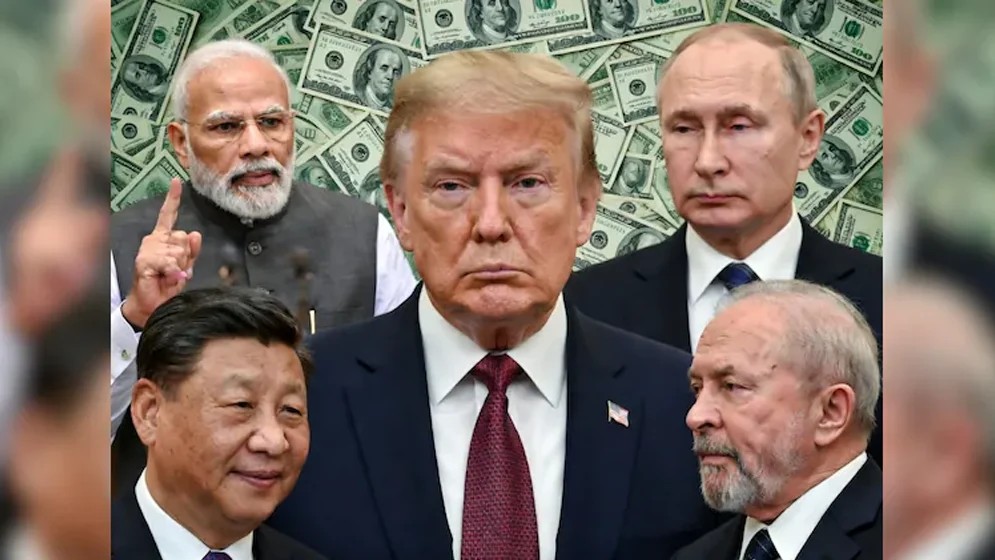
China and Russia have long supported de-dollarization, or reducing dependence on the dollar. Brazilian President Luiz Inácio Lula da Silva has also spoken strongly in favor of the idea. India, the second-largest economy in BRICS, however, continues to take a more cautious approach.
This does not mean India is stepping away from efforts to strengthen financial cooperation within BRICS. Instead, New Delhi is proposing a more limited and technical initiative: linking the central bank digital currencies (CBDCs) of BRICS member states.
The goal would be to make trade and tourism-related transactions within the bloc easier. In other words, India is focusing more on improving payment systems than on revolutionizing the international monetary system.
India will not move away from the dollar
Indian Foreign Minister S. Jaishankar made the country’s position clear at the Carnegie Endowment in Washington, saying that targeting the US dollar is not part of India’s economic, political or strategic policy.
India does have concerns about excessive dependence on the dollar. However, being concerned about dollar dependence is not the same as actively trying to replace the currency.
India’s position has remained broadly consistent over the past two years. Since 2024, BRICS has expanded to include Egypt, Ethiopia, Iran, Saudi Arabia and the United Arab Emirates, making the bloc more diverse. Many of these countries have varying degrees of concern about the dominance of the dollar. India, however, has not directly joined any unified anti-dollar initiative.
Rishi Shah, a partner and head of economic advisory at Grant Thornton Bharat, said that forming a conventional currency union would not make economic or political sense for a diverse group such as BRICS, which lacks the level of political and financial integration seen in a single country.
However, he said, the members could work toward creating a simpler and more unified system for trade payments.
What is India proposing?
The core of India’s proposal is central bank digital currencies, or CBDCs.
Citing a Reuters report, it has been reported that the Reserve Bank of India has recommended placing a formal proposal on the BRICS agenda to establish interoperability among the CBDCs of member countries.
If adopted, the proposal would mark the first time such a plan is formally presented to BRICS leaders.
At the 2025 BRICS summit in Rio de Janeiro, member countries called for greater interoperability among their payment systems. India’s current proposal seeks to turn that broad commitment into a specific technical framework.
The objective is to reduce the cost, time and complexity of cross-border trade and tourism transactions among BRICS members.
However, the initiative faces several challenges. Connecting different CBDC systems would require agreement on common technical standards, governance structures and regulatory policies. Another major question is how to manage imbalances in trade flows between member countries.
India has already faced difficulties in its efforts to expand trade with Russia using the rupee. Large amounts of Indian currency accumulated in Russia, but there were limited opportunities to use the funds. The Reserve Bank of India later allowed Russia to invest some of those holdings in Indian government bonds.
To avoid similar problems, policymakers are also considering bilateral currency-swap agreements and swap lines between central banks. Such arrangements could help prevent countries from accumulating large amounts of currencies that are difficult to use later.
India’s $226 billion trade deficit
India’s huge trade deficit with other BRICS members is emerging as one of the biggest practical challenges in creating a BRICS payment system.
Soham Banerjee, founder of consulting and research firm Quantiv Advisory LLP, said discussions about BRICS payment systems often become focused on de-dollarization. But the real opportunity, he argued, lies in reducing transaction costs, settlement delays and dependence on a limited number of cross-border payment mechanisms.
According to Banerjee, India’s trade deficit with the other BRICS countries has exceeded $226 billion. In other words, India buys significantly more goods and services from other BRICS members than it sells to them.
This trade imbalance presents a major obstacle to settling transactions in local currencies. If one country consistently runs a trade surplus, the other country’s currency can accumulate in large quantities. That creates the problem of where the accumulated currency can be invested or how it can be used.
Therefore, simply switching from dollars to rupees or yuan would not solve the underlying problem. It could merely change the currency in which the imbalance is expressed without addressing the trade imbalance itself.
Experts say an effective BRICS payment system would require a clear framework covering currency-exchange mechanisms, liquidity support, common settlement standards, regulatory rules and the management of accumulated currencies.
For India, a gradual approach therefore appears more practical than pursuing a single alternative to the dollar.
Where the dollar remains efficient, India can continue using it. In suitable trade corridors, local-currency transactions can be expanded, while swap lines can provide liquidity support. CBDC interoperability could then be tested on a limited number of trade routes before being gradually expanded.
What does this mean for the dream of a common BRICS currency?
India’s position places significant limitations on the prospect of a common BRICS currency.
Creating such a currency would require a high degree of political and economic alignment among the bloc’s largest economies. China is interested in developing alternatives to a dollar-centered financial system, while India remains cautious about creating a monetary system that could become heavily influenced by Beijing.
As long as India views the issue primarily as a payment-system challenge rather than a currency-replacement project, the idea of a common BRICS currency is likely to remain more of a topic for discussion than an immediate practical project.
India’s proposal should not necessarily be interpreted as an anti-dollar initiative either. The primary objective of connecting CBDCs would be to make trade settlements faster, cheaper and more efficient.
In other words, the initiative is aimed more at improving payment infrastructure than at challenging the dollar’s status as the world’s dominant reserve currency.
However, without reducing India’s trade deficit, CBDC interoperability alone cannot solve the underlying problem. Digital currencies can reduce the time and cost of transactions, but they cannot correct imbalances in trade flows between countries.
A gradual shift, not a dollar exit
Overall, India’s message at the 2026 BRICS summit is likely to be that developing alternative payment systems is more practical than attempting to replace the US dollar.
India may become the first BRICS member to formally propose connecting the bloc’s digital currencies, but its immediate objective is not to say goodbye to the dollar.
Instead, New Delhi appears focused on building a faster, cheaper and more efficient cross-border payment system that can operate alongside the dollar rather than replacing it.