
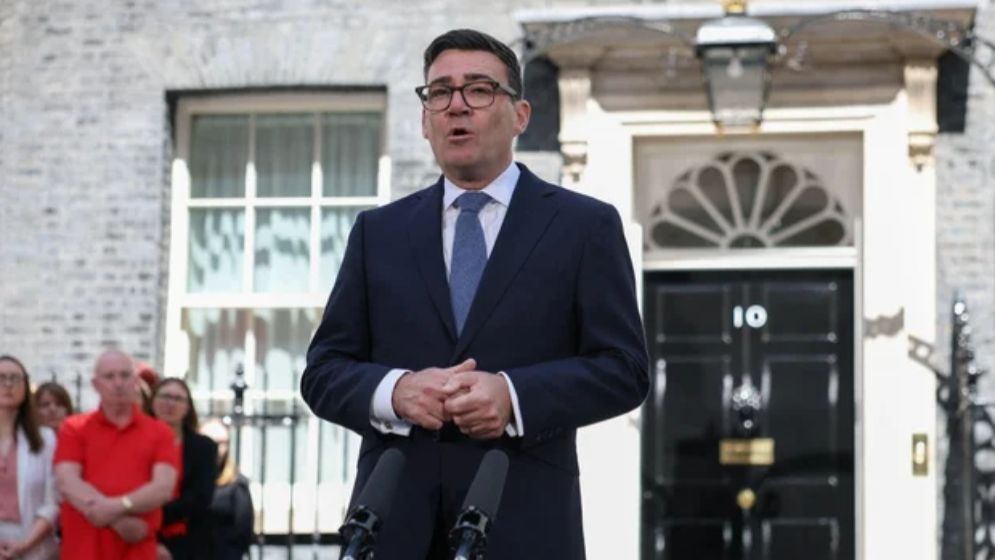
The United Kingdom has witnessed another major political transition, with Andy Burnham replacing Keir Starmer as Prime Minister. Burnham officially formed a new government on Monday (20 July) after being invited by King Charles III at Buckingham Palace.
Burnham becomes Britain’s seventh prime minister in the past decade. Under the UK’s parliamentary system, voters elect Members of Parliament rather than the prime minister directly, allowing a change in national leadership without holding a general election when the governing party selects a new leader.
In his first speech outside 10 Downing Street, Burnham acknowledged that the country’s frequent changes of prime minister had damaged Britain’s international reputation. He said his government would focus on restoring political stability and rebuilding public confidence.
Known as the “King of the North,” the former Mayor of Greater Manchester and experienced former cabinet minister has long advocated for devolving power and investment away from London. He pledged to strengthen regional governments and lower the cost of living by giving local communities greater control over economic development.
However, Burnham faces significant challenges at home and abroad. Maintaining a working relationship with U.S. President Donald Trump is expected to be an early diplomatic test after Trump reportedly described him as an “extreme liberal.”
Domestically, Burnham must also contend with the growing popularity of the right-wing Reform UK and the Green Party, while convincing voters that his administration can deliver lasting change after years of political instability. His immediate challenge will be to improve living standards and demonstrate that his government can provide the stability many Britons have been seeking.