

by Ibrahim Chowdhury Khokon
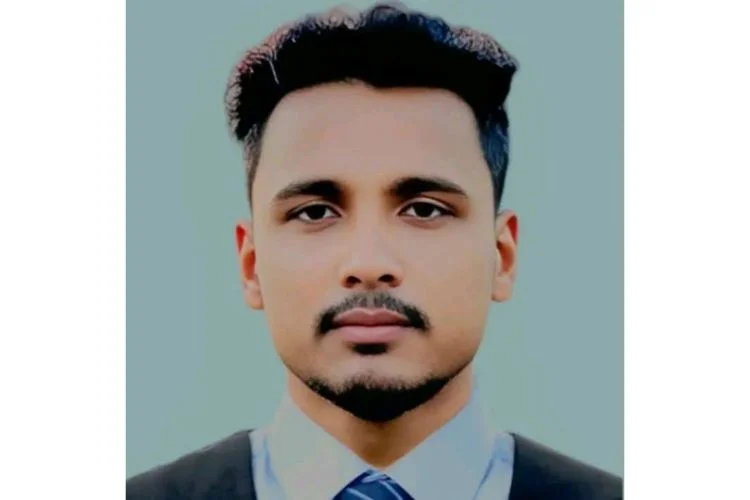
Five lakh taka borrowed at high interest. The family home is mortgaged. Giving up everything, 24-year-old Muhibur Rahman from Chatak set out chasing a dream—the dream of reaching Europe and changing his family’s fate.
But the reality was far more brutal. Trapped in the web of human traffickers, his life came to an end in the dark waters of the Mediterranean Sea.
The traffickers call this journey a “game.” A word that hides death, deception, and the silent grief of countless families.
These networks target poor, hopeful young men. They promise safe passage to Europe, but in truth, the journey is a descent into danger—crossing deserts, enduring torture, being held captive, extorted for more money, and finally risking everything on a deadly sea crossing.
Muhibur took that path. His family waited, burdened with debt, hoping for good news.
Instead, a call came from Maruf Ahmed, a fellow traveller from Jagannathpur in Sunamganj, who had reached Greece. The message was simple and devastating: Muhibur was no more.
He was the eldest son of Nurul Amin from Gaglaur village in Bhatgaon Union.
Among four brothers and two sisters, he was the pillar of the family—the one who carried their hopes. Now, that hope has turned into their deepest sorrow.
Muhibur was not alone.
Many others—young men from Sunamganj, Netrokona, Kishoreganj—were on the same journey. All carried the same dream: Europe.
But the traffickers never tell the whole story.
First, it’s by air or land to Libya or Turkey. Then the desert—on foot, under a burning sun, shivering through cold nights. Water runs out. Some collapse and are left behind in the الرمال.
If caught, they are detained—locked in dark rooms, beaten, and forced to call their families: “Send more money, or you won’t be released.”
Back in Bangladesh, families take on more loans, sinking deeper into debt.
Finally, the survivors reach the Libyan coast—exhausted, half-dead. In front of them lies the Mediterranean.
In the dead of night, they are packed into small rubber boats—50, 60, sometimes 70 people—on vessels meant for barely 20.
The traffickers say, “Once you reach the other side, that’s Europe.” But many never reach the other side.
Days pass on the boat—no food, no water. Bodies burn under the sun. Waves batter the fragile vessel. Slowly, strength fades.
One day, Muhibur closed his eyes. Maruf, sitting beside him, called his name, shook him—there was no response.
In the middle of the sea, under the open sky, with no medical help, a life quietly slipped away.
What followed is even harder to bear.
After hours in the heat, his body began to decompose. The smell spread. The other passengers —struggling to survive themselves—were forced into an unthinkable decision.
They threw Muhibur’s body into the sea.
The soil he was born in, the land he left to save, will never receive him again. No grave. No funeral prayer. Only endless water.
Every year, thousands leave Bangladesh on this route. International estimates suggest that thousands of migrants die in the Mediterranean annually. Over the past decade, tens of thousands have lost their lives in these waters.
Each number is a Muhibur. A family. A mortgaged home. A broken dream.
This trafficking network begins in the villages. Agents know where poverty lives, where unemployment bites, where dreams still survive. They buy those dreams—with lies and half-truths.
They call it a “game.” But in this game, losing means there is no return.
Bangladesh has laws against human trafficking. But enforcement remains weak.
Traffickers are often arrested, then released, only to resume their business. There are allegations that local power brokers—even influential figures—protect these networks.
And the state?
The state is busy calculating.
Remittances sent by migrant workers are a major pillar of the economy. Billions of dollars flow in every year. Migrant workers are called “remittance warriors”—the pride of the
nation.
But those who drown trying to get there?
Where are they counted?
There is no comprehensive policy for them. No visible crackdown strong enough to dismantle trafficking networks. No effective system to bring back the bodies of those who die at sea.
The state counts remittances. It does not count the dead.
Every Eid, every national day, officials declare: “Migrant workers are the backbone of our economy.”
But when that backbone breaks beneath the Mediterranean— The state falls silent.
Muhibur Rahman is dead.
Whether the state even knows—remains uncertain.