
By Deshi Tribune International Desk
The Middle East war has entered its strangest chapter yet — one where the two sides can’t even agree on whether they’re talking to each other.
On one side, President Donald Trump is telling the world that productive conversations have taken place and that a resolution may be within reach. On the other hand, Tehran is flatly denying that any such conversations happened at all. In the middle of this diplomatic fog, a five-day window has opened — and the world is watching to see whether anyone walks through it.
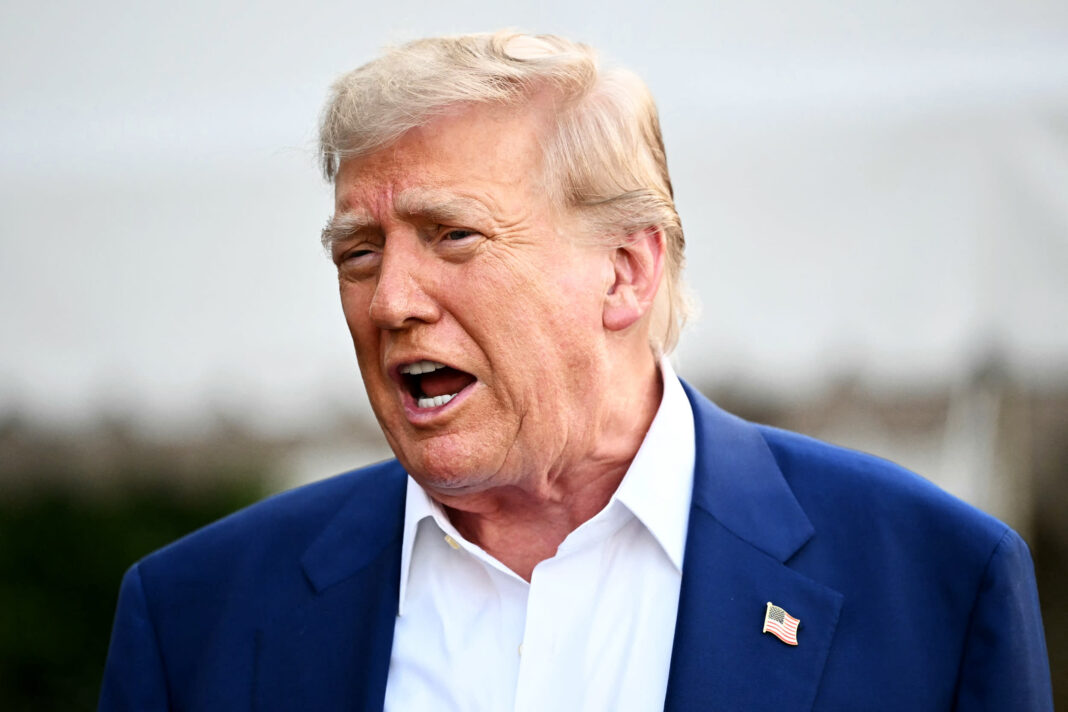
Trump made the announcement Monday morning on his Truth Social platform, writing in his characteristic all-caps style that the United States and Iran had held very good and productive conversations over the past two days about reaching a complete and total resolution to hostilities in the Middle East. On the strength of those talks, he said, he had directed the military to pause all strikes on Iranian power plants and energy infrastructure for five days. Speaking to reporters at a Florida airport later in the day, he added that Iran wants to make a deal and that American envoys had spoken with a respected Iranian leader — though he was careful to clarify it was not Supreme Leader Mojtaba Khamenei.
Iran’s response was swift and unambiguous. Foreign Ministry spokesman Ismail Baghaei told state media that since the war began on February 28, there have been no direct negotiations with American officials — none whatsoever. He did acknowledge that several friendly nations had recently passed along messages conveying Washington’s interest in talks, and that those messages had been answered. But that, Tehran is saying,
is a far cry from the productive conversations Trump described. Iran’s position on the Strait of Hormuz and the conditions for ending the war, Baghaei made clear, has not changed.
What actually happened in the space between those two statements is anyone’s guess. What is known is that diplomats from Egypt, Pakistan, Turkey, and Qatar have all been quietly working the phones — speaking separately with US envoy Steve Witkoff and Iranian Foreign Minister Abbas Araghchi. A source familiar with the mediation efforts told reporters that the process is moving forward, with discussions focused on both a ceasefire and resolving the deeper issues that triggered the conflict.
Meanwhile, on the ground in Lebanon, the situation grew more alarming.
Israeli forces demolished the Qasimiyah Bridge over the Litani River on Monday — a critical crossing that connected southern Lebanon to the restof the country. Lebanese President Joseph Aoun, himself a former military general, did not mince words, calling the strike a prelude to a ground invasion. The destruction of the bridge further isolates already displaced communities and signals that Israel’s campaign in Lebanon is
far from winding down.
The broader economic toll of the war is also coming into sharper focus.
The head of the International Energy Agency warned Monday that the situation is extraordinarily serious — potentially worse than the twin oil crises of the 1970s and the disruption caused by the Ukraine war combined. The Strait of Hormuz remains effectively closed, fuel costs are surging globally, and parts of Asia are already reporting cooking
gas shortages.
Markets, at least, welcomed Trump’s pause announcement. Oil prices dropped more than six percent, and stock markets climbed on the news.
China’s Middle East envoy Zhai Jun offered a more sobering read, telling reporters in Beijing that whoever tied this knot is the one who needs to untie it — a pointed reference to the US-Israeli strikes that launched the war while diplomatic talks were still underway.
The human cost continues to mount. More than two thousand people have been killed across the region since February 28. Iran’s death toll has passed twelve hundred, Lebanon’s has crossed one thousand, and fifteen Israelis have been killed by Iranian strikes. Thirteen American service members have also lost their lives.
Five days. That is how long the window is open. Whether it leads anywhere depends entirely on whether the two sides can first agree on something far more basic — that they are actually speaking to each other at all.