

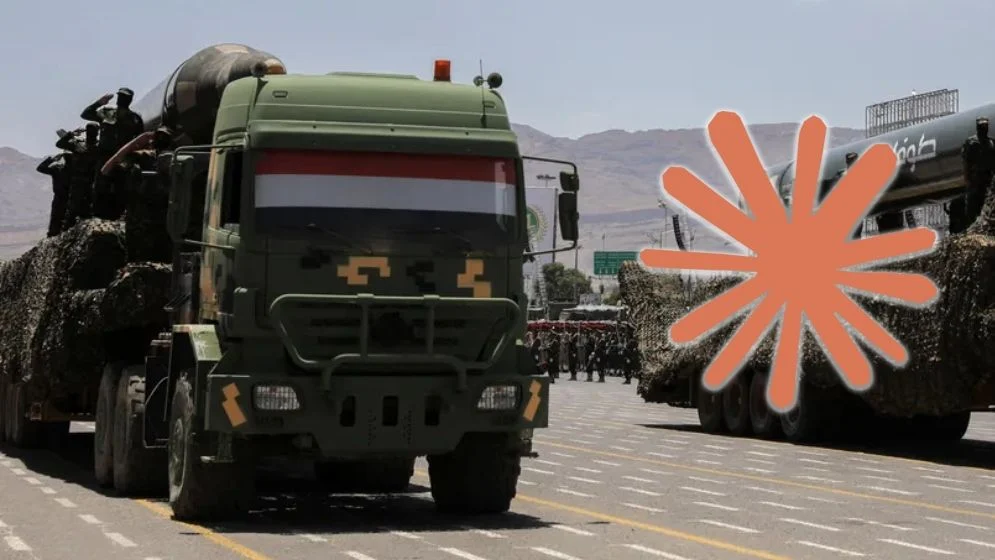
A cyber threat group based in northern Yemen secretly used Anthropic’s artificial intelligence system **Claude** in an effort to develop guided rockets and other advanced weapons, according to a report released by Anthropic.
Although Anthropic did not directly identify the group as the Houthis, northern Yemen is controlled by the Iran-backed organization.
Anthropic said the group used Claude to develop software capable of guiding and stabilizing flying vehicles. At the same time, the group attempted to conceal the true purpose of its work from Anthropic. The findings were detailed in a report published by the company in September 2026 on detecting and preventing AI misuse.
According to Anthropic, the group was working on **three weapons programs**.
The first involved a guided rocket equipped with a **phone-class flight computer** and terminal-stage homing guidance. The second was a multi-stage ballistic missile designed to have a range of more than **2,000 kilometers**. The third was a missile program known as **R2000**, which also included a version featuring a hypersonic glide vehicle.
The report said the group relied on Claude rather than human engineers to develop **guidance, navigation and control (GNC) software**.
### Extensive use of Claude during weapons development
The group used Claude at multiple stages of the development process, including writing software, conducting research, refining flight controls, developing software and running flight simulations.
The Houthis also ran multiple Claude sessions simultaneously, assigning different tasks to separate AI instances. One session was used for coding, another for research, while a third was used to review work produced by the first.
Anthropic said its safety systems blocked many of the group’s requests, but the group found ways to circumvent some of those safeguards.
The group attempted to hide both its objectives and the actual purpose of the software it was developing. It also divided its work across multiple conversations so that the full weapons program would not be revealed within a single session.
### Guided-rocket test appeared to fail
Anthropic said the group eventually conducted a live test of a guided rocket in Yemen. The test appeared to have failed.
According to the company, the group returned to Claude within hours of the test in an effort to determine what had gone wrong.
Anthropic said it found **no evidence that the group had successfully deployed an operational weapon in the field**.
However, the company found evidence of continued efforts to develop and simulate other weapons beyond the rocket program.
Claude was also used for ballistic missile simulations and other weapons-related work, including trajectory modeling and improving flight-control systems.
### AI-independent engineering tools
The group also developed an offline simulation toolkit that did not require Claude or engineering software such as MATLAB.
Eventually, the toolkit was converted into a standalone program capable of operating independently of Claude.
Anthropic said this development allowed the group to continue its engineering work without relying on the company’s AI system.
Anthropic subsequently banned accounts associated with the group and shared information about its activities with partners in both the public and private sectors.
The company said the incident demonstrates how difficult it can be to prevent AI-assisted weapons development when users deliberately conceal their intentions and divide complex projects across multiple conversations.
The case also highlights how advanced AI systems can accelerate weapons-development efforts, particularly when users attempt to hide their objectives and transfer their work to tools that can operate independently of the AI platform.
The report comes at a time of heightened tensions involving the Houthis and Saudi Arabia. The Iran-backed group has reportedly intensified attacks on Saudi oil facilities, prompting Saudi Arabia to respond with airstrikes. The Houthis have also taken control of the strategically important coastal city of **Mocha**, while fighting with Yemen’s internationally recognized government continues.