

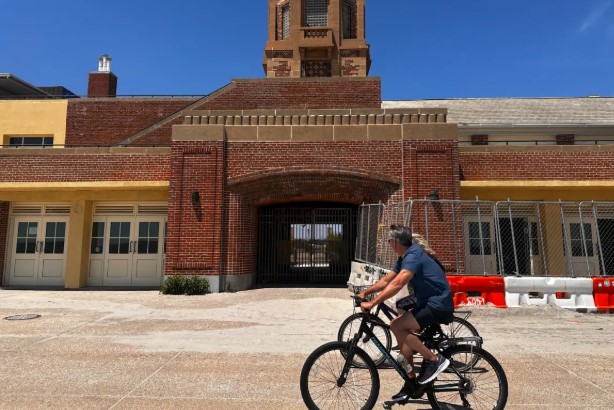
A major redevelopment project at the historic Jacob Riis Bathhouse in New York’s Rockaway Peninsula is drawing growing criticism from community groups, even as developers move closer to opening the long-delayed venue.
The restored Art Deco bathhouse is set to become the Rockaway Ocean Club, a beach club offering paid memberships, along with restaurants, cafés, retail shops and other amenities. Membership plans are expected to include a one-time joining fee and annual dues, while some businesses on the ground floor will remain open to the public.
Although developers had hoped to open parts of the complex by early July, construction delays have pushed the expected launch to early August. Work is still underway, with crews continuing renovations throughout the building.
The bathhouse, originally built in the 1930s, has remained largely unused for decades after falling into disrepair and suffering significant damage during Hurricane Sandy in 2012. Developers say the restoration will preserve the landmark while bringing new life to the property.
However, the project has sparked opposition from several grassroots organizations, which recently launched a boycott campaign against the beach club and its future businesses. The coalition argues that transforming part of the public beachfront into a private membership venue could accelerate gentrification and reduce the area’s accessibility.
Jacob Riis Park—often called the “People’s Beach”—has long served as an important gathering place for New York’s LGBTQ+ community, particularly since the mid-20th century. Critics fear the redevelopment could change the character of the beach and diminish its role as an inclusive public space.
Some activists also questioned whether the project has adequately recognized the area’s cultural significance for queer communities. They have urged officials and developers to prioritize public access and community stewardship over private development.
Project representatives reject claims that the development is intended to exclude any group. They say the venue is designed to welcome a broad range of visitors, including families and LGBTQ+ guests, and emphasize that a majority of the restored building will remain publicly accessible.
Beyond the beach club, the redevelopment plan also includes a boutique hotel expected to open in a later phase of the project.
The development has also faced scrutiny over one of its financial backers after past concerns related to housing management surfaced. Project officials, however, say the investor has no operational role in the beach club’s management.
Despite the controversy, some longtime visitors welcome the restoration of the long-abandoned bathhouse, though many question whether the membership costs will be affordable for local residents.
With construction nearing completion, debate continues over whether the project represents a long-overdue revival of a historic landmark or a shift away from the public character that has defined Jacob Riis Park for generations.