
The Trump administration has lifted restrictions on visa and green card application reviews for foreign doctors. However, the decision applies only to physicians, while thousands of researchers, entrepreneurs, and other professionals continue to face uncertainty.
Last week, the U.S. Citizenship and Immigration Services (USCIS) quietly updated its website without a formal announcement, stating that doctors would no longer be subject to the suspension of visa processing. The Department of Homeland Security later confirmed the change, saying that applications related to physicians would continue to be processed.
The exemption, however, is limited in scope. It applies only to foreign doctors who are already living in the United States. Physicians currently outside the country remain subject to travel restrictions.
The restrictions were first imposed on 19 countries in June 2025 and later expanded to 39 countries in January 2026. Unlike the travel bans introduced during Trump’s first term, the latest measures also affected people already living and working in the United States — an unprecedented step.
The suspension followed an incident involving an Afghan national accused of shooting two National Guard members, which the administration cited as an example of “insufficient vetting.”
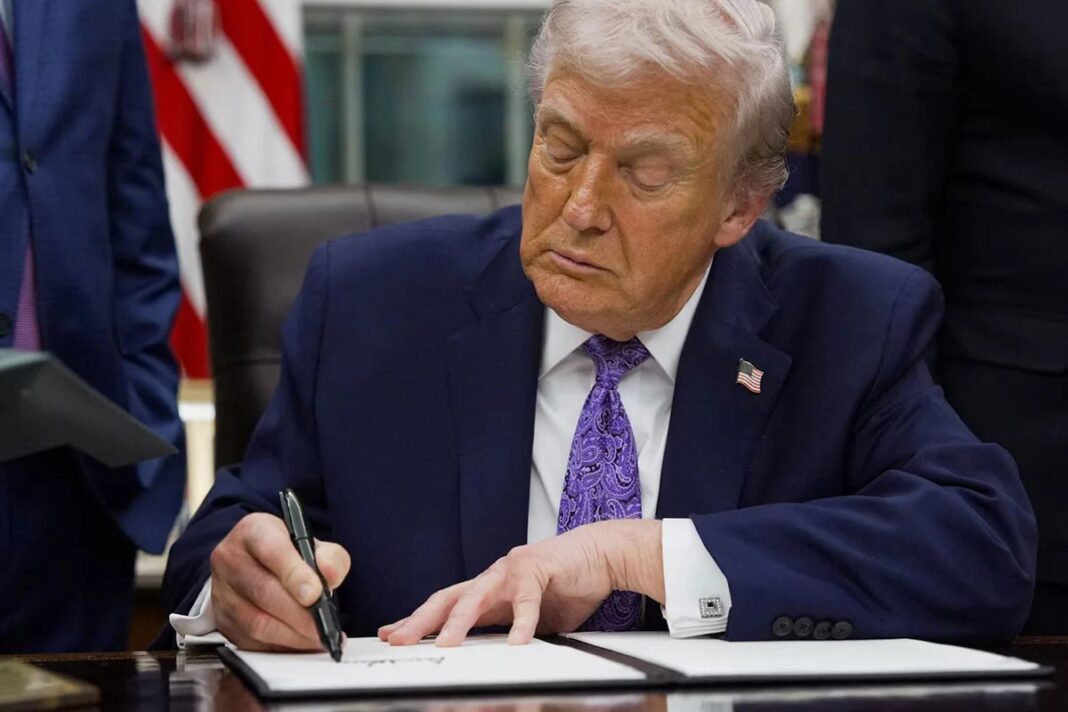
An executive order issued on September 19, 2025, also introduced a $100,000 fee for H-1B visas. However, the order allows the Homeland Security Secretary to waive the fee if deemed to be in the “national interest.” The White House has indicated that doctors and medical residents may qualify for exemptions, although no final decision has been made.
Libyan physician Faisal Algula, who treats nearly 1,000 patients in rural Indiana, had his green card renewal stalled and faced the possibility of his visa expiring by September. Under the new exemption, his application may now move forward. Still, Algula said he remains fearful after hearing reports that many immigrants are being arrested during document renewal interviews.
Iranian doctor Zahra Shokri Varniab came to the United States three years ago to conduct radiology research. Her green card application was frozen and later reviewed only after a court order, but it was ultimately denied. She believes the rejection was retaliation for filing a lawsuit.
Meanwhile, many immigrants working in science and technology remain unable to work because they have not received employment authorization. Kaveh Javanshir, an Iranian PhD student who has spent seven years in the United States, was supposed to begin a laboratory job in January. Without work authorization, the opportunity disappeared. He is currently borrowing money from friends to pay rent. His wife is expected to complete her PhD this summer and may soon face the same problem.
Immigration experts have long argued that foreign doctors disproportionately serve underserved communities. Analysts also warn that the restrictions are making life so difficult for legal immigrants that many may eventually feel forced to leave the country voluntarily.