The International Women’s Media Foundation (IWMF) has released a sweeping new report titled “Safe Together: Building Community Amid Expanding Threats to U.S. Journalists,” painting a stark picture of a profession under siege. In 2025, journalists across the United States continued to work amid intensifying political polarization, eroding public trust in the media, and growing exposure to physical, digital, and psychological dangers that now cut across virtually every beat and assignment type.
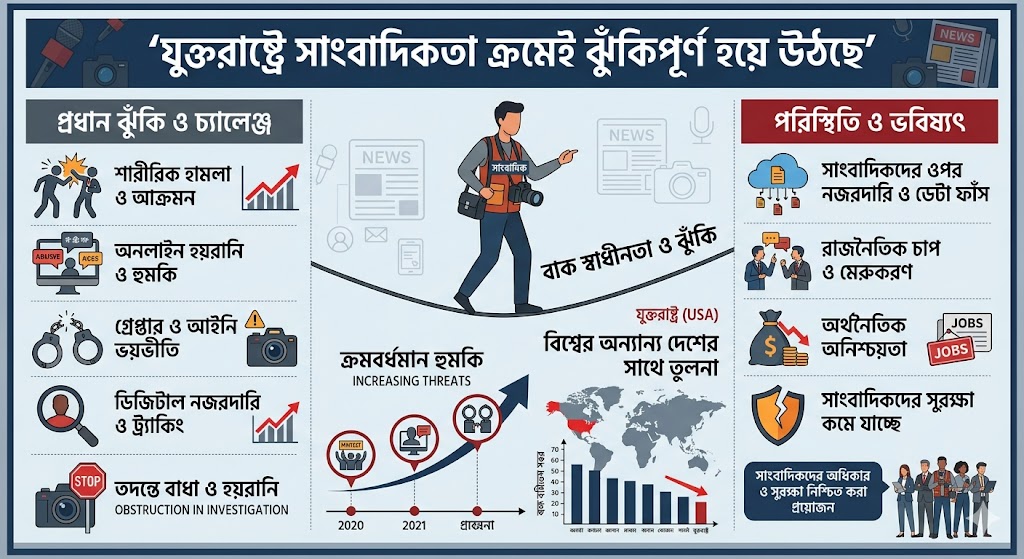
The report draws on a national survey conducted under the IWMF’s Newsroom Safety Across America (NSAA) Initiative, which gathered responses from 163 journalists across six states. The findings are alarming: 30 percent of 161 respondents reported experiencing physical violence while on the job — including harassment, theft or confiscation of equipment, unlawful detention, physical assault, and death threats. An equal proportion — 30 percent of 117 respondents — reported facing digital threats, ranging from online abuse and hacking attempts to identity theft, phishing, device searches, and damage to digital equipment. Meanwhile, 17 percent of 136 respondents said they had encountered legal threats or pressures, such as being coerced to alter or censor their reporting, facing surveillance, having devices confiscated, or being denied access to certain locations.
The survey revealed that journalists covering a wide range of beats — from politics (50%) and culture (46%) to social justice (46%) and education (37%) — face significant dangers in the field. Critically, the report stresses that risk is no longer confined to traditionally “high-danger” beats such as war or crime reporting. One journalist covering a routine local township meeting described facing intense online harassment and threats from a source’s followers after their reporting on a controversial issue drew retaliation. A Los Angeles-based photojournalist noted that protest coverage conditions have deteriorated sharply, saying they now require a tear gas respirator for assignments that would have once seemed unremarkable.
Protest coverage has emerged as a particularly hazardous environment for journalists. Many respondents described being removed from news scenes, beaten, detained, or handcuffed while clearly identified as press. One journalist recounted how federal agents deployed tear gas as a crowd-control measure while the media were attempting to leave the area, exposing the journalist to chemical agents despite their visible press credentials. Others described being targeted by armed protesters at demonstrations, who recorded journalists’ names and outlets and issued veiled warnings about monitoring their coverage. Incidents documented in the report include being shoved or thrown to the ground, having eyeglasses smashed, being struck with batons, and having cameras forcibly taken.
Digital security has grown into one of the most urgent and underaddressed threats facing the profession. The most commonly reported digital experiences were online abuse, the malicious publication of personal data, and attempted hacking. Yet despite the scale of the problem, only 33 percent of 133 respondents said they had access to digital safety tools through their newsroom or clients. Many journalists described feeling isolated when facing online harassment campaigns, with one respondent noting that when cyberattacks occurred, no one at the newsroom came to their defense, leaving individual reporters as the public-facing targets for editorial decisions made above them. The report concludes that journalists need not only technical protections but also visible editorial backing and coordinated institutional responses when harassment campaigns strike.
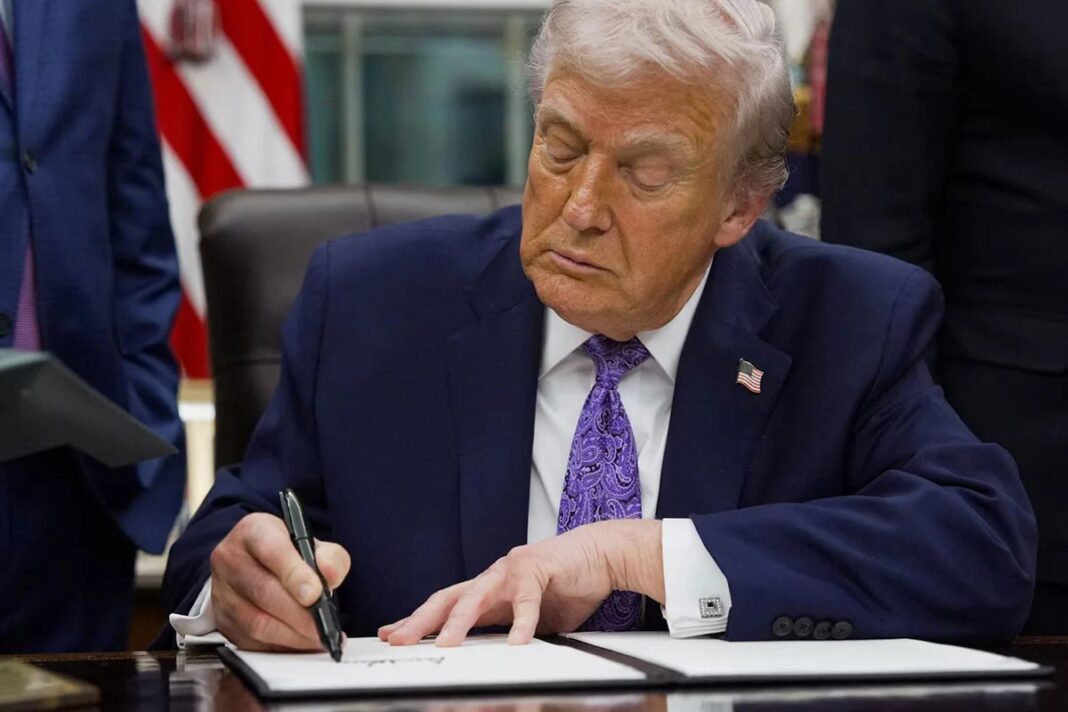
The report dedicates significant attention to the role of the current political administration in shaping the safety climate for journalists, particularly women in the press. It documents a pattern of gendered attacks by President Donald Trump against female reporters, including an incident in November 2025 aboard Air Force One where he told Bloomberg reporter Catherine Lucey to “be quiet” and used a derogatory term, and separately described New York Times reporter Katie Rogers on social media in dismissive and belittling terms. The IWMF argues that such public attacks by senior officials normalize hostility toward the press, undermine journalists’ accountability function, and erode public confidence in a free press. Research cited in the report found that more than 40 percent of women journalists, activists, and human rights defenders have experienced offline threats or attacks directly linked to online abuse, illustrating how targeted rhetoric can translate into real-world danger.
In response to the worsening landscape, the IWMF significantly expanded its support efforts in 2025, training more than 1,579 journalists, providing one-on-one safety consultations to 103 journalists, and delivering emergency funding to 61 individuals facing acute threats. Under the NSAA Initiative, the organization conducted eight one-day safety workshops across six states, reaching 194 journalists from daily newspapers, local radio and television stations, and nonprofit newsrooms. These sessions brought together reporters, photojournalists, and editors — both staff and freelance — to build practical safety skills and strengthen newsroom preparedness from the ground up.
The report concludes with a call to action that frames journalist safety not as an individual responsibility but as an organizational and societal imperative. It argues that clear safety protocols, access to training and protective resources, visible editorial support during harassment incidents, and proactive risk assessments before assignments all play a critical role in enabling journalists to do their work without fear. Strengthening newsroom safety cultures, the IWMF insists, is essential not only for the well-being of individual journalists but for the health of democratic societies that depend on a free and functioning press. Continued investment in coordinated efforts among news organizations, press freedom groups, and policymakers, the report urges, remains indispensable to ensuring that journalists can report freely, safely, and without intimidation.
U.S. Newsrooms Face Expanding Threats as Journalist Safety Crisis Deepens, New Report Warns
Previous article
Next article