
Twenty-one years of waiting. Some had hoped simply to see their longtime leader in person. Others wanted a handshake. Some wanted to spend just a few minutes telling him about years of sacrifice, political struggle, achievements, disappointments, and everything they had kept inside for so long.
This time, the leader they had waited for came to New York not only as chairman of the Bangladesh Nationalist Party (BNP), but also as the Prime Minister of Bangladesh.
Yet after he left, many BNP leaders and activists in the United States were left with a mixture of happiness, disappointment, frustration, and a sense of unfulfilled expectations.
“After 21 years, our leader came to New York. He was so close, yet I could not even see him properly in person. How can I explain how painful that is?” said Mohammad Rahman, a BNP activist who came from Connecticut.
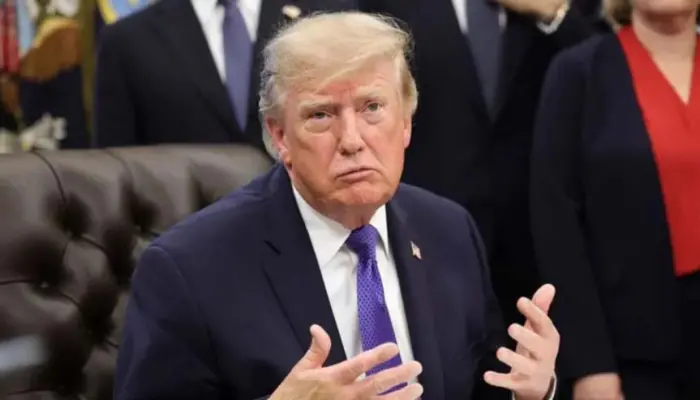
Prime Minister and BNP Chairman Tarique Rahman arrived in New York on Monday, September 21, to attend the 81st session of the United Nations General Assembly. During his visit, he stayed at the Hyatt Grand Central New York in Manhattan. On Thursday, September 24, he delivered his first address to the UN General Assembly as prime minister. Over four busy days, he took part in nearly 30 official engagements, including bilateral meetings, high-level UN events, and meetings with representatives of international organizations.
Tarique Rahman’s previous visit to the United States was in 2005. Naturally, his return to New York after 21 years generated considerable excitement and expectations among BNP leaders and activists across the United States.
Leaders and activists traveled to New York from Jackson Heights, Jamaica, the Bronx, Brooklyn, Queens, and Long Island, as well as from New Jersey, Pennsylvania, Connecticut, Massachusetts, Virginia, Maryland, and other states. Some carried flowers. Others brought banners. Some simply stood with their mobile phones, hoping to capture a photograph of their longtime leader.
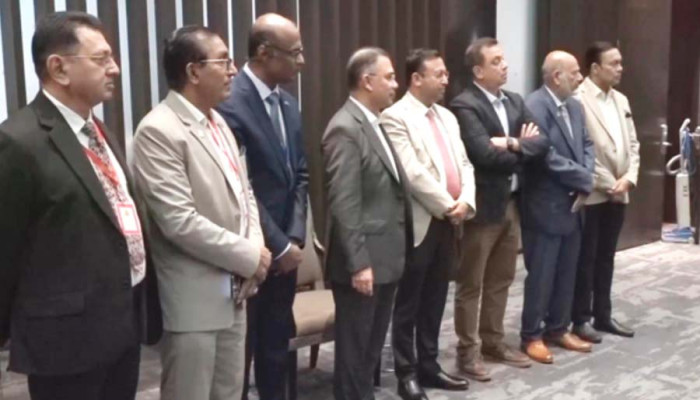
**New York: BNP leaders from the United States meet with Prime Minister Tarique Rahman.**
Many understood that the prime minister’s schedule would be extremely tight. Even so, they hoped that at least some time would be set aside for party leaders and activists. Not everyone felt that expectation was met.
Some people even booked hotel rooms at their own expense at the hotel where Tarique Rahman was staying or at nearby hotels. Their hope was simple: perhaps they would run into him in the lobby, or perhaps they would get a few moments to meet him.
“I did not go there to ask for a party position or any personal benefit,” said Jubo Dal activist Asaduzzaman Rony in New York. “I have supported this man politically for 20 or 21 years. I simply wanted the opportunity to greet him in person. I did not even get that chance.”
Another Jubo Dal leader, who asked not to be named, said, “I came all the way from Maryland just to see him. I paid for my own hotel room. I thought I might get five minutes with him. In the end, I had to return after seeing him only from a distance.”
For some, however, a brief meeting was possible at the last moment.
Before returning to Bangladesh, BNP Chairman and Prime Minister Tarique Rahman shook hands with a small number of party leaders and activists at the hotel on Saturday, September 25. For many, those few seconds became the most memorable moment of the entire trip.
BNP leader Sirajul Islam said, “I shook his hand for a few seconds. There was no opportunity to say anything. But even that meant a lot to me. At the same time, I am disappointed. After so many years, I finally met him, yet I could not even exchange a few words.”
A large number of party leaders and activists acknowledged that Tarique Rahman’s visit was exceptionally busy because he was traveling as prime minister.
Alongside his address to the UN General Assembly, he held meetings with heads of government from different countries, representatives of international organizations, and business leaders. According to official information, he had nearly 30 engagements over four working days.
But some party activists asked whether, after such a long wait, it would have been possible to arrange even a limited meeting or reception for several hundred BNP leaders and activists.
“We understand that he is now the prime minister of the country. There are security concerns, protocol requirements, and state responsibilities,” said a senior BNP leader in the United States who requested anonymity. “But he is also our party chairman. Couldn’t an hour have been set aside for those who have worked politically for him here for 15 or 20 years?”
Another leader said, “We did not want to waste his time. We were not asking for an event with thousands of people. Whether it was 50 or 100 people, there could have been a representative meeting.”
During the visit, a small number of BNP leaders from the United States were able to meet Tarique Rahman. However, the process through which some people gained access became a subject of discussion among others.
Syed Muradul Hasan Reza, one of the founders and a former convenor of the US Jubo Dal, said, “We have no objection to those who were able to meet him. Our question is why there was no party-organized arrangement. If there had been one, people would not have had to rely on personal connections.”
He added, “The biggest topic of discussion among activists now is who got to meet him and who did not. If there had been a formal party meeting, this discomfort could have been avoided.”
Reza attributed the situation to what he described as failures of the US BNP leadership. He also linked the absence of a formal US BNP committee to what he called leadership failures, saying that the broader organizational problems contributed to activists being unable to meet the party chairman.
Several BNP leaders waiting outside the Grand Hyatt hotel expressed their frustration more strongly.
Abdul, a BNP activist from New Jersey, said, “We felt that a circle had formed around the prime minister that made it difficult for ordinary party activists to reach him. We do not know whose decision this was. But keeping Tarique Rahman away from his activists would not be good for the party.”
Raich Uddin made a similar complaint. “After becoming head of government, it seems the party chairman is being kept excessively out of public view. We do not know whether this is for security reasons or someone else’s decision. But if party activists begin to feel that there is an effort to distance him from them, that needs to be taken seriously.”
On Monday, September 21, the day Tarique Rahman arrived in New York, large numbers of BNP leaders and activists gathered at JFK Airport and outside the Hyatt Grand Central to welcome him. As his motorcade passed, they waved flags and held posters while chanting slogans. The prime minister responded by waving to the crowd.
On the day of his departure, party leaders and activists again gathered along the road outside JFK Airport to see him off.
For many, those few seconds of seeing him wave from a distance were their only opportunity to see Tarique Rahman after 21 years.
“I saw him through the car window. He waved at us,” said BNP supporter Anwar Hossain. “Tears came to my eyes. I was happy, but at the same time I felt that even though he had come so close, he was still so far away.”
In conversations with *Thikana*, the leaders and activists expressed frustration, but what came through most strongly was a sense of hurt and disappointment. Many said their expectations of Tarique Rahman were different from those they would have of any other political leader.
His long absence from active politics in Bangladesh, years abroad, and return to New York as prime minister following Bangladesh’s political changes made the visit an especially emotional occasion for many of his supporters.