

On the evening of June 25, East Harlem’s El Museo del Barrio Theatre was packed beyond capacity. Hundreds of tenants—workers, immigrants, seniors, and young New Yorkers—filled the auditorium, many holding signs reading “Freeze the Rent” and “Roll Back the Rent.”
Shortly after 7 p.m., the New York City Rent Guidelines Board (RGB) cast its decisive vote.
The result: 7–1 in favour of a zero-per-cent rent increase for both one-year and two-year rent-stabilised leases.
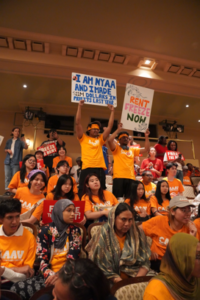
The announcement sparked an emotional celebration. The audience erupted in cheers. Some cried, others embraced, and many poured into the streets, chanting and celebrating what housing advocates called a historic victory.
For the first time in New York City’s 157-year history of rent regulation, the Rent Guidelines Board approved a complete rent freeze on both one-year and two-year lease renewals.
The decision applies to approximately one million rent-stabilized apartments, home to nearly 2.4 million New Yorkers. It will take effect for leases beginning between October 1, 2026, and September 30, 2027. These apartments generally include buildings with six or more units built before 1974, as well as certain properties receiving government subsidies or tax incentives.
The vote did not happen overnight. Tenant organizations have spent years building momentum against rising housing costs. Last year, tenant groups successfully challenged the political influence of New York’s powerful real estate lobby, making affordable housing one of the defining issues of the mayoral election.
The coalition Tenant Bloc collected more than 20,000 pledges from renters who promised to support only candidates committed to freezing rents. That movement helped propel Zohran Mamdani to the mayor’s office after nearly one million New Yorkers backed candidates advocating stronger tenant protections.
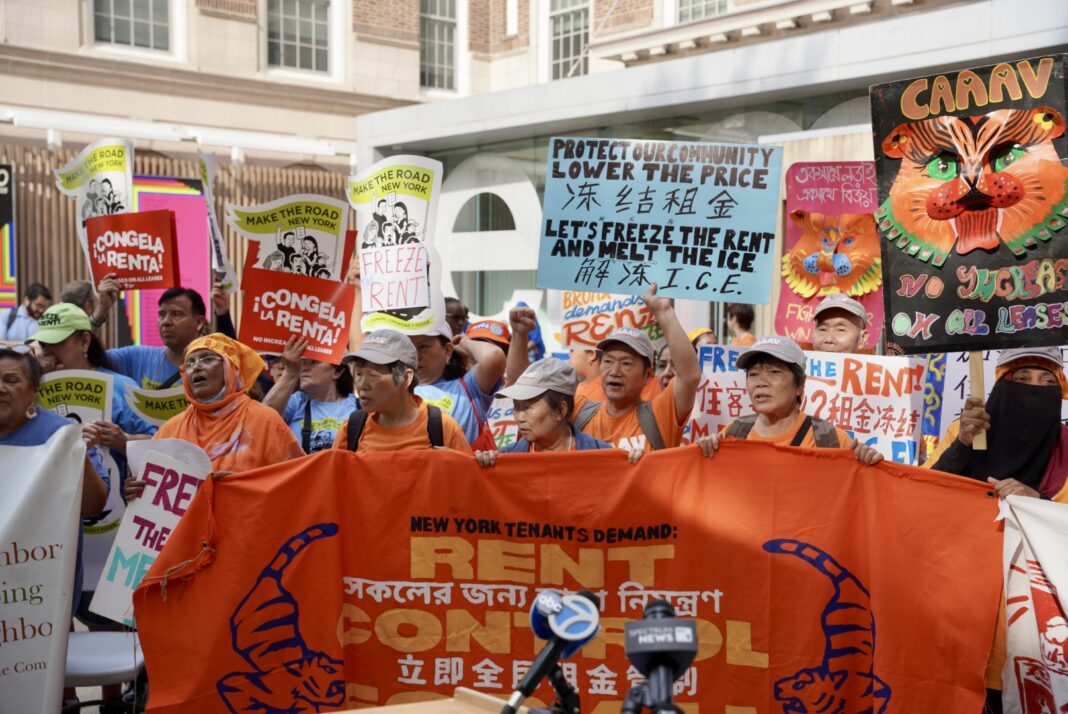
Following Thursday night’s vote, Mayor Mamdani described the decision as “a historic victory for New York City’s tenants.” Linda Lin, a tenant leader with CAAAV Chinatown, said: “Working-class and immigrant tenants have made history. The Rent Guidelines Board listened to the majority of New Yorkers. The rent freeze begins here—and we’re ready to win even more.”
The day was far from routine. Just hours before the meeting, landlord representative Christina Smith resigned from the Rent Guidelines Board, arguing that the board was ignoring its own economic data because “politics would not accept the conclusions the evidence pointed to.” Despite her resignation, the board retained a quorum.
Another landlord representative, Maxim Wynn, delivered a lengthy speech amid loud chants and interruptions from tenant activists. Then, in a surprising turn, Wynn voted in favour of the rent freeze himself, helping produce the overwhelming 7–1 outcome.
Under former Mayor Eric Adams, rents for stabilized apartments increased by a combined 12 percent over four years, while net operating income for rent-stabilized building owners reportedly rose by approximately 30 percent. During the same period, complaints about inadequate heat and hot water also increased.
Supporters argued that freezing rents is essential at a time when many New Yorkers are already struggling with inflation, rising living costs, federal reductions in programs such as SNAP, Medicaid, childcare assistance, and housing support, as well as continuing immigration enforcement actions.
According to the Community Service Society, the rent freeze could save New York tenants up to $7 billion over four years, amounting to hundreds of dollars annually for many households.
Landlord organizations condemned the decision. James Whelan, president of the Real Estate Board of New York (REBNY), argued that the board had ignored its own financial evidence.
“This decision may be politically popular,” Whelan said, “but it will worsen New York City’s housing crisis and place additional financial pressure on aging rent-stabilized buildings.”
Kenny Burgos, CEO of the New York Apartment Association, warned that the rent freeze would ultimately reduce the quality of housing available to millions of residents.
Property owner Humberto Lopez said the decision could force building owners to lay off staff, including superintendents.
However, an independent analysis by the New York City Independent Budget Office paints a different picture, concluding that significant financial distress is concentrated among only a relatively small number of landlords, while most owners remain financially stable.
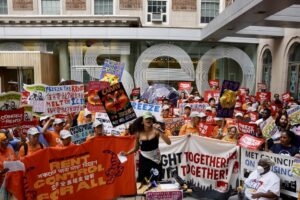
As the vote concluded, hundreds of tenants gathered outside the theater, singing, dancing, and celebrating. Joanne Grell of CASA Bronx called the victory larger than the rent freeze itself.
“Our biggest achievement isn’t just freezing rents for two years,” she said. “It’s proving the power of organized tenants. When people discover their collective strength, they begin asking what else is possible. For years, we were told tenants couldn’t change the system. Tonight we proved otherwise.”
Tenant Rick Ortiz struggled to describe the moment. “I don’t even know how to put it into words,” he said. “We’ve wanted this for years, but it never happened. Tonight, it finally did.”
Sumathi Kumar, Executive Director of Tenant Bloc, described the vote as a lesson for tenant movements everywhere.
“Organized tenants made history tonight. Cities and states across the country can learn from this: when renters organize together, they can win.”
For decades, New York’s housing policy has largely reflected the influence of the city’s powerful real estate industry. Thursday night’s vote suggests that the balance of power may be shifting.
For approximately 2.4 million New Yorkers—workers, immigrants, retirees, and low-income families—the decision means at least two years without rent increases, offering welcome financial relief during a period of continued economic uncertainty.
For landlords, however, the fight is far from over. Many have already signalled that legal and political battles over the rent freeze are likely to continue.