

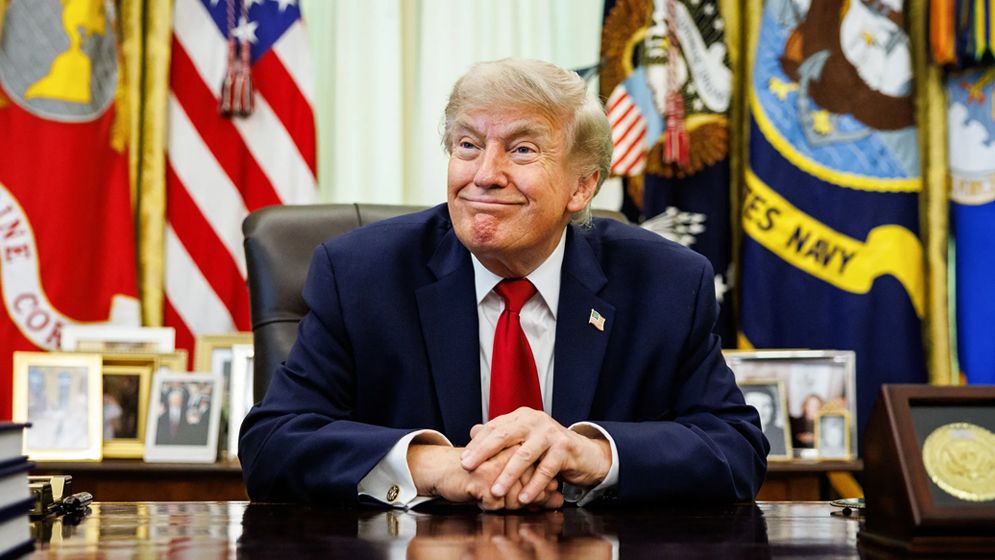
US President Donald Trump has announced a new strategy aimed at forcing Iran into submission through unprecedented economic pressure rather than direct military action.
In a post on his Truth Social platform last Wednesday, Trump said the United States would impose sweeping economic measures to isolate Iran. He also warned countries and businesses that continue to trade with Tehran that they could face severe consequences.
However, questions remain over how long Trump can maintain such a tough position if the political and economic costs continue to rise. His administration has previously issued strong threats and taken tough measures against Iran, only to later soften or reverse its position. As a result, the durability of the latest economic campaign remains uncertain.
Trump’s new approach comes after attempts to force Iran into submission through military strikes and efforts to bring Tehran back to nuclear negotiations failed to produce the desired outcome. The strategy is therefore being viewed by some analysts as an attempt to maintain political leverage while avoiding further military escalation.
Trump’s administration has reportedly told political allies that all negotiations with Iran have been suspended. At the same time, Washington is pursuing a long-term economic campaign designed to pressure Tehran into making major concessions.
Trump said financial institutions, businesses, airports and government agencies that provide Iran with any form of assistance would face tough action. He also called for the immediate closure of channels used for oil smuggling, financial transfers, shell companies and fraudulent vessel registrations.
Daniel Citrinowicz, a former head of Iran-related research and analysis at Israel Defense Intelligence, warned that it would be a serious mistake to assume Iran will collapse under economic pressure. He said Tehran has shown no signs of changing its strategy of exerting pressure on international markets and argued that economic damage alone is unlikely to fundamentally alter Iran’s political position.
Analysts say Trump’s strategy will require long-term strategic patience. They also argue that Washington would need a major diplomatic effort involving allies in Europe, Asia and the Middle East to disrupt revenue streams linked to Iran’s Islamic Revolutionary Guard Corps (IRGC) and its regional proxy networks.
Ludovic Hood, a senior fellow at the Hudson Institute, believes Treasury Secretary Scott Bessent should increase economic pressure on China, one of the largest buyers of Iranian oil. However, there is uncertainty over whether Washington would take such a step ahead of a possible visit to the United States by Chinese President Xi Jinping in September.
Meanwhile, Iran could have an opportunity to retaliate politically, particularly with the US midterm elections approaching. Tehran could potentially attempt to drive up global oil prices by launching new drone or missile attacks on commercial shipping in the Strait of Hormuz, thereby increasing economic pressure on American voters.
Democratic Representative James Walkinshaw said he was not interested in a prolonged economic war in which ordinary Americans ultimately pay the price at gas stations and grocery stores.
The central question now is whether Trump’s new economic campaign will produce a meaningful solution—or whether mounting political and economic pressure will eventually force him to reconsider his position.
*Source: CNN*