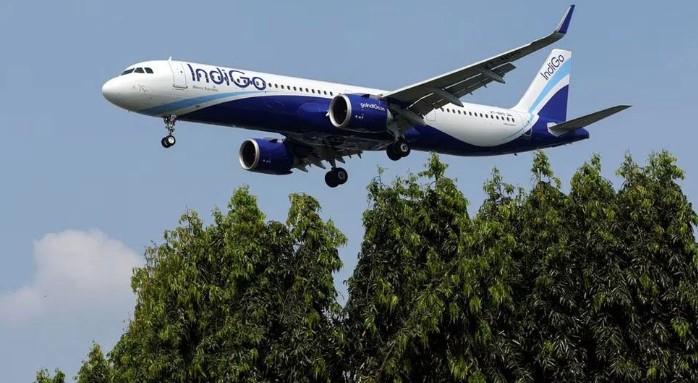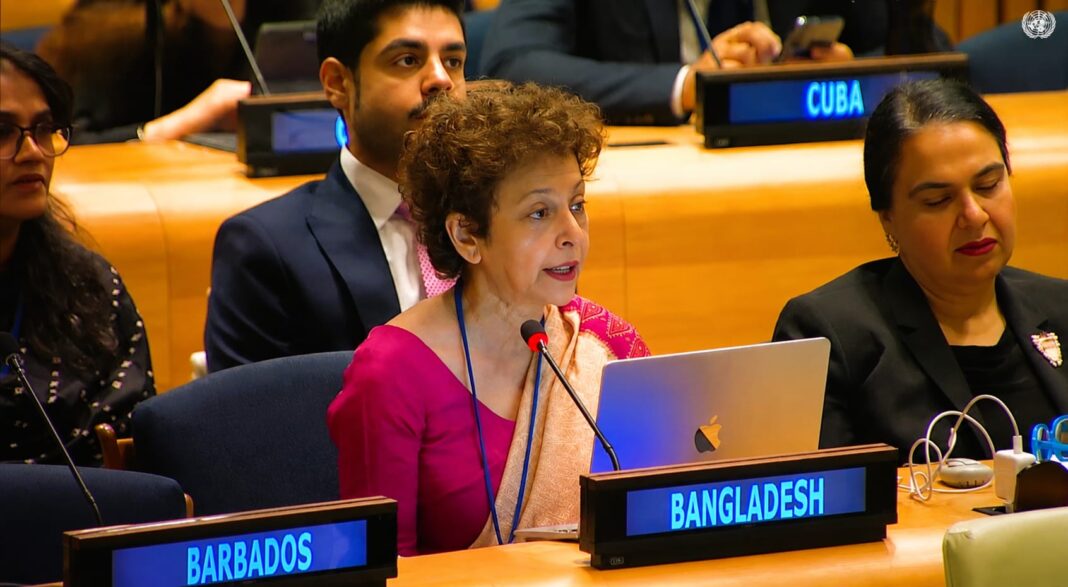

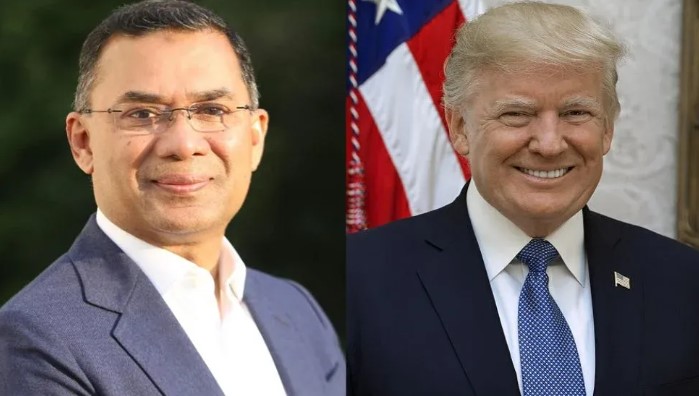
US President Donald Trump’s recent letter to Bangladesh’s Prime Minister Tarique Rahman may be brief, but its timing and language carry significance beyond the country’s decision to purchase Boeing aircraft.
While the immediate purpose of the letter was to acknowledge Bangladesh’s Boeing purchase, Trump’s message could also be interpreted as a sign of Washington’s interest in strengthening ties with Dhaka at a time of shifting geopolitical dynamics in South Asia.
More Than a Thank-You Note
In the letter, Trump thanked Tarique Rahman for Bangladesh’s decision to purchase Boeing aircraft and wrote, “Boeing will not let you down, and I will not forget.” He also conveyed his greetings to the people of Bangladesh and expressed optimism about the country’s future under Rahman’s leadership.
Perhaps the most notable part of the message was Trump’s expression of interest in meeting Bangladesh’s prime minister in the near future. Such a statement from a US president can carry political significance, potentially pointing to an intention for closer high-level engagement between the two countries.
The Boeing Deal Could Open Wider Economic Opportunities
A major aircraft purchase involves far more than the initial transaction. Long-term relationships can develop around aircraft maintenance, spare parts, pilot and technical training, and other forms of technological cooperation.
For Bangladesh, cooperation with Boeing could potentially extend into maintenance, repair and overhaul (MRO), workforce development, aerospace technology and supply-chain participation.
The long-term value of the agreement, therefore, may depend on whether the aircraft purchase becomes part of a broader economic and technological partnership between Bangladesh and the United States.
Bangladesh’s Position Between Washington and Beijing
The wider geopolitical context is equally important.
Bangladesh occupies a strategically significant position along the Bay of Bengal and the broader Indian Ocean region. Its ports, maritime routes, trade connections and potential role in regional security have increased its importance within the wider Indo-Pacific framework.
At the same time, Bangladesh has maintained extensive economic ties with China, particularly in infrastructure, trade and investment. Chinese involvement has played an important role in several major development and connectivity projects.
The United States, meanwhile, remains an important export market for Bangladesh and a potential partner in technology, investment, trade and defense cooperation.
This leaves Dhaka with a delicate challenge: maintaining productive relations with both major powers without allowing its foreign policy to become overly dependent on either one.
A Strategy of Multi-Alignment
Against this backdrop, Bangladesh’s engagement with both China and the United States can be viewed through the lens of multi-alignment.
Rather than choosing one side, such a strategy seeks to work with multiple powers based on national interests while expanding the country’s own economic and strategic capabilities.
As competition between Washington and Beijing intensifies, countries with important geographic positions can gain greater strategic relevance. The United States has an interest in preventing any single power from becoming overwhelmingly dominant in the Indo-Pacific, while China has its own reasons for deepening economic and strategic engagement with countries such as Bangladesh.
For Dhaka, the most advantageous approach may therefore be to cooperate with both sides without becoming a formal strategic extension of either.
What Trump’s Message Could Signal
Trump’s personal thanks for the Boeing purchase, his positive comments about Bangladesh’s leadership and his expressed interest in meeting Tarique Rahman could indicate Washington’s desire to deepen engagement with Dhaka.
However, interpreting the letter as a direct US attempt to push Bangladesh away from China would be excessive.
A more measured interpretation is that Bangladesh’s growing importance is attracting greater attention from both major powers. That gives Dhaka additional diplomatic space—but also places greater responsibility on its policymakers.
Potential Areas for a Broader US-Bangladesh Partnership
A future high-level meeting between Trump and Rahman could potentially go beyond Boeing and address issues such as:
Trade and investment
Technology and skills development
Defense cooperation
Bay of Bengal maritime security
The Rohingya crisis
Regional stability
Supply-chain and aerospace cooperation
Bangladesh would benefit from approaching such engagement with a clearly defined economic and strategic agenda rather than treating it merely as a ceremonial diplomatic meeting.
The same principle applies to defense cooperation. Bangladesh can potentially engage with the United States, China, Europe and other suppliers while maintaining competitive procurement and avoiding excessive dependence on any single country.
Institutional Ties Matter More Than Personal Relations
Personal rapport between political leaders can help accelerate diplomatic engagement, but it cannot be the sole foundation of a long-term bilateral relationship.
US administrations can change. For that reason, Bangladesh would need to deepen institutional links across Washington—including with Congress, the State Department, businesses and strategic-policy circles.
Similarly, its relationship with China would benefit from stronger institutional foundations across trade, industry, technology, education and infrastructure.
Such diversification could make bilateral relationships more resilient to changes in leadership or the international environment.
The Bigger Picture
Trump’s letter should not, by itself, be viewed as evidence of a fundamental shift in Bangladesh’s foreign policy. Nor does the Boeing purchase necessarily mean that Dhaka is strategically moving toward Washington and away from Beijing.
Instead, the episode may reflect a broader trend: Bangladesh is attempting to maintain its longstanding relationship with China while creating new opportunities for economic and strategic cooperation with the United States.
The significance of Trump’s letter therefore extends beyond Boeing. It highlights Bangladesh’s growing economic potential, geographic importance and strategic relevance to Washington.
For Bangladesh, the most effective diplomacy may be one in which it remains nobody’s adversary, everybody’s partner—but retains control over its own decisions.
Closer ties with the United States do not necessarily have to be anti-China, just as cooperation with China does not have to be anti-American.
Ultimately, Bangladesh’s foreign policy should be measured by its contribution to economic development, national security, sovereignty and long-term strategic interests.
In an increasingly multipolar world, that balanced position could become one of Bangladesh’s greatest strategic assets.
Trump’s letter, therefore, may be less a conclusion than the beginning of a new conversation. If the dialogue opened by Boeing expands into trade, investment, technology, defense and broader strategic cooperation, the seemingly small letter could eventually be remembered as an important marker in the evolution of Bangladesh-US relations.