
President Donald Trump’s latest attempt to restrict birthright citizenship in the United States has suffered another major legal setback after a federal judge in Maryland blocked implementation of his new executive order.
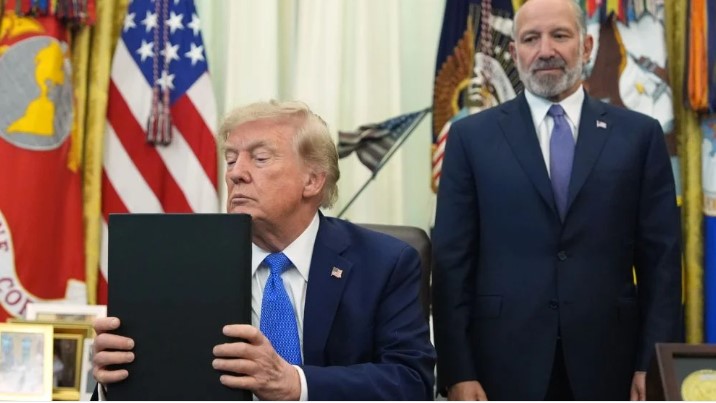
On Wednesday, September 2, Maryland District Judge Deborah Boardman issued a preliminary injunction against Trump’s executive order, signed on August 6. The ruling comes after the US Supreme Court previously addressed similar efforts and affirmed the constitutional protections surrounding birthright citizenship.
Judge Questions Constitutionality of New Order
Trump’s latest order sought to curb what his administration calls “birth tourism”—the practice of foreign nationals traveling to the United States to give birth, with the expectation that their children will obtain US citizenship.
The order attempted to deny birthright citizenship to children belonging to certain categories of foreign nationals, including some individuals accused of using commercial arrangements to obtain citizenship-related benefits or classified as “alien enemies.”
Judge Boardman said the new order appears likely to face the same constitutional problems as Trump’s earlier attempt.
She pointed to the Supreme Court’s ruling in Barbara v. Trump in June, saying the justices had already determined that children falling within the relevant category are US citizens from the moment they are born.
In her written order, Boardman concluded that Trump’s latest effort to strip those children of citizenship would therefore likely fail to withstand constitutional scrutiny.
14th Amendment Protects Birthright Citizenship
The Supreme Court ruled 6–3 in the Barbara case that birthright citizenship is protected by the 14th Amendment to the US Constitution.
Under the amendment, most people born on US soil automatically receive American citizenship, although there are limited exceptions, such as children of foreign diplomats or members of hostile occupying forces.
The constitutional basis for birthright citizenship has also been reinforced by Supreme Court decisions over many decades. One of the most significant was United States v. Wong Kim Ark, in which the court recognized the citizenship rights of Wong Kim Ark, an American-born man of Chinese descent.
Trump Administration Continues Challenge
Trump made tighter immigration controls a central promise during his campaign for a second term, including a commitment to change the longstanding system of birthright citizenship.
Trump and his allies argue that children born to immigrants who are in the United States temporarily on visas or without legal status should not automatically qualify for citizenship. They contend that such individuals are not subject to US jurisdiction in the way contemplated by the 14th Amendment.
Despite the Supreme Court setback in June, the Trump administration and its allies have continued exploring ways to challenge the constitutional protection of birthright citizenship.
Immigrant Rights Groups Challenge Order
The latest lawsuit was brought by immigrant-rights organizations and several families, including the Asylum Seeker Advocacy Project.
Judge Boardman had previously blocked enforcement of Trump’s first birthright-citizenship executive order. Last week, she allowed the plaintiffs to amend their case to specifically challenge the administration’s new order.
At that stage, the judge had already expressed doubts about the constitutionality of the latest measure, describing it as an unprecedented move.
In Wednesday’s ruling, Boardman again emphasized that the Supreme Court’s position was clear: children covered by the relevant constitutional protections are citizens at birth.