
The US president says a deal is within reach. Israel is still bombing.
Iran is still firing. And 3,000 American paratroopers are on their way to the region.
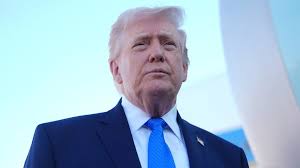
Donald Trump sat in the Oval Office on Tuesday and told the world he was feeling good about Iran. Not cautiously optimistic — genuinely upbeat.
He said Iran had sent America a “gift,” something big, something worth a “tremendous amount of money,” and that this mysterious gesture convinced him the two countries were talking to the right people. He wouldn’t say exactly what the gift was, but when pressed, he tied it to the Strait of Hormuz — the narrow waterway that Iran has kept largely blockaded since the war began, choking global oil supplies and sending energy prices into a frenzy. Whatever Tehran quietly offered, it was apparently enough for Trump to believe a negotiated end to this war is still possible.
This war is nearly a month old. It started on February 28, when Trump and Israeli Prime Minister Benjamin Netanyahu launched a joint assault on Iran that killed Supreme Leader Ayatollah Ali Khamenei. The killing set off a chain reaction that has since swallowed up the region. Iran blockaded the strait in retaliation. Gulf states — Bahrain, Kuwait, the UAE, Saudi Arabia — began intercepting Iranian drone and missile strikes. Lebanon was pulled in when Hezbollah, honouring its patron, started firing rockets into Israel on March 2. And through it all, Trump’s public tone has swung wildly — one day threatening to “obliterate” Iran’s power plants, the next extending deadlines and talking diplomacy. He did it again this week, pulling back a Monday night ultimatum on the strait just before US markets opened, citing progress in talks.
Pakistan’s prime minister has offered to host US-Iran talks. Vice President JD Vance is reportedly involved. France’s Emmanuel Macron called on Iran to engage “in good faith” ahead of a G7 foreign ministers’ meeting in Paris on Friday. And according to Israel’s Channel 12, American envoys have put a 15-point framework on the table — a one-month ceasefire, a ban on Iran enriching uranium on its own soil, and the reopening of the strait, with sanctions relief offered in return. It is, in rough outline, the same kind of deal the Trump administration was trying before the bombs started falling. Whether Iran sees it as a genuine offer or a trap is another question entirely.
Because while Trump was speaking of gifts and good faith in Washington, Israeli warplanes were running what the military called a “large wave” of airstrikes across Iran. Israeli military spokesman Effie Defrin said the war plan was “unchanged” and that operations would continue to “deepen the damage.” Iranian missiles, meanwhile, have grown more effective at punching through Israeli defences — wire photos show rubble-strewn streets in Tel Aviv, a city that only months ago felt comfortably removed from the front lines. On Tuesday, more than a dozen people were wounded in Israel, including an infant. The UN’s nuclear watchdog, alarmed by a second strike on Iran’s Bushehr nuclear plant — a civilian facility sitting dangerously close to densely populated Gulf
coastlines — called for “maximum restraint.” Nobody seemed to be listening.
In Lebanon, the picture is no less grim. Israel has been escalating its campaign against Hezbollah, declaring its intention to take control of southern Lebanon up to the Litani River, roughly 20 miles from the border — territory it once occupied for nearly two decades before withdrawing in 2000. On Tuesday night, residents of Beirut’s southern suburbs received evacuation warnings ahead of imminent Israeli strikes.
The campaign has already killed at least 1,072 people in Lebanon and displaced more than a million. In the latest round of strikes, at least eight people died, among them a three- ear-old girl. Lebanon’s fragile central government, fed up with being a battlefield managed from Tehran, ordered the Iranian ambassador to leave the country by Sunday.
Iran’s own signals remain deeply mixed. Parliamentary Speaker Mohammad Bagher Ghalibaf flatly denied any negotiations with the United States, accusing Trump of trying to “manipulate financial and oil markets.” But the foreign ministry told a different story — quietly acknowledging that messages had been passed through “friendly countries” at Washington’s request. It is the kind of carefully managed ambiguity that could mean Tehran is keeping the door open, or simply keeping its options alive.
Trump, for his part, claimed Iran had already effectively undergone “regime change” given how many of its top leaders have been killed — an assertion that sounded more like spin than strategy.
For ordinary Iranians, the geopolitical chess match barely registers against the reality of daily life under fire. “The sounds, the explosions, the missiles — they are part of our daily life now,” a 35-year-old woman in Tehran said by phone. “Our one real worry is that
the oil and gas infrastructure isn’t targeted. I think that’s the only thing all Iranians can agree on.” The Wall Street Journal reported Tuesday that the US is sending 3,000 soldiers from the elite 82nd Airborne Division to the Middle East. Trump may be talking about a deal.
He is also preparing for the alternative.