
Washington / Islamabad — April 22, 2026
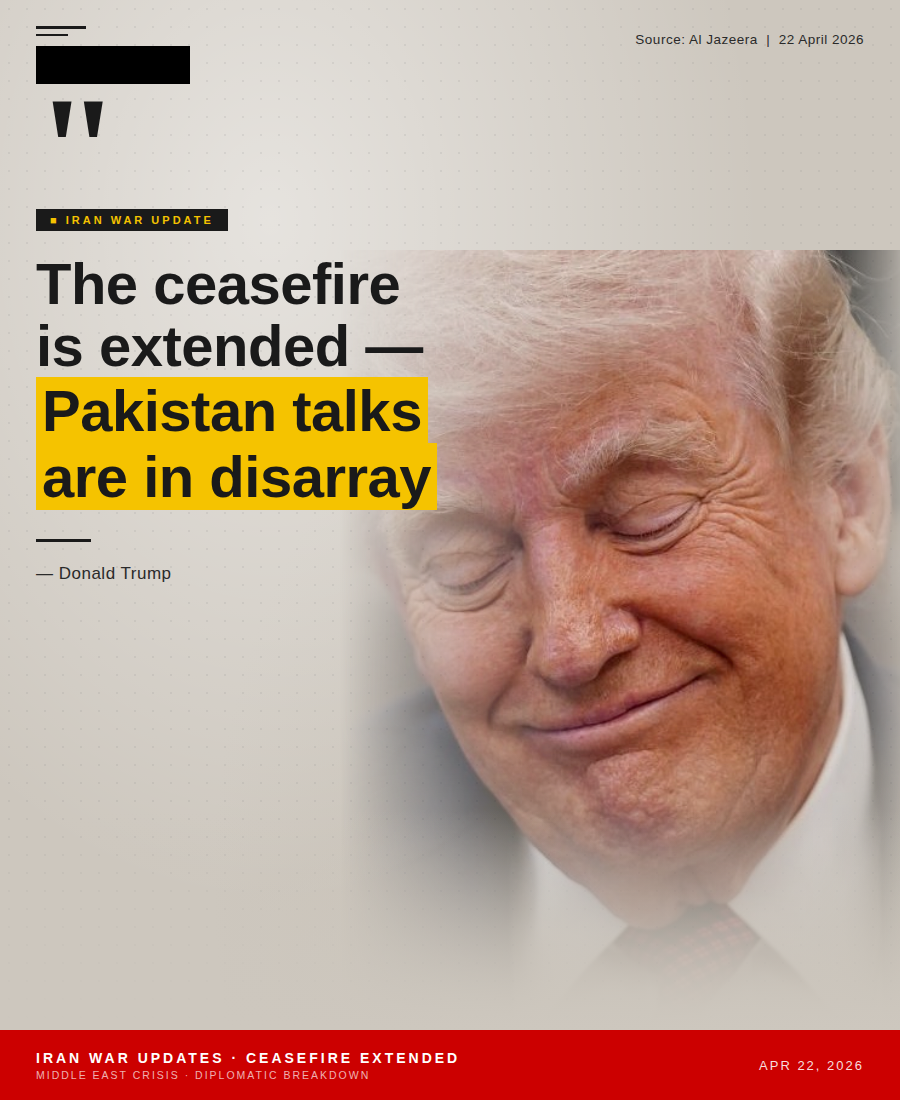
US President Donald Trump has announced an open-ended extension of the ceasefire between the United States and Iran, halting a military deadline that had been set to expire this week, while simultaneously maintaining a naval blockade on Iranian ports that Tehran has condemned as an act of war. Trump made the announcement on his Truth Social platform, stating that the truce would remain in place until Iran’s leadership could present a unified position on ending the conflict. He cited what he described as deep internal divisions within the Iranian government as the reason for the extension, suggesting that mixed signals from Tehran were making a coherent agreement impossible to finalize.
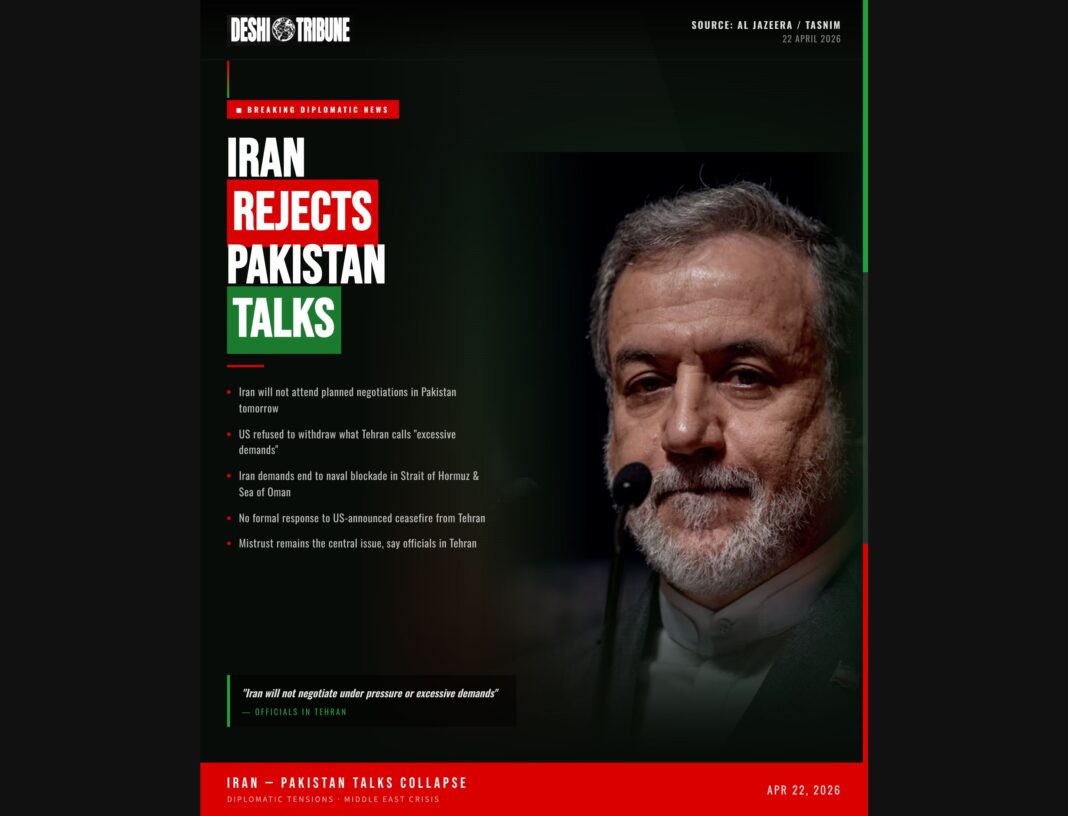
The move came after a planned second round of peace negotiations in the Pakistani capital Islamabad collapsed before it even began.
US Vice President JD Vance, who was expected to lead the American delegation alongside special envoy Steve Witkoff and senior White House adviser Jared Kushner, cancelled his trip after Iran failed to confirm it would send a delegation. The White House said Vance would remain in Washington for additional policy consultations. Pakistan, which has served as the primary mediator between Washington and Tehran throughout the conflict, expressed hope that diplomatic efforts would continue. Prime Minister Shehbaz Sharif thanked Trump for honouring Pakistan’s appeal to extend the ceasefire, saying Islamabad would press ahead with efforts to bring both sides back to the table for a permanent resolution. Iran’s response, however, was sharply critical. Foreign Minister Abbas Araghchi argued that the continued US naval blockade of Iranian ports constitutes a violation of the ceasefire itself, calling it an aggressive act rather than a peace measure.
Senior Iranian officials signalled that the country would not return to negotiations while operating under what they described as military coercion, and expressed readiness for further escalation if pressure continued. A key sticking point in the negotiations remains Iran’s nuclear programme. The Trump administration has insisted that any deal must
include a binding Iranian commitment to abandon its nuclear ambitions entirely. Tehran has refused to accept that condition as a precondition for talks. Also at stake is the Strait of Hormuz, the narrow waterway through which roughly one-fifth of the world’s oil supply normally flows. Iran effectively closed the strait at the start of the war, triggering the US
blockade in retaliation. Trump has said the full reopening of the strait is non-negotiable, while Tehran has demanded that the blockade be lifted before any meaningful discussions can take place. The situation in Lebanon adds another layer of complexity. The Lebanese
government’s disaster management authority reported that weeks of Israeli strikes have killed over 2,400 people and wounded more than 7,600 others.
Iran-backed Hezbollah has accused Israel of violating the ceasefire terms more than 200 times, a charge that has further complicated efforts to frame a comprehensive regional peace agreement.
Crude oil markets reacted sharply to the diplomatic uncertainty, with international Brent crude briefly surpassing 101 dollars a barrel before news of the ceasefire extension brought some relief to global energy markets.
With no scheduled date for a fresh round of talks and both sides holding firm on their core demands, diplomats and analysts warn that the extended ceasefire could become a prolonged stalemate rather than a stepping stone to peace.