
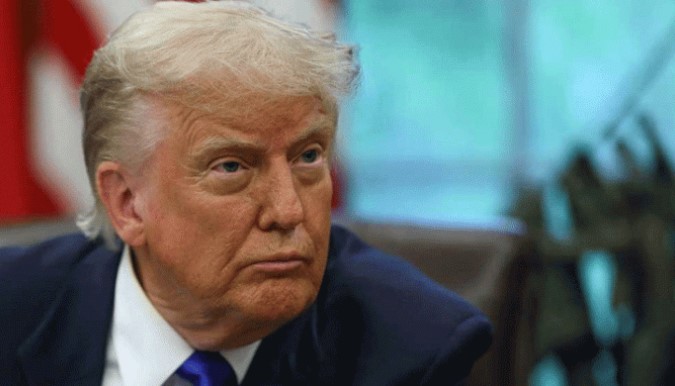
WASHINGTON D.C. – President Donald Trump is reportedly seeking an exit strategy from the military conflict with Iran, a campaign he initiated alongside Israel but which has now devolved into a complex standoff he finds increasingly “tiresome.”
Despite the lack of a definitive resolution, the President has prematurely declared victory on several occasions. Most recently, he cited a brief reopening of the Strait of Hormuz by Iranian forces as a triumph for U.S. foreign policy. However, reports from The Atlantic suggest a different reality behind closed doors: a President frustrated by a war that has refused to follow his script.
The Toll of “Project Freedom”
This week, Trump suspended “Project Freedom,” a major U.S. naval operation in the Strait of Hormuz. Sources close to the administration indicate that the President’s enthusiasm has waned as the geopolitical stakes rise.
Economic Impact: Rising global oil prices are rattling markets.
Political Fallout: Republican approval ratings are dipping ahead of crucial midterms.
Diplomatic Distractions: Trump is anxious that the Iran crisis will overshadow his high-stakes visit to China this week.
A Clash of Endurance
While the White House looks for the door, Tehran appears to be in no rush. Iranian leadership has shown little interest in conceding to demands brought forward by U.S. mediators. This leaves the author of The Art of the Deal in a precarious position: unable to bring his opponent to the negotiating table.
A recent one-page Memorandum of Understanding (MoU) sent by Washington remains unanswered. Analysts suggest Tehran is utilizing the conflict to consolidate domestic power, aiming to humiliate another U.S. President—a tactic they have employed historically.
From Confidence to Stalemate
The conflict began on February 28 with joint U.S.-Israeli strikes, resulting in approximately 3,500 deaths, including Iran’s Supreme Leader, Ayatollah Ali Khamenei. Iran retaliated by targeting U.S. installations across a dozen countries, including Jordan, Iraq, and Saudi Arabia, effectively paralyzing regional aviation and destabilizing energy markets.
A 40-day milestone led to a temporary ceasefire on April 8, followed by historic direct talks in Islamabad. However, the Pakistani-mediated summit ended without a breakthrough. Last Tuesday, Trump extended the ceasefire indefinitely, yet the blockade of the Strait of Hormuz persists.
U.S. intelligence assessments suggest Iran can withstand the current blockade for another three to four months. If the stalemate continues, fuel prices in the West are expected to surge further. As one advisor told The Atlantic, the President is simply “bored” and frustrated that a conflict he predicted would be “another Venezuela” has turned into a test of patience—a virtue not traditionally associated with Donald Trump.