

What began years ago as a small Thursday gathering organized by Prothom Alo North America has gradually evolved into one of New York’s most distinctive cultural forums for the Bangladeshi diaspora. It is an informal gathering without a fixed agenda or predetermined topic, where conversations move naturally from memories to literature, from personal stories to shared dreams. Perhaps that is why the attraction of this gathering has never diminished.
Over the years, the Thursday gathering has inspired a variety of memorable events—from recreating the fashion of the 1960s through a women’s cultural evening, to book discussions, poetry sessions, and even photography exhibitions documenting the darkest days of the COVID-19 pandemic. Each gathering has become the inspiration for the next, leaving behind new stories and stronger community bonds.
This year’s event was unlike any before. Dedicated entirely to Bangladesh’s national fruit, it was aptly named “Kathalia Adda” (The Jackfruit Gathering).
Held on Thursday, July 30, at the auditorium of Ilham Academy in Hillside, New Jersey, the gathering began as the afternoon sun started to fade. Rashida Akhtar of the Prothom Alo Foundation coordinated the event from the very beginning, while respected community members Nasir Khan Paul and Nilufar Khan were among the first to arrive. Soon the venue filled with guests. The aroma of ripe jackfruit even attracted curious passersby. Some came after seeing announcements on social media, while others arrived at the invitation of friends.
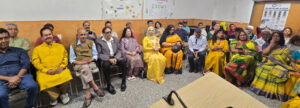
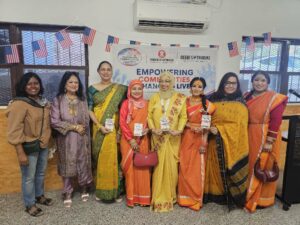
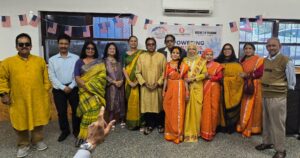
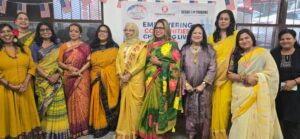
Many guests embraced the theme by wearing sarees in shades of yellow, green, and golden—the colors of ripe jackfruit. The sweet fragrance of the fruit filled the hall, creating an atmosphere that, many remarked, surpassed even the world’s finest perfumes.
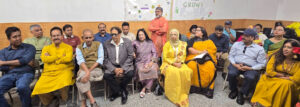
The afternoon featured songs, poetry, laughter, memories, and stories from childhood. Some reminisced about the giant jackfruit trees that once stood beside their village homes; others recalled the sticky sap that clung to their hands after cutting the fruit. There were stories of affection and even playful complaints, but everyone agreed on one thing: jackfruit represents far more than a fruit—it is a symbol of rural Bangladesh, childhood, and cultural roots.

One of the event’s highlights was the presence of renowned contemporary Bengali poet Subodh Sarkar. Reflecting on the uniqueness of the gathering, he remarked:
“I’ve heard of many festivals and celebrations dedicated to mangoes, but this is the first time I’ve ever seen an adda or festival devoted entirely to jackfruit.”

He also recalled a well-known observation by the late celebrated writer Sunil Gangopadhyay, saying:
“Sunilda used to say that if the Bengali language continues to flourish around the world, it will be because of Bangladeshis.”
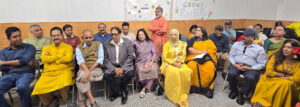
As a gesture of appreciation, Editor Ibrahim Chowdhury Khokon, who served as a volunteer during the recently concluded FIFA World Cup, presented Subodh Sarkar with a special World Cup commemorative gift.
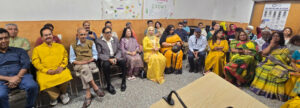
Acclaimed recitation artist Dr. Faruk Azam captivated the audience with an emotionally charged poetry performance, while poet Dhananjay Saha also recited his work.
The culinary offerings reflected the spirit of rural Bangladesh. Selina Uddin—New York’s first Bangladeshi female real estate agent and an accomplished author—prepared traditional Birni rice pudding, accompanied by milk, yogurt, flattened rice, and puffed rice. Samsun Fowzia traveled from the Bronx with a homemade dish of green jackfruit curry (echor). From New Jersey, Mohammad Chowdhury and Tahnina Chowdhury contributed freshly harvested vegetables from their home garden.
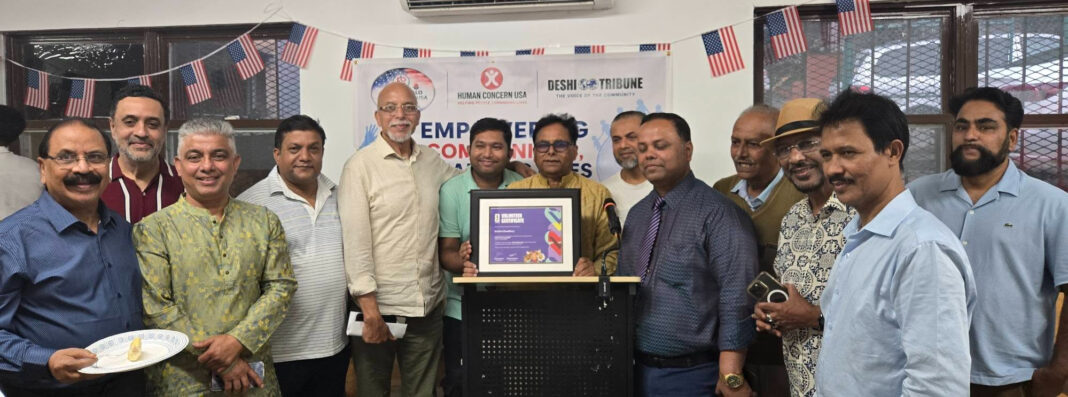
Another memorable moment came when FIFA President’s Volunteer Certificates were presented in recognition of volunteer service during the recently concluded FIFA World Cup. Ibrahim Chowdhury Khokon and Abu Bakar Siddiki received the certificates from fellow journalists and writers of Prothom Alo North America, earning warm applause from the audience. Participants also joined virtually from several U.S. states, demonstrating how technology continues to bridge geographical distance within the diaspora.
Welcoming the guests, journalist Muhammad Shahidullah, founder of Ilham Academy, reflected on the importance of fruits in religious scriptures and highlighted their symbolic significance in human civilization.
Among the international guests was Fatima Nias from Senegal, who expressed her amazement at seeing an entire community gathering centered around a single fruit. She said she had never before witnessed such affection and celebration devoted to a national fruit.
The gathering was attended by Fakhrul Islam Delwar, Muhammad Shahidullah, Rajiya Nazmi, Bhayla Salina, Shelly Zaman Khan, lyricist Mahfuz, Sultana Ferdousi, Shihab Noori, Md. Mostafizur Rahman, Farida Yasmin, Md. Abu Bakar Siddiki, Rabeya Khan, Moni Latif, Minu Latif, Runu Latif, Monjurul Haque, Rudra Masud, Ishtehaque Chowdhury, Sadat Kabir, Nuzhat, Mousumi Kapali, Sohana Nazneen, Mahbub Rahman, Mia M. Askir, Dr. Faruk Azam, Lutfur Chowdhury Helal, Paul Khan, Swapna Khan, Rokeya Dipa, M. Mahin Kanchan, Samsun Fowzia, Salma Ferdous, Jebunnesa Jyotsna, Abul Monsur Khan, Jesmin Akter, Muhammad Abdul Kaiyum, Jesmeen Akter, Adiba Bhuiyan, Humayun Kabir Liton, Shelina Uddin, Rowshan Haque, Suntana Ferdousi, Mokbul Haque, Mahmudullah, Syed Utba, Md. Faisal, Shah Palash, Nilufar Khan, Zakir Hossain, Mohammad Kalim, Sultana, K. M. Fazlul Haque (Jhuma), Rana, Sumona Baker, Shantanu Sajjad, Arif Ahmed Arnab, Sajal Roshan, Wahida Shamsun Bandhan, Sentu Chowdhury, Maria Mariam (Minar), Rashid Haque, Moin Ilias Khasru, Manas Chowdhury, Ismail Siddique, Mofiza Sultana, Faku Chowdhury, Dewan Naser, Nurul Khan, Mukul Haque, Joy Acharya, and Wahida Shamsun.
Veteran community leader Nasir Khan Paul described the event as the beginning of a new cultural tradition.
“Through Prothom Alo’s Kathalia Adda, a new cultural movement has begun. I believe this gathering will continue to grow and help us reconnect with our roots in meaningful ways.”
Author Selina Uddin said the event would remain a memorable chapter in New York’s Bangladeshi cultural history and expressed her joy at being part of such a creative initiative.
Moderated by Ibrahim Chowdhury Khokon, the two-hour gathering came to an end, but its warmth lingered long afterward. As participants departed, many were already asking the same question: When will the next gathering be, and what will its theme be?
Perhaps that question itself reflects the event’s greatest success.
For immigrants living far from home, memories of Bangladesh are often revived not only on national holidays but through the aroma of a ripe jackfruit, the taste of childhood, or an unplanned conversation shared over a cup of tea. Such gatherings leave no formal minutes or official records. Instead, they live on in memory—in familiar faces, shared laughter, poetry, music, and the unmistakable fragrance of home that time can never erase.