
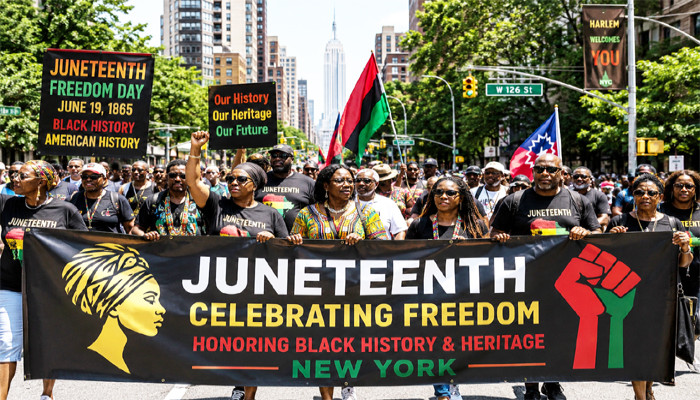
In observance of Juneteenth, New York City Mayor Zohran Mamdani released a special short documentary highlighting the life, artistic achievements, and contributions of renowned artist Dr. Lorenzo Pace to African American history and culture. The documentary centers on his celebrated sculpture, *Triumph of the Human Spirit*, located in Foley Square, which stands as a symbol of the struggles, resilience, and legacy of Black New Yorkers.
Released on June 19, the documentary features Dr. Pace reflecting on his family history, the harsh realities of slavery, and the importance of preserving history through art. He recalls an iron lock that was once used to shackle his great-grandfather, Steve Pace, during slavery in Alabama. Dr. Pace describes the lock as a powerful symbol of American history and a reminder of the suffering endured by enslaved Africans.
According to Dr. Pace, art is more than an expression of beauty—it serves as a record of human history and civilization. He notes that much of what we know about ancient Egyptian, Greek, and Renaissance societies comes through artistic works, emphasizing that Black history must also be preserved and communicated through art.
African Burial Ground History
The documentary also explores the history of the African Burial Ground, a historic site discovered in 1991. Located in Manhattan, the burial ground contains the remains of more than 400 people of African descent who were buried there between 1630 and 1795. It is recognized as the largest and oldest excavated burial site of both free and enslaved Africans in North America.
The discovery transformed public understanding of New York City’s history and highlighted the significant contributions of enslaved Africans to the city’s development. Following the discovery, plans were made to create a memorial honoring those buried at the site and preserving their legacy.
Dr. Pace Selected from Hundreds of Artists
As part of New York City’s Percent for Art program, the Department of Cultural Affairs invited artists to submit designs for the memorial. Among more than 400 proposals, Dr. Lorenzo Pace was ultimately selected to create the monument.
While designing the sculpture, Dr. Pace drew inspiration from the Chiwara, a symbolic antelope figure found in several West African cultures. His sculpture depicts a Chiwara standing atop a boat floating on water. The boat symbolizes the arrival of Africans in New York, migration, and the painful history of the transatlantic slave trade.
Standing nearly five stories tall and weighing approximately 300 tons, the monument has become one of New York City’s most significant public artworks.
“New York’s History Is Incomplete Without Black History”
In his remarks, Mayor Mamdani stated that Juneteenth is not only a time to commemorate the end of slavery but also an opportunity to honor the Black New Yorkers who fought for freedom, helped build the city, and expanded the promise of democracy.
He said Dr. Pace’s artwork reminds us that the work of securing freedom and justice for all remains unfinished. The mayor added that *Triumph of the Human Spirit* has become a symbolic gathering place where people come together to envision a more just and inclusive future.
Reflecting on the project, Dr. Pace said that creating the memorial inspired him to reach the highest level of his artistic practice. He expressed his belief that the spiritual guidance and blessings of his ancestors enabled him to undertake such an important historical responsibility.
The documentary, released in honor of Juneteenth, is being widely regarded as a meaningful tribute to the history, struggles, and contributions of New York’s Black community, while helping to educate and inspire future generations.