
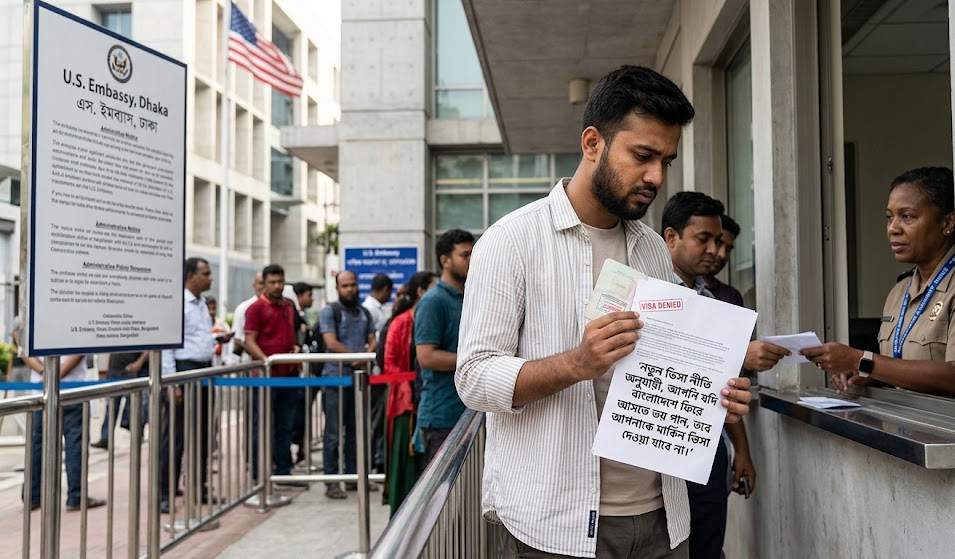
Applicants seeking temporary U.S. visas—including tourist (B-1/B-2), student (F-1), business, and H-1B work visas—are now reportedly required to clearly state whether they fear harm or persecution if they return to their country of origin. Under the new approach, any applicant who answers “yes” or refuses to answer would face a significantly reduced
chance of receiving a visa.
According to the reported internal directive from the U.S. State Department, consular officers at all embassies and consulates worldwide have been instructed to incorporate two mandatory screening questions during visa interviews:
1. “Have you experienced any harm or mistreatment in your country of nationality or last habitual residence?”
2. “Do you fear any harm or mistreatment if you return there?”
Under the reported policy, an affirmative answer—or refusal to respond—would effectively result in an immediate visa denial.
The directive is said to justify the change by citing concerns over increasing attempts by foreign nationals to use temporary visas as a pathway to asylum claims after entering the United States. It alleges that some applicants may conceal their true intentions during the visa process.
Critics argue that such a policy could unintentionally block genuine victims of persecution, including survivors of domestic abuse, journalists facing credible threats, and members of religious minorities at risk. They warn that individuals with legitimate fears may be denied
entry before they even reach U.S. territory.
Human rights organizations have strongly condemned the reported measure, claiming it could violate international refugee protections, including obligations under the 1951 UN Refugee Convention. They further argue that forcing applicants to deny fear of persecution could put them at legal risk, as providing false information in a visa application can lead to long-term or permanent bans from entering the United States.
The reported policy comes amid ongoing legal and political disputes in the United States over immigration and asylum rules. Observers say it may significantly reshape how visa eligibility is assessed at the consular level, although official confirmation and implementation details remain unclear.