
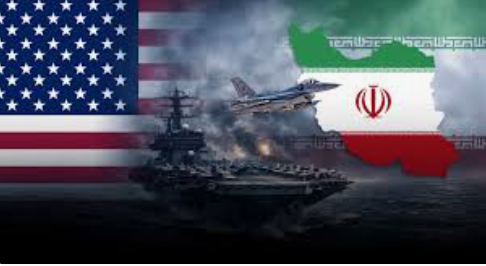
On Thursday, April 17, several major developments unfolded simultaneously in the Middle East. Shortly after a 10-day ceasefire between Israel and Lebanon took effect, Iran’s Foreign Minister Abbas Araghchi announced that the Strait of Hormuz has been “fully open” to all commercial shipping — but only for the duration of the ceasefire. In a post on X, Araghchi directly linked the Lebanon ceasefire to the reopening of Hormuz, although Trump denied any such connection.
However, the reopening of Hormuz does not come without conditions. Iran’s semi-official Tasnim News Agency, citing a source, reported that Tehran has imposed three شروط: only commercial vessels are allowed, military ships are banned; ships must follow routes designated by Iran; and all vessel movements must be coordinated with Iranian forces. In other words, the strait is open, but control remains firmly in Iran’s hands.
Meanwhile, Trump has stirred controversy with his own statement. In an interview with Reuters, he claimed that the United States and Iran would jointly retrieve highly enriched uranium from Iran’s bombed nuclear facilities and transport it to the United States. Trump said, “We will go together, carefully go down, and begin excavation with heavy machinery. Then we will bring it to the United States.” However, Iranian officials have not confirmed this claim.
Iranian presidential spokesperson Seyyed Mohammad Mehdi Tabatabaei rejected Trump’s remarks as “baseless statements by an adversary.” He stated that the limited and conditional reopening of Hormuz was entirely Iran’s own initiative and serves as a test of the opposing side’s commitments. He warned, “If they backtrack on their promises, they will face severe consequences.” He also said Trump’s comments aim to deny the Iranian people the pride of their defensive achievements.
Regarding the 10-day ceasefire in Lebanon, Trump confirmed that Israel would halt airstrikes in the country. The ceasefire, which took effect at midnight, comes after six weeks of intense conflict that left at least 2,196 people dead and more than one million displaced. However, the Lebanese army reported several ceasefire violations by Israeli forces on Friday morning.
Hezbollah’s parliamentary bloc has cautiously supported the ceasefire but stressed that it must apply across all Lebanese territory and lead to a full Israeli withdrawal. The group credited Iran’s diplomatic pressure for the ceasefire and strongly criticized the Lebanese government for engaging in direct talks with Israel.
Behind the scenes, discussions are ongoing. Sources in Tehran told Al Jazeera that preparations are underway for another round of talks, where a temporary framework lasting 45 to 60 days is being considered. The future of highly enriched uranium is also expected to be part of these discussions. Iran’s ambassador to Pakistan, Reza Amiri Moghadam, said the Lebanon ceasefire and the reopening of Hormuz could form the basis of a broader agreement, and Pakistan’s mediation could pave the way for lasting regional peace.
However, fundamental contradictions remain between Trump and Iran’s positions. Trump says Hormuz and Lebanon are separate issues, while Iran insists they are linked. Trump claims Iran will hand over uranium, while Iran has not confirmed this. Trump also stated that the naval blockade will remain in place until a peace agreement is signed. Amid these conflicting narratives, one thing is clear — the war is not fully over; it has merely entered a fragile pause.