
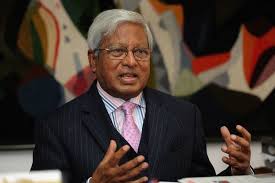
April 27 marks the birth anniversary of a man who proved through his life how far one person’s determination can transform the world. He is Sir Fazle Hasan Abed—one of Bangladesh’s greatest sons and a shining symbol of humanity.
Though he passed away in December 2019, his presence feels undiminished. Each year, his birthday returns as a reminder that he never truly left. He lives on in every light of hope, in every story of change among the world’s poor, and in every smile of the people whose lives he touched.
Those who had the privilege of knowing him closely understand that he was a quiet force—humble, composed, and deeply committed. He stayed away from the spotlight, never sought credit, and never tried to promote any ideology for personal recognition. His work spoke for him. He worked—silently, consistently—for people and alongside people.
Born in 1936 in Habiganj, Sylhet, Sir Fazle Hasan Abed began life on a conventional path. He studied at the University of Dhaka, then pursued higher education abroad, studying naval architecture at the University of Glasgow and qualifying as a chartered accountant in London. He built a successful career at Shell, enjoying a secure and comfortable life.
But 1971 changed everything.
As the Liberation War unfolded and suffering engulfed his homeland, he could not remain a distant observer. He left his job, sold his apartment, and used those funds to support war refugees. It was a defining moment—transforming him from a successful professional into a
lifelong servant of humanity.
After independence, he returned to Bangladesh and saw that the end of war had not ended people’s struggles. In a devastated village in Shallla, Sunamganj, he witnessed the depth of human suffering—people without homes, food, or hope. There, amid the ruins, he began a new journey.
In 1972, he founded BRAC, an organization that would grow into the world’s largest non-governmental development organization. Sir Fazle Hasan Abed believed that poverty is not a personal failure—it is a structural problem. Therefore, charity alone is not enough; empowerment is essential. Education, healthcare, microfinance, skills, and confidence—these were the tools he used to help people rise.
At a time when many believed rural families would never send girls to school, BRAC established schools across villages. Those girls became educated, empowered women who, in turn, changed future generations. When the poor were dismissed as incapable, he insisted they simply lacked opportunity. Through microfinance, he demonstrated how even a small chance could transform a family’s future.
One of his most humane innovations was the “Graduation Program” for the ultra-poor—people so marginalized they were often excluded even from microfinance initiatives. By providing assets, training, and sustained support, he showed that even the most vulnerable could stand on their own feet. Today, this model has been adopted in dozens of countries.
BRAC now operates in 11 countries, from Afghanistan to Africa, reaching millions of people every year. What began as a single decision in 1971—to leave behind comfort and serve humanity—has grown into a global force for change.
He received numerous awards and honors throughout his life. Yet those who knew him best say he never worked for recognition. His work itself was his identity. He was calm, thoughtful, and measured in speech. He spoke little, but when he did, his words carried clarity and direction.
He believed deeply in people—especially the poor. Once, when asked about the secret to running such a vast organization, he said: “My only secret is trusting people—trusting the poor that they can succeed, and trusting my colleagues to make the right decisions. That trust is everything.”
On his birth anniversary, one cannot help but think of the countless people who may not even know his name, yet live better lives because of him. The child who learned to read, the mother who gained independence, the family that broke free from poverty—all carry his invisible touch. And perhaps that invisible impact is his greatest achievement.
He lived for 83 years, working tirelessly until his final days. He came to serve, and he departed while still serving.
Today, we do more than remember him—we bow our heads in respect. We honor a towering figure who quietly illuminated the path for others.
Sir Fazle Hasan Abed—
You may no longer be with us, but your work lives on. Your vision lives on. Your light continues to shine beyond borders and time.
With deepest respect, love, and gratitude.