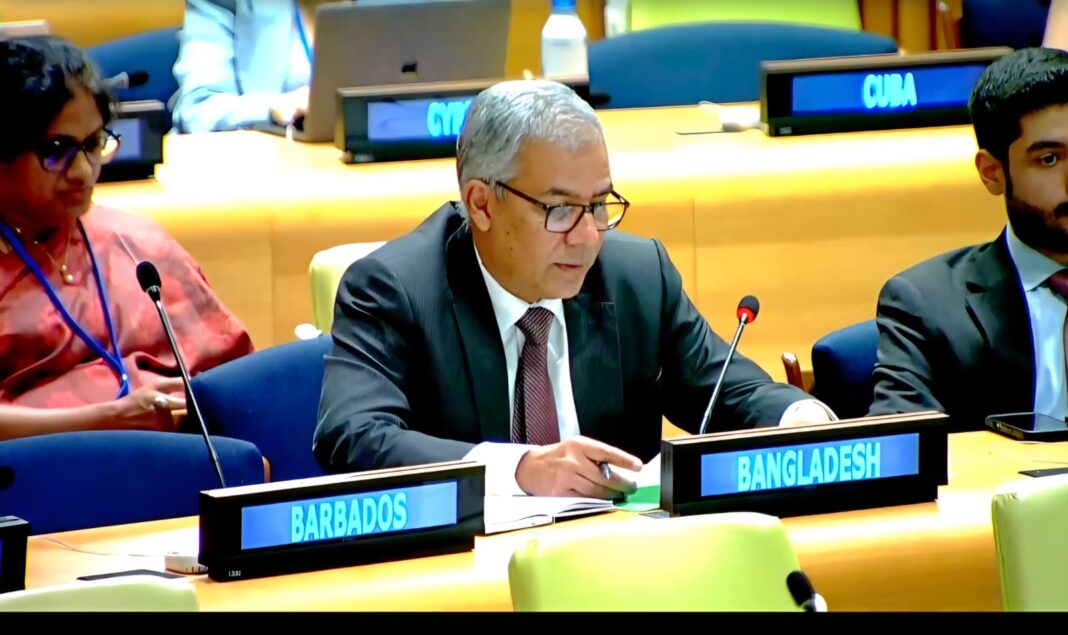

Bangladesh and UN Women have reaffirmed their commitment to deepening cooperation on women’s empowerment, gender equality, climate resilience, and the Women, Peace and Security (WPS) agenda during a high-level meeting at the United Nations Headquarters in New York.
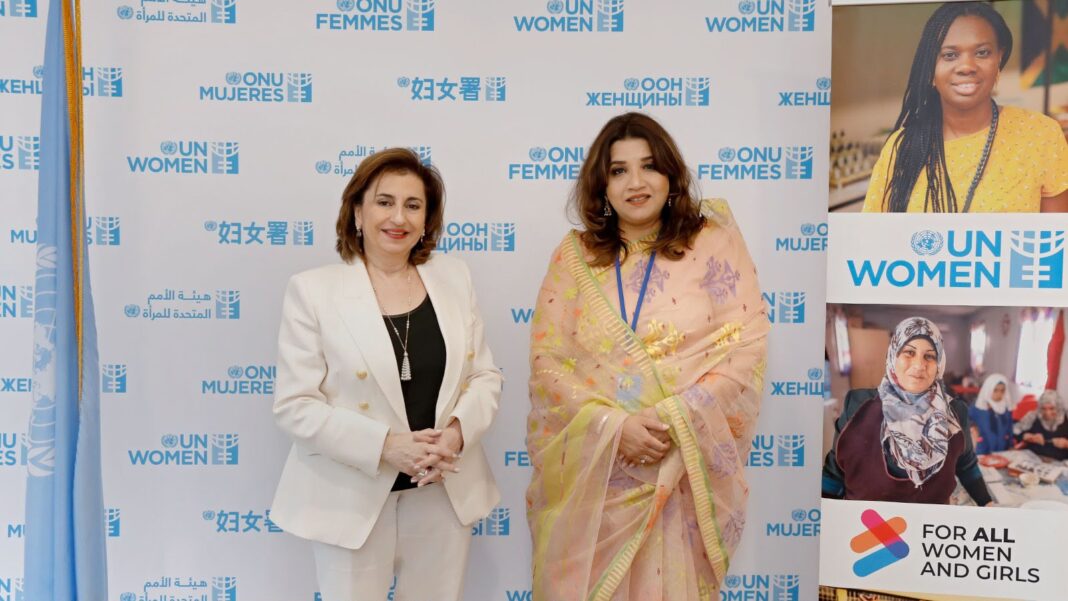
The meeting took place between Bangladesh’s State Minister for Foreign Affairs, Shama Obaed Islam, and Sima Bahous, United Nations Under-Secretary-General and Executive Director of UN Women.
During the discussion, State Minister Shama Obaed Islam highlighted Bangladesh’s longstanding commitment to expanding opportunities for women and girls. She recalled former Prime Minister Begum Khaleda Zia’s landmark decision to introduce free education for girls, describing it as a transformative policy that laid the foundation for greater female participation in education.
She also outlined the current government’s initiatives to strengthen women’s empowerment, including free education for women through the postgraduate level, expanded reproductive healthcare, and enhanced mental health support.
The two sides explored opportunities to strengthen collaboration in promoting women’s economic empowerment, building climate resilience, and advancing the global Women, Peace and Security agenda.
UN Women Executive Director Sima Bahous praised Bangladesh for its continued progress in promoting gender equality and women’s leadership. She also congratulated Bangladesh on its election as President of the 81st Session of the United Nations General Assembly (UNGA), describing it as an important milestone for the country on the global stage.
Bahous reaffirmed UN Women’s commitment to working closely with Bangladesh to further advance women’s rights and the WPS agenda. She also commended the significant contributions of Bangladeshi women to international peacebuilding efforts and United Nations peacekeeping missions.
The Rohingya crisis was also discussed during the meeting. State Minister Shama Obaed Islam expressed concern over declining international funding for the Rohingya response, warning that women and girls in the refugee camps are among those most severely affected.
She reiterated Bangladesh’s longstanding position that the voluntary, safe, dignified, and sustainable repatriation of the Rohingya people to Myanmar remains the only lasting solution to the crisis.
The meeting reflected Bangladesh’s continued efforts to strengthen international partnerships while advancing gender equality, sustainable development, and peace through multilateral cooperation.