
New York: With the 2026 FIFA World Cup just weeks away, elite athletes and senior sports administrators gathered at United Nations Headquarters this week to make the case for something that goes far beyond goals and trophies — the power of sport to reshape societies, bridge divides, and drive lasting human progress.
The gathering, titled Building Bridges, Breaking Barriers, was held to mark the International Day of Sport for Development and Peace, observed annually on April 6. It brought together some of the world’s most influential voices in sport at a moment when global attention is turning toward what promises to be the biggest football tournament in history.
The 2026 World Cup, running from June 11 to July 19, will feature 48 national teams competing across 104 matches spread across three host nations — Mexico, the United States, and Canada. The final is scheduled to be held at MetLife Stadium in New Jersey, just miles from the UN building where Wednesday’s discussions took place. Billions of viewers worldwide are expected to follow the tournament.
Yet beyond the spectacle, speakers stressed that football — and sport more broadly — carries a deeper social value that reaches communities far removed from the world’s biggest stadiums.
A Global Network, A Local Impact One of the centrepieces of this year’s World Cup is a community programme called Play Collective, operating across each of the host city
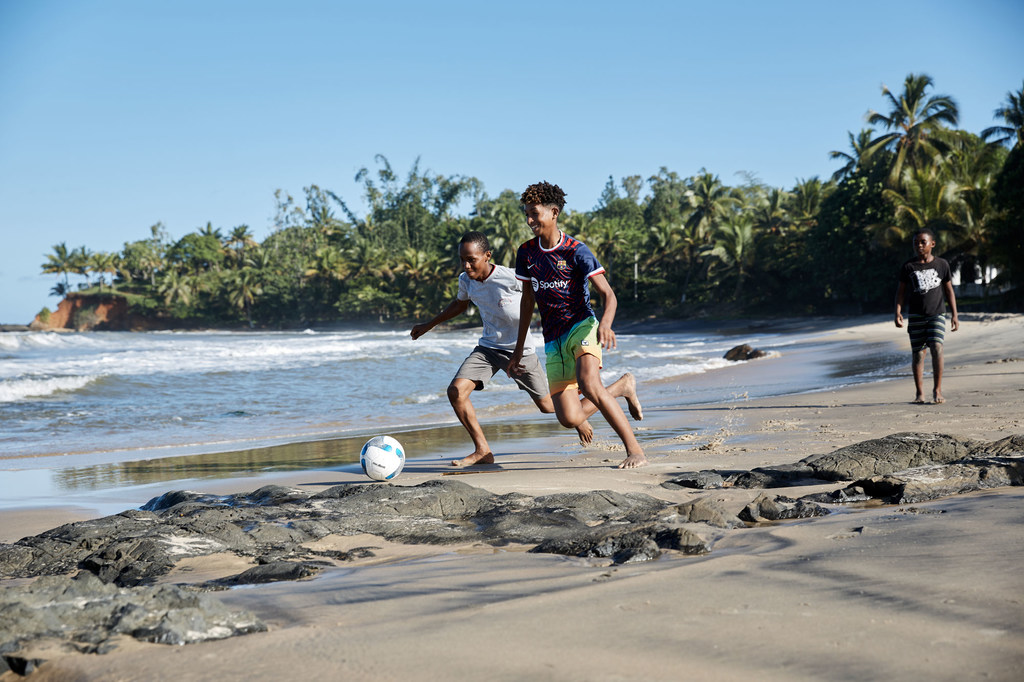
regions. A joint initiative of the Adidas Foundation, the Beyond Sport foundation, and Common Goal — a global non-profit serving 3.6 million young people annually — the programme channels funding and support to grassroots sports organisations, creating safe spaces for underserved youth in some of the most vulnerable communities.
Mary Connor, Executive Director of Common Goal, drew a direct parallel between the values of football and the United Nations’ mission. Speaking at the event, she described the UN as a place where people “come together across differences, across cultures that keep us isolated” and work to “make space for one another to find a way through, against a lot of headwinds” — a spirit, she argued, that mirrors the solidarity at the heart of the game.
A Trailblazer Reflects on Barriers Broken Among the most compelling voices at the event was Nawal El Moutawakel, currently Vice President of the International Olympic Committee and one of the most celebrated figures in the history of global sport.
At the 1984 Los Angeles Olympics — the last time the Games were held in the United States before next year’s 2028 edition in the same city — El Moutawakel made history by becoming the first Moroccan, African, Arab, and Muslim woman ever to win an Olympic gold medal, claiming victory in the 400-metre hurdles.
Her triumph is widely regarded as a turning point for women’s sport in Morocco and across the Arab world, inspiring generations of women to pursue athletics in societies where sport had long been considered a male domain.
Reflecting on her career at Wednesday’s event, El Moutawakel described her sport as a metaphor for life’s challenges. “My race was the 400 hurdles — a race where there is a start and a finish, and in between there are 10 hurdles,” she said. “For me, they were the hurdles of life that taught me discipline, coordination, determination, and passion.
Sometimes you experience failures, but I never gave up.”
She also pointed to a historic milestone in international sport governance: for the first time in a century, the IOC is led by a woman.
President Kirsty Coventry, she noted, is also the first African to hold the office — a reflection, El Moutawakel said, of the progress slowly but steadily being made.
Young Voices, Real Stories The panel was joined by several young athletes who shared personal testimony about the transformative role sport has played in their lives. Among them was Ailyn Lopez, who credited football with helping her overcome mental health struggles. Lopez now works as a young leader with Street Child United, an organisation that uses sport as a vehicle to support children and young people living on the streets or in extreme poverty.
Their stories underscored a message that ran through the entire event: that sport, at its best, is not merely entertainment — it is a tool for healing, empowerment, and social cohesion.
The Bigger Picture The International Day of Sport for Development and Peace was formally
established by the UN General Assembly, recognising sport’s unique capacity to advance human rights and contribute to social and economic development. Given its global reach and universal appeal, football in particular has been identified as a powerful vehicle for progress toward the UN’s Sustainable Development Goals. As the world turns its eyes toward Mexico City for the World Cup’s opening match on June 11, the message from UN Headquarters this week was clear: the real game being played is much larger than any single tournament.