
By Samanta Islam
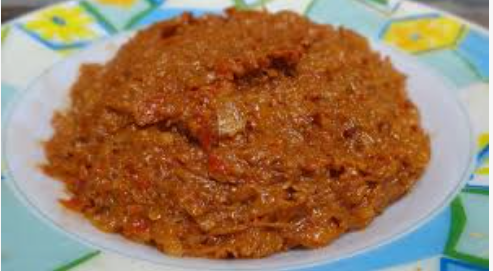
On a cold Tuesday evening in Jackson Heights, the smell of mustard oil and dried fish drifts through a narrow corridor of shops tucked between a Bangladeshi grocery and a sari store. Inside a modest restaurant with plastic-covered tables and a television playing Bangla music videos, a group of homesick men from Sylhet share a plate of shutki bhorta and
steamed rice, speaking quietly in their mother tongue. For a moment, they are no longer in Queens. They are home.
This is the quiet, unhurried world of Bangladeshi ethnic food in New York City — and it is a world that, for decades, has sustained one of the largest South Asian diaspora communities in the United States without ever quite receiving the recognition it deserves.
New York City is home to an estimated 75,000 to 100,000 Bangladeshis, according to official counts, but the actual number is double or more by some estimates, concentrated primarily in Jackson Heights and Woodside in Queens, Kensington and Flatbush in Brooklyn, and the Bronx. Wherever Bangladeshis have settled, their food has followed — and with it, a rich, complex culinary tradition that is deeply distinct from the Indian and Pakistani cuisines with which it is so often wrongly grouped.
Bangladeshi cooking is a cuisine of rivers and rain. It is shaped by a delta landscape, a monsoon climate, and centuries of agricultural life.
Fish — particularly freshwater fish like hilsa, rohu, catla, and shol — sit at the very heart of the tradition. Mustard, turmeric, green chilli, and dried red chilli form the backbone of most dishes. The cooking tends to be lighter on cream and heavier on aromatics than many of its subcontinental cousins, with a directness of flavour that can surprise those unfamiliar with it.
Walk through the Bangladeshi corridor of Jackson Heights on a weekend
afternoon, and the food on offer tells the story of a community that has
replicated its culinary homeland with extraordinary faithfulness. Ilish
macher jhol — hilsa fish cooked in a thin, golden mustard sauce — is the undisputed king of the Bangladeshi table, and arguably the dish that provokes the most profound nostalgia among the diaspora. Finding fresh hilsa in New York was once nearly impossible, but a growing number of Bangladeshi fish markets now stock the fish, frozen and imported from
Bangladesh and India, and restaurateurs have become skilled at coaxing it back to something close to its full glory.
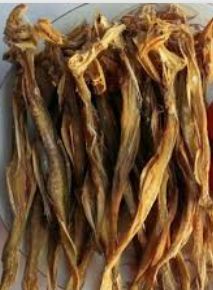
Shutki, or dried and fermented fish, is perhaps the most polarising and most beloved of Bangladeshi flavour traditions. To the uninitiated, the smell alone can be arresting. To a Bangladeshi, it is the smell of a mother’s kitchen, of winter evenings, of childhood. Shutki bhorta — dried fish mashed with mustard oil, raw onion, green chilli, and sometimes a squeeze of lemon — is not a dish that announces itself elegantly. It is a dish that grabs you by the collar. Several restaurants and home kitchens in Jackson Heights and Kensington prepare it with a faithfulness that borders on reverence.
Bhorta, in its many forms, is one of the great unsung contributions of Bangladeshi cuisine. The word simply means “mash,” but in practice, it encompasses a universe of preparation. Begun bhorta — fire-roasted eggplant smashed with mustard oil and raw onion — is smoky, earthy, and deeply satisfying. Aloo bhorta, mashed potato enriched with mustard oil and chilli, is what you eat when you are tired and hungry and want something that will hold you. Tomato bhorta, dal bhorta, shrimp bhorta — the variations are as numerous as the cooks who make them, and each family swears by its own version.
Alongside bhorta sits the world of dals. Masur dal, cooked thin and seasoned with a tarka of mustard seeds, dried red chilli, and a slick of ghee, is the everyday staple that sustains millions. Moong dal, slightly nuttier and thicker, is often reserved for Fridays or when someone is unwell. Cholar dal, made with split chickpeas and enriched with coconut and raisins, is celebratory food — the dal you make for Eid or a wedding feast.
And then there is beef. Bangladesh is a Muslim-majority country, and beef holds a place of cultural and religious significance that goes well beyond nutrition. Beef bhuna — slow-cooked, intensely spiced, the meat falling apart in a thick, dark gravy — is the pride of countless Bangladeshi restaurants in New York. Kala bhuna, the famed preparation of Chittagong, takes this even further: the beef is cooked for hours until the gravy is all. Still, it disappears, leaving behind meat that is deeply charred at the edges and explosively flavourful. A handful of restaurants in Jackson Heights now offer kala bhuna on their menus, and for Bangladeshis from Chittagong, it represents a taste of specific, irreplaceable geography.
Bangladeshi sweets deserve a conversation of their own. Mishti doi — sweet yoghurt set in clay pots and sold in Bangladeshi sweet shops in Queens and Brooklyn — is one of the subcontinent’s great desserts, creamy and tangy and caramelised all at once. Roshogolla, sandesh, chomchom, and the syrup-soaked pantua are among the sweets that fill glass cases in sweet shops that double as gathering places for the community. On weekends, these shops are packed with families buying sweets for guests, for parties, for no particular reason other than that sweetness is an act of generosity in Bangladeshi culture.
Street food, too, has found its way to New York. Fuchka — the Bangladeshi version of pani puri, filled with spiced mashed potato and tamarind water — is prepared at Eid gatherings, community events, and occasionally at pop-ups organised by younger Bangladeshi New Yorkers who are beginning to take their culinary heritage into more public-facing spaces. Jhal muri, puffed rice tossed with mustard oil, chopped onion, green chilli, chanachur, and a squeeze of lemon, is the ultimate Bangladeshi snack — portable, crunchy, barely a meal, and completely addictive.
In recent years, a younger generation of Bangladeshi Americans has begun to engage with their food tradition in new and more visible ways. A small but growing number of pop-up dinners, food blogs, and social media accounts dedicated to Bangladeshi cooking have emerged from within the New York community. These are not restaurants in the traditional sense — they are passion projects, acts of cultural preservation, attempts to tell the story of a cuisine that has spent too long being mistaken for something else.
“People always assume our food is the same as Indian food,” says Nadia, a second-generation Bangladeshi woman from Kensington. “But when they actually try it — really try it — they realise how different it is. The mustard, the hilsa, the bhortas. There’s nothing quite like it.”
The challenge for Bangladeshi food in New York is one of visibility. The community’s restaurants have historically served the community itself rather than reaching outward. Menus are sometimes only in Bangla.
Signage is modest. The dining rooms are often no-frills. This is not a failing — it reflects a cuisine that has always prioritised substance over spectacle. But it has meant that Bangladeshi food remains largely unknown to the broader New York dining public, even as the city prides itself on its unmatched culinary diversity.
That may be beginning to change. A handful of younger Bangladeshi chefs and entrepreneurs are quietly working to bring their food to a wider audience — not by diluting it or dressing it up for outsider tastes, but by presenting it with the pride and confidence it has always deserved.
The cuisine does not need to be reinvented. It needs only to be seen.
For now, the restaurants of Jackson Heights and Kensington continue to do what they have always done — feed a community, preserve a tradition, and offer, to anyone willing to pull up a chair, a genuine and unrepeatable taste of Bangladesh. The plastic-covered tables are still there. The hilsa is still there. The smell of mustard oil still drifts through the corridor. And on a cold evening in Queens, that is more than enough.